
India’s Supreme Court suspends British-era sedition law
Section 124A of the Indian penal code gives wide-ranging powers to the police to arrest people, who can even face life imprisonment, for an act or speech that "brings or attempts to bring into hatred or contempt, or excites or attempts to excite disaffection towards the government"
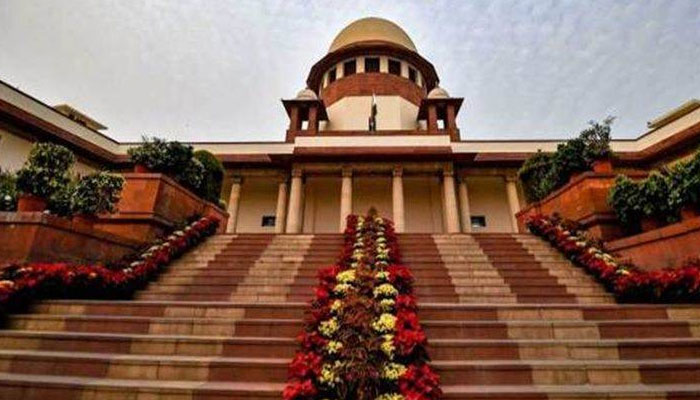
NEW DELHI: India's Supreme Court on Wednesday suspended a colonial-era sedition law that activists say is often used by Prime Minister Narendra Modi's government to target free speech and dissent.
Modi's critics say that the law, which was once used by Britain to target independence hero Mahatma Gandhi, has been abused by his government against many journalists, activists and students.
Section 124A of the Indian penal code gives wide-ranging powers to the police to arrest people, who can even face life imprisonment, for an act or speech that "brings or attempts to bring into hatred or contempt, or excites or attempts to excite disaffection towards the government".
"The rigours of Section 124A (are) not in tune with the current social milieu, and was intended for a time when this country was under the colonial regime," India's chief justice N V Ramana, part of a three-judge bench hearing a petition against the law, said.
Ramana asked the government not to file any new sedition cases and pause ongoing sedition investigations. "All pending trials, appeals and proceedings" under sedition, the court said, "be kept in abeyance" until the "re-examination of the provision is complete".
The government had said Monday that it had decided to "re-examine and reconsider" the law but it remained in force. The top court also urged people jailed for sedition to approach local courts for bail. India's official crime data says 236 people faced sedition charges between 2018 and 2020.
The law has long been misused by all Indian political parties in power but critics say Modi's Bharatiya Janata Party (BJP) has widened its scope, including to target minorities and ideological dissenters.
The government of India's most populous state Uttar Pradesh, led by firebrand monk Yogi Adityanath from the BJP, has been an especially enthusiastic user of the law.
Police there last year jailed three students from Indian Illegally Occupied Jammu and Kashmir for sedition after they celebrated India's defeat to arch-rival Pakistan in a cricket match.
India sparked global outrage last year after 22-year-old climate change activist Disha Ravi was arrested for sedition for allegedly creating a "toolkit" to aid anti-government farmer protests.







-
 Australia To Launch First High-speed Bullet Train After 50-years Delay
 -
 Meghan Markle Turns To Desperate Bids & Her Kids Are Her ‘saving Grace’: Here’s What They’ll Do
 -
 King Charles Gives A Nod To Sister Anne's Latest Royal Visit
 -
 Christian Bale Shares Rare Views On Celebrity Culture Urging Fans Not To Meet Him In Person
 -
 Ariana Grande To Skip Actor Awards Despite Major Nomination
 -
 North Carolina Teen Accused Of Killing Sister, Injuring Brother In Deadly Attack
 -
 Ryan Gosling Releases Witty 'Project Hail Mary' Ad With Sweet Reference To Eva Mendes
 -
 Teyana Taylor Reveals What Lured Her Back To Music After Earning Fame In Acting Industry
 -
 Prince William Shows He's Ready To Lead The Monarchy Amid Andrew Scandal
 -
 Lux Pascal Gushes Over Role In Tom Ford's 'Cry To Heaven': 'I Just Wanted To Be Part Of This Picture'
 -
 Near-blind Refugee Found Dead In Buffalo After Release By US Border Patrol
 -
 Firm Steps In Forcing Andrew’s Hand: ‘Can No Longer Keep A Promise'
 -
 Kenyan Man Accused Of Recruiting Men To Fight In Ukraine
 -
 'The Wrong Paris' Star Veronica Long Shares What New Crime Series 'Blue Skies' Is About
 -
 King Charles Remains Immersed In Work Amid Andrew Scrutiny
 -
 Bobby J. Brown's Passing Adds To Growing List Of Celebrity Deaths In 2026