
Tough challenges for new government, warn economists
Incoming government would have to strike a balanced budget keeping in view the ground realities, said Dr Abid Suleri
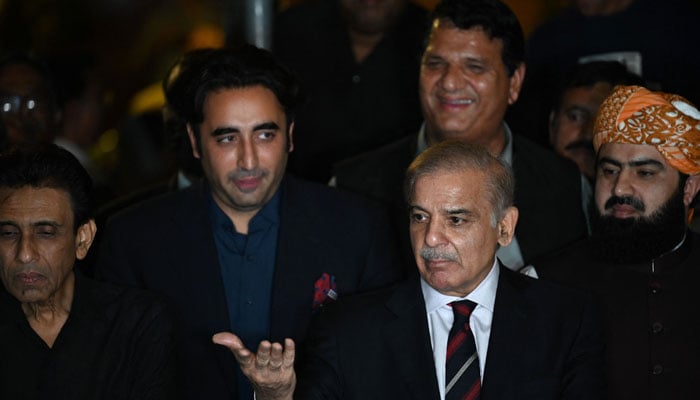
ISLAMABAD: Dr Abid Suleri, Executive Director SDPI, on Sunday said that there would be a balance of payment crisis on a short-term basis and the incoming government would have to abandon popular measures so the petroleum and electricity prices would have to be adjusted upward in order to suppress demand. He said that the so-called relief measures announced by the Imran Khan government would have to be reversed.
He said that the incoming government would have to strike a balanced budget keeping in view the ground realities but it would be hard for the incoming government for taking stringent measures because they had come into power after doing "Manghai Makao March". The rising inflation, he said, would be a major challenge for the incoming government but on a short-term basis, there would be a balance of payment crisis. If corrective measures are not taken, then the country might plunge into a crisis like Sri Lanka, he added. Dr. Aqdas Afzal, Professor of Economics at Habib University, Karachi, said that the economy was in a precarious situation because the current account deficit rose sharply and it might touch $21 billion, the highest-ever in the country’s history. He said that there was super cycle on commodities and POL prices in international market, so the current account deficit was becoming a major challenge for the economy. He said that the USA was increasing its policy rate so the demand for dollar would surge but our policymakers hiked discount rate after much delay. He said that the incoming government would have to face huge challenges as first of all they would have to convince the IMF for obtaining fiscal space to take corrective measures. First of all, they would have to increase the POL prices so inflation might go up further, he added.
Dr Khaqan Najeeb, former Adviser, Ministry of Finance, said Pakistan must address the challenges facing the external sector. The country needs to build its foreign exchange reserves, which have declined to a low of $11.3 billion dollars. The Chinese rollover of funds must be pursued and the government must actively engage with bilateral and multilateral partners for increased funding. The deferred oil facility from KSA must be used fully and project financing must be fast tracked at our end. He emphasized it is important for Pakistan to complete the ongoing program with the IMF. External financing swelling above $32 billion requires successful completion of the seventh review on better terms. Consensus with the IMF is also time bound as being in the IMF program requires consultation of the contours of the Budget 2023 with the Fund.
He felt the Budget 2023 needs to manage the fiscal deficit, which has a bearing on the rising current account. The budget must be finalized considering the overall financing envelope and the needed repair of the expenditure side as current expenditure has swelled to Rs7.5 trillion. Burgeoning pensions and rising mark-up payments remain unfinished reforms agenda. Revenue reforms covering the personal income tax regime and doing away with concessions also need a serious effort. The Budget 2023 must show move on having a progressive and simple taxation system in the country. It may be prudent to pursue a levy on income and wealth of high net worth individuals and a reduction in the threshold of the highest taxation bracket. He said managing inflation beyond monetary tightening is a key challenge for the government to give relief to the people. In this regard, it is important to do vigilant supply-side monitoring of key food items to bring down food inflation. The government must ensure supply of cheaper fuels, ensure that there is no undervaluation of the rupee, and limit the rate of monetary expansion to low double-digits.
Dr Khaqan expressed concern on the energy side, especially the need to ensure uninterrupted fuel supply for the power sector considering the rising financial needs of the energy sector in the summertime. Also gradually the general subsidy on petroleum products and electricity would need to be tapered to ensure fiscal stability. Of course, the targeted subsidy must continue. The government would also need to do away with amnesty in the Budget 2023. These are all tough decisions for the new government, he concluded.






-
 Michael B. Jordan Makes Bombshell Confession At Actor Awards After BAFTA Controversy: 'Unbelievable'
 -
 Prince William Willing To Walk Road He ‘loathes’ For ‘horror Show’ Escape: ‘He’s Running Out Of Allies Fast’
 -
 Pentagon Says No Evidence Iran Planned Attack On US, Undercutting Strike Justification
 -
 Prince William’s Changes Priorities With Harry After Kate Middleton’s Remission: ‘It Couldn't Be Worse’
 -
 Justin Bieber Gets Touching Tribute From Mom Pattie Mallette On Turning 32 Amid Limited-edition Birthday Drop
 -
 Jada Pinkett Smith Details How Her Memoir Combats 'shame' Around Alopecia
 -
 Harrison Ford Reflects On Career As He Receives Life Achievement Award At 2026 Actor Awards
 -
 Timothee Chalamet's Red Carpet Date For Actor Awards Not Kylie Jenner This Year
 -
 Weather Forecast For Tomorrow: Wintry Mix Overnight And Warmer Temps Midweek
 -
 Keith Urban 'solitary' Life Laid Bare After Nicole Kidman Split
 -
 SAG Actor Awards 2026 Winners: Complete List
 -
 UK Asylum System Faces Changes As Refugees Will Get Temporary Protection Only
 -
 Meghan Markle Has Realised ‘star Power’ Is Not Enough After Jordan Trip
 -
 USC Leading Scorer Chad Baker-Mazara Leaves Program Amid Losing Streak
 -
 Google Is Winding Down Popular App 'Pixel Studio': Here's Why
 -
 Zendaya, Tom Holland Secretly Married?