
IHC ruling against govt plots allotment challenged
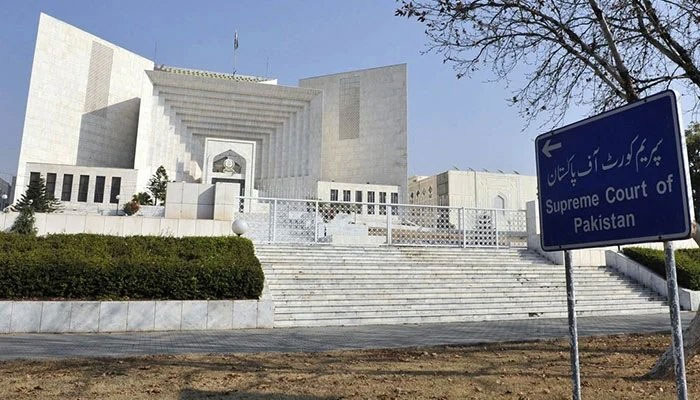
ISLAMABAD: Some 35 serving and retired government employees on Wednesday challenged in the Supreme Court the verdict of the Islamabad High Court (IHC) that scrapped the new policy of allotting government’s plots to civil servants, judges, generals and journalists in the federal Capital.
They have filed a civil petition for leave to appeal under Article 185(3) of the Constitution against the judgment of the Islamabad High Court (IHC) issued on February 3, 2022 making Federal Government Employees Housing Foundation and others as respondents.
Filed through advocate Hafiz Ehsan Khokhar, the petitioners prayed to the apex court that the impugned judgment is liable to be set aside being not sustainable, unfounded and having been passed in a perfunctory manner against the law and facts as well. Islamabad High Court Chief Justice Athar Minallah on February 3, 2022 while hearing a petition filed by one Adnan Syed and 10 others against the Federal Government Employees Housing Foundation (FGEHF), had scrapped the new policy of allotting government’s plots to civil servants, judges, generals and journalists in the federal Capital.
The IHC had held that the revised policy and the scheme pursuant thereto, intended to be launched in Sectors F-12, G-12, F-14 and F-15, are in derogation of public interest and violative of the constitutionally guaranteed rights of the people at large.
“Thus they are illegal, unconstitutional, void and without jurisdiction,” IHC Chief Justice Athar Minallah had read out in his judgment, adding that those who had registered themselves in the Membership Drive-I and were awaiting their turn on the basis of the promised principle of ‘first come first served’ were ignored, rather, excluded from being considered for allotment of plots in Sectors F-14/F-15”.
In their petition Wednesday, the serving and retired government employees submitted that Islamabad High Court failed to appreciate that the policy in question was issued in the year 2015 and was implemented so far as the present petitioners have deposited the requisite amount to the housing authority and they have been allotted plots whereas the points observed in the impugned judgment could not be given a retrospective effect on the basis of reviewing the policy submitted during ICA proceedings.
“The present petitioners being government servants applied as per policy to Membership Drive Drive-ll being based on seniority in age and government service launched in 2015 with the approval of competent authority and deposited the requisite amount against the allotments since long with authority as per award process and finally they were allotted plots in 2021 through balloting in Sectors F14-F15 Islamabad,” says the petition.
They contended that the issue of acquisition relating to Sectors F14/F15 also went up earlier to the Supreme Court and it was decided on many points including that the point of acquisition for a housing scheme constituting a valid public purpose, and as per Article 189 of the Constitution all authorities including the high courts are constitutionally and legally bound to adhere and not to deviate from the law points decided by this court. The petitioners contended that the division bench of the Islamabad High Court violated the concept and principle of law regarding finality of proceedings and principle of “Exception Res Judicata” pronounced earlier by the Supreme Court.
They submitted that the question as to whether the land could have been acquired for the Federal Government Employees Housing Authority or the schemes of Sector F/14, F15 or could be declared illegal was not agitated nor the subject matter of writ petition, nor was prayed in writ petition or any stage of proceedings, but the same was taken up by the learned high court in writ jurisdiction in suo motu proceedings and according to the counsel of allottees that a high court cannot exercise or enjoy suo motu jurisdiction under Article 199 of the 1973 Constitution of Islamic Republic of Pakistan, as per judgments of the Supreme Court.
“Thus the impugned judgment suffers from gross illegality, is based on erroneous assumption of jurisdiction and the same is liable to be set aside by the Supreme Court being unconstitutional and illegal,” the petitioners submitted. They submitted that high court cannot legally intervene into policy matters of government when importantly it was not specifically challenged from any side in court on ground of mala fide or any violation of fundamental rights.







-
 Teyana Taylor Reveals What Lured Her Back To Music After Earning Fame In Acting Industry
 -
 Prince William Shows He's Ready To Lead The Monarchy Amid Andrew Scandal
 -
 Lux Pascal Gushes Over Role In Tom Ford's 'Cry To Heaven': 'I Just Wanted To Be Part Of This Picture'
 -
 Near-blind Refugee Found Dead In Buffalo After Release By US Border Patrol
 -
 Firm Steps In Forcing Andrew’s Hand: ‘Can No Longer Keep A Promise'
 -
 Kenyan Man Accused Of Recruiting Men To Fight In Ukraine
 -
 'The Wrong Paris' Star Veronica Long Shares What New Crime Series 'Blue Skies' Is About
 -
 King Charles Remains Immersed In Work Amid Andrew Scrutiny
 -
 Bobby J. Brown's Passing Adds To Growing List Of Celebrity Deaths In 2026
 -
 Prince William Fears For Andrew's Mental Health
 -
 Paige DeSorbo Breaks Silence On New Relationship With Joe D'Amelio
 -
 'Marshals' Showrunner Reveals If Kayce And Beth Will Cross Paths In 'Yellowstone' Spinoff
 -
 Belgium Watchdog Launches Antitrust Probe Into Google Ads Business
 -
 Andrew Ready To Fight Back: 'He's Very Vengeful'
 -
 After Surpassing 100 Million YouTube Subscribers, BLACKPINK Returns With New Release
 -
 Rihanna Sends Fans Into Frenzy With BTS Footage Of Music Making: Watch