
Chronology of MQM-PPP showdowns since 1988
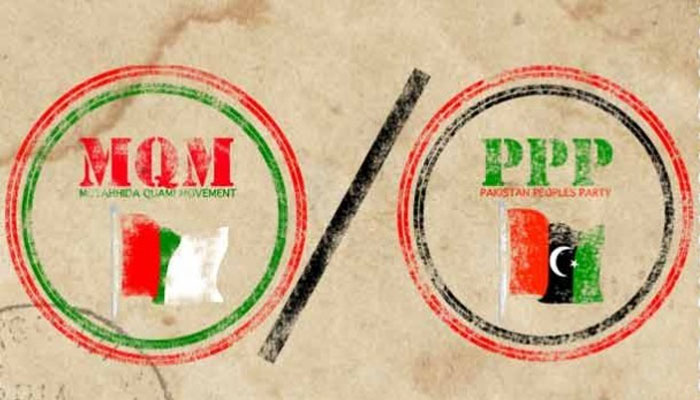
LAHORE: This is not the first time when Muttahida Qaumi Movement (MQM) and Pakistan People’s Party (PPP) are at daggers drawn with each other.
The latest MQM-led protests against the incumbent PPP regime in Sindh also forced some Pakistan Super League (PSL) franchises cancel their practice sessions Wednesday evening, just hours before the start of the professional Twenty20 Cricket league--hence irking the Pakistan Cricket Board, PSL, franchise owners and other stakeholders.
These two political entities have nourished a love-hate relationship with each other since December 1988, when MQM was pivotal in the formation of the Benazir Bhutto-led government by becoming its ally.
On December 16, 1988, or hardly a fortnight after Benazir was sworn-in as country’s premier, a partial curfew was ordered in Karachi after death toll from ethnic rioting had surged to 10.
However, the MQM left the coalition in October 1989 when differences developed after dozens were killed at an MQM congregation by Sindhi nationalists, and the alliance fell apart in the wake of ensuing violence.
The two parties again came together in July 2000, when a Nationality Accountability Bureau court had found MQM leader, Farooq Sattar.
In August 2002, however, Farooq Sattar had ruled out the possibility of any electoral alliance with the PPP. On October 12, 2002, after the PPP was unable to form a provincial government (following the split mandate from the October 2002 elections) without the cooperation of either the independent winners or the MQM, the late Benazir Bhutto said she did not rule out cooperation with Altaf Hussain’s political entity, provided the differences were set aside for the sake of a new beginning.
On October 29, 2002, PPP and MQM held negotiations and hence agreed to continue dialogue to form a coalition government in Sindh. It was in not-so-distant past when both MQM and the PPP had joined hands in both federal government and the Sindh Assembly after the February 2008 polls.
MQM left the federal cabinet and its members were extremely bitter against PPP’s Interior Minister in Sindh, Zulfiqar Mirza. On August 2, 2010, riots had started after the assassination of a parliamentarian Raza Haider, who was a member of MQM.
By August 3, 2010, at least 35 people were killed and on August 17, unidentified gunmen had killed the son of a prominent Shia cleric and three policemen in a series of targeted attacks. Delimitation of Karachi’s constituencies and target killings also remained the bone of contention between the two coalition partners throughout the 2008 to 2013 PPP regime and so did the National Reconciliation Order (NRO) issue.
The MQM had opposed the NRO in November 2009, while the PPP hierarchy had tried to legalise it by making it part of the constitution. The Reformed General Sales Tax issue had also proved an apple of discord between these two political entities. MQM had out rightly rejected this proposed tax and horns were locked.
Last but not least, when the then Sindh Home Minister, Zulfiqar Mirza, had accused the MQM of being involved in target killings. The MQM founder and his lieutenants were infuriated. They demanded immediate removal of Mirza and the MQM gave a 10-day deadline to the PPP government in this context.
Ultimately, MQM left the federal cabinet on December 27, 2010, but decided to sit on the treasury benches and support the government. Interestingly, this decision was reversed by MQM only five days later and its parliamentarians were seen requesting for seats on the opposition benches.
In October 2011, just hours after Chaudhry Shujaat Hussain’s Pakistan Muslim League-Q had announced that it would not be leaving the PPP-led ruling coalition (as was being widely speculated), the MQM said that it would rejoin the Treasury benches.
In February 2012, MQM quit the PPP-led Sindh and central governments.
In October 2012, when President Zardari had called on MQM founder in London, the two parties again affirmed that they would continue their uneasy alliance.
In February 2013, the MQM had yet again announced to quit the PPP government.
In June 2013, various PPP leaders had appeared optimistic in media about MQM joining the Sindh government.
On February 4, 2014, both MQM and PPP lawmakers were seen fighting on the Sindh Assembly floor.
And in January 2014, PPP had invited its former ally, the MQM, to rejoin the Sindh government.
In November 2014, MQM once again ended its short-lived coalition with the PPP in Sindh for the umpteenth time.







-
 Halsey's Fiance Avan Jogia Shares Rare Update On Wedding Planning
 -
 Instagram Head Adam Mosseri Says Users Cannot Be Clinically Addicted To App
 -
 James Van Der Beek Was Working On THIS Secret Project Before Death
 -
 Las Vegas Father Shoots Daughter's Boyfriend, Then Calls Police Himself
 -
 'Hunger Games' Star Jena Malone Shocks Fans With Huge Announcement
 -
 Ex-OpenAI Researcher Quits Over ChatGPT Ads
 -
 Prince William Criticized Over Indirect Epstein Connection
 -
 'Finding Her Edge' Creator Explains Likeness Between Show And Jane Austin Novel
 -
 Margot Robbie Delivers Sweet Message Ahead Of Valentine's Day
 -
 How AI Boyfriends Are Winning Hearts In China: Details Might Surprise You
 -
 Blake Lively Mocked Over 'dragons' After Latest Court Appearance
 -
 Gmail For Android Now Lets Users Create Labels On Mobile
 -
 Emma Slater Reveals Final Moments With James Van Der Beek Before His Death
 -
 Princess Kate Makes Surprise Visit To Support Mental Health Initiative
 -
 Reese Witherspoon Sparks Nostalgia With 'Green Sisters' Tribute To Jennifer Aniston
 -
 Royal Family Faces Fresh Crisis While Andrew's Controversy Refuses To Die