
Mixed signals in Ukraine crisis: Germany under fire
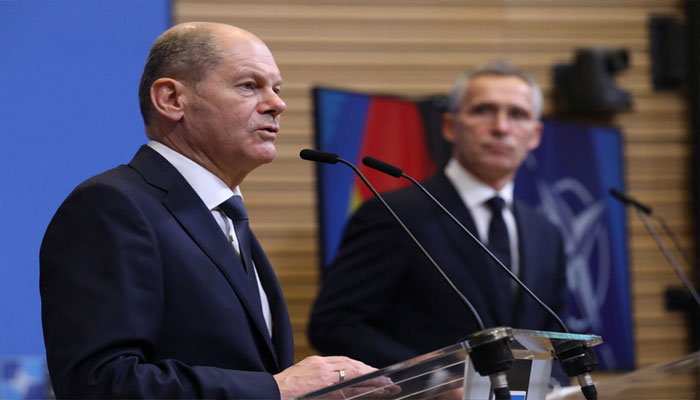
Germany’s new government is facing pressure to get tough on Russia, after a German navy chief’s pro-Moscow remarks angered Kyiv and exasperation grows with Berlin’s fence-sitting in the Ukraine crisis.
After a week of frantic diplomacy that included a visit to Berlin by US Secretary of State Antony Blinken, Chancellor Olaf Scholz’s government found itself scrambling at the weekend to reassure Kyiv of its support amid fears of a Russian invasion.
The spat was triggered by German navy chief Kay-Achim Schoenbach’s musings that it was "nonsense" to think Russia was about to march on Ukraine and that President Vladimir Putin deserves respect.
Schoenbach resigned late Saturday, but the damage was done. Ukraine’s Foreign Minister Dmytro Kuleba summoned the German ambassador and accused Germany of "encouraging" Putin to attack Ukraine.
Scholz on Sunday warned again of "high costs" should Russia attack, in an interview with the Sueddeutsche newspaper. But with trademark caution, he also called for "wisdom" in considering sanctions and "the consequences they would have for us".
The Ukraine crisis is the first major test for Social Democrat Scholz, who took over from veteran leader Angela Merkel last month. His coalition government of the centre-left SPD, the Greens and the pro-business FDP, has vowed "dialogue and toughness" with Russia.
But it has struggled to overcome internal divisions and craft a unified response on how to deal with an emboldened Moscow. The Handelsblatt financial daily, noting that German politicians’ tendency to "understand Russia" remains alive and well, asked: "Where is the line between a willingness to engage in dialogue, and strategic naivete?"
Scholz’s knack for dodging difficult questions was on display again on Sunday, when he was asked about Russian demands for a guarantee that Nato will not expand eastward. Such an expansion "is not at all on the agenda right now", Scholz replied.
A key bone of contention between Germany and Western allies is Berlin’s refusal to send weapons to Ukraine. The United States, Britain and Baltic states have already agreed to send weapons, including anti-tank and anti-aircraft missiles.







-
 Alix Earle And Tom Brady’s Relationship Status Revealed After Cosy Super Bowl 2026 Outing
 -
 Why King Charles Has ‘no Choice’ Over Andrew Problem
 -
 Shamed Andrew Wants ‘grand Coffin’ Despite Tainting Nation
 -
 Keke Palmer Reveals How Motherhood Prepared Her For 'The Burbs' Role
 -
 King Charles Charms Crowds During Lancashire Tour
 -
 ‘Disgraced’ Andrew Still Has Power To Shake King Charles’ Reign: Expert
 -
 Why Prince William Ground Breaking Saudi Tour Is Important
 -
 AOC Blasts Jake Paul Over Bad Bunny Slight: 'He Makes You Look Small'
 -
 At Least 53 Dead After Migrant Boat Capsizes Off Libya
 -
 'God Of War' Announces Casting Major Key Role In Prime Video Show
 -
 Real Reason Prince William, Kate Broke Silence On Andrew Scandal Revealed
 -
 Drew Barrymore Responds To 'Charlie's Angels' Costar's Comments About Her
 -
 Shakira Slips Hard On Stage During Life Show
 -
 King Charles Speaks Out Over Andrew's Scandal: 'Stand Ready To Help Police'
 -
 Dax Shepard Recalls Horrifying Accident That Almost Killed Him
 -
 Logan Paul's Bodyguard Hits Fan On Super Bowl Day