
To pre-empt US, China influence: Pakistan must put house in order, says experts
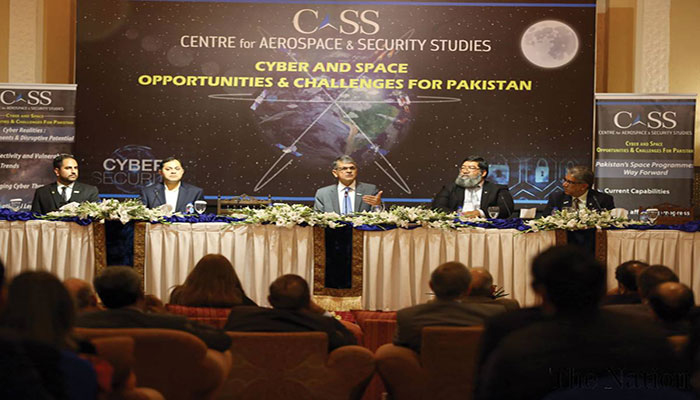
ISLAMABAD: Pakistan needs to put its own house in order, gradually reduce dependence on major powers and negotiate more astutely to protect its national interests in a changing world order.
This was stated by leading diplomats, former senior military officers and eminent intellectuals at a seminar on ‘The Future of Pak-US Relations: Challenges & Opportunities” organized by the Centre for Aerospace and Security Studies (CASS) here. Speakers included former Foreign Minister Ambassador Inam-ul-Haq, former Foreign Secretary and Director CASS Ambassador Jalil Abbas Jilani, former Federal Minister for Information and Broadcasting and Senator Javed Jabbar, Director CASS for Economic Affairs and National Development Dr Usman W. Chohan and Air Vice Marshal (retd) Shahzad Aslam Chaudhry.
It was chaired by President CASS Air Marshal (retd) Farhat Hussain Khan, while Syed Muhammad Ali, Director Nuclear & Strategic Affairs at the Centre, delivered the welcome remarks and moderated the event. Ambassador Inam-ul-Haq, while analyzing the emerging geopolitical dynamics and options for Pakistan, said that Pakistan’s options, amidst accelerating Sino-US strategic competition, depend upon its ability to set its own house in order, by building its economy and improving its governance.
He warned that Pakistan would come under pressure from both sides. He also advised that Pakistan should avoid advocating Afghan Taliban’s case in the world and argued that they have successfully negotiated with the United States in Doha and are capable of doing their diplomacy, so Pakistan should let them do it themselves. He further emphasized the need to focus on domestic social issues, including population control, education and health.
Former Senator Javed Jabbar discussed the socio-cultural dimension of Pak-US relations and stressed the need to significantly increase Pakistan’s very limited cultural outreach to help improve its international image.
Dr Usman W. Chohan analyzed the future of Pak-US economic relations and highlighted the importance of the US as the biggest export market for Pakistan and emphasized the need to improve ease of doing business and bolstering institutions to achieve sustainable growth.
He also recommended expanding Pakistan’s exports to reduce economic dependence on international financial institutions, which was increasingly becoming strangulating. Air Vice Marshal (retd) Shahzad Aslam Chaudhry, while reviewing the Pak-US security relations, said that Pakistan’s military has relied on a combination of high and medium tech platforms because of the country’s technology dependence on major powers. He argued that Pakistan should neither close doors for anyone, nor devise blocs or celebrate someone else’s victory.
Ambassador Jalil Abbas Jilani presented the way forward for Pak-US relations and was of the view that Pakistan was caught in the crossfire between the US-China rivalry and there was a growing fear that it may no longer be able to maintain the neutrality that it had so far carefully maintained.
He identified the evolving geostrategic environment, US-India strategic partnership, Indian lobbying and Pakistan’s close relations with China as key factors that were collectively influencing US policies towards Pakistan.
He lauded the growing role and influence of Pakistani diaspora in the United States and cautioned that Indian diaspora was now virtually a part of the US political system. President CASS Air Marshal (retd) Farhat Hussain Khan said that Pakistan has offered exceptional and unprecedented cooperation to help the US promote its geopolitical and geostrategic interests within South, Central and West Asia.
This cooperation had helped Pakistan develop its infrastructure, equip its military forces and receive financial assistance but it had also affected Pakistan’s internal security, damaged its social fabric, discouraged Foreign Direct Investment and made the country economically and militarily dependent.
He hoped that the future Pak-US relationship would be based on charting a course which respects the values, national interests and aspirations of both nations, facilitates greater trade and economic cooperation and also recognizes Pakistan’s security compulsions.







-
 Kanye West's Best Songs: Fans Argue Over Bold Top 10 Ranking On Social Media
 -
 King Charles Secretly Relies On Advice From THIS Royal
 -
 Jennifer Garner Reveals Beauty Choice She Makes As Botox Alternative In Her 50s
 -
 Kate Middleton Drops Four-word Message For Young Girl After Wales Visit
 -
 Shamed Andrew Uncensored ‘massages’ Should Be Refunded To Public
 -
 Kylie Kelce Reveals Rules She Wants Daughter Bennett To Learn At 3: No More 'passies'
 -
 Smartphone Market Set For Biggest-ever Decline In 2026
 -
 Mud, Rain, Loincloths: All About Japan’s 200-year-old Harvest Wrestling Ritual
 -
 Jonathan Majors Set To Make Explosive Comeback To Acting After 2023 Conviction
 -
 Next James Bond: Why Jacob Elordi May Never Get 007 Role?
 -
 Maddox Drops Pitt From Surname In Credits Of Angelina Jolie’s New Film 'Couture' Despite Truce From Father's End In Legal Battle
 -
 Meghan Markle Adds Diamonds To Engagement Ring For Jordan Trip
 -
 Burger King Launches AI Chatbot To Track Employee Politeness
 -
 Andrew’s Woes Amid King Charles’ Cancer Battle Triggers Harry Into Action For ‘stiff Upper Lip’ Type Dad
 -
 Experts Warn Andrew’s Legal Troubles In UK Could Be Far From Over
 -
 Teyana Taylor Reflects On Dreams Turning Into Reality Amid Major Score