
National amnesia
Eight years ago, on the morning of September 21, four young men, armed with automatic rifles and grenades charged into the Westgate Mall in the uptown Westlands district of the Kenyan capital Nairobi. They went on a rampage, killing 68 people and injuring hundreds more and sparking a traumatic four-day standoff with the Kenyan military.
What went on in the mall for those four days has remained a closely guarded state secret to date. Media investigations have shown that “the assault on the Westgate Mall lasted only a few hours, almost all of it taking place before Kenyan security forces even entered the building” and that by the time they did, “most of those who would escape had already escaped; most of those who would be wounded had already been struck; and most of those who would die were already dead”.
Yet, with the mall sealed off, for four days the country and the world were treated to an orchestrated performance of ‘fighting terror’ replete with confusing and contradictory government updates, regular explosions and bursts of gunfire, as well as tales of fictitious ‘hostage’ rescues and ‘terrorists’ burning mattresses. At the end of it all, the mall stood empty, cleaned out by the ‘rescuers’ who apparently had time, in between fighting terror, to have beers and break into shops.
Despite promises by President Uhuru Kenyatta, whose nephew was among those killed in the attack, to institute an official inquiry, none has materialised. Today the mall has been refurbished and is once again a site of bustling commerce.
There is little there to remind the many shoppers of what happened, except perhaps the increased security and improved access design. The only public memorial to the incident was built using private donations a year later nearly 7km away in a secluded section of the Karura Forest. The mall itself stands today as a monument to national amnesia, to forgetting and moving on.
Kenya has never been particularly good at remembering the past, especially when that past has the potential to embarrass and implicate the people in power. This is a legacy of its colonial upbringing. At independence in 1963, the British burned and looted official documents in a largely successful attempt to erase the systematic theft and sadistic brutality and violence that accompanied their ‘civilising mission’.
The political class that inherited the colonial state used it in much the same way the Brits had -- to enrich themselves and brutalise the natives.
Excerpted: ‘The Westgate Mall attack and ‘Kenya’s national amnesia’
Aljazeera.com







-
 Why Kate Middleton, Prince William Opt For ‘show Stopping Style’
 -
 Here's Why Leonardo DiCaprio Will Not Attend This Year's 'Actors Award' Despite Major Nomination
 -
 Ethan Hawke Reflects On Hollywood Success As Fifth Oscar Nomination Arrives
 -
 Tom Cruise Feeling Down In The Dumps Post A Series Of Failed Romances: Report
 -
 'The Pitt' Producer Reveals Why He Was Nervous For The New Ep Of Season Two
 -
 Maggie Gyllenhaal Gets Honest About Being Jealous Of Jake Gyllenhaal
 -
 'Bridgerton' Star Luke Thompson Gets Honest About Season Five
 -
 Prince William On Verge Of Breakdown Because Of 'disgraced' Andrew
 -
 Tig Notaro Reflects On Oscar Nod For 'Come See Me In The Good Light': 'I Was Sleeping'
 -
 Kenyon Sadiq Sets 40-yard Dash Record At NFL Scouting Combine, Eyes First Round
 -
 Talk Show Host Drops Hint About Taylor Swift, Travis Kelce Wedding Date
 -
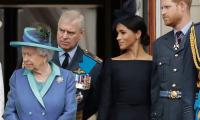 Andrew Scandal Brings New Worries For Prince Harry, Meghan Markle
 -
 King Charles Imposes New Restrictions On Ex-Prince Andrew In Surprise Move
 -
 Chris Hemsworth Reveals How Elsa Pataky Guides His Career Moves
 -
 Was Travis Barker In A Relationship With Kim Kardashian Before Marrying Her Sister?
 -
 Brad Pitt Feeling Down In The Dumps After Kids' Snubs As Pals Continue To Paint Angelina Jolie A Villain