
Stakeholders Rejection of EVM: Govt’s task to introduce equipment becomes tough
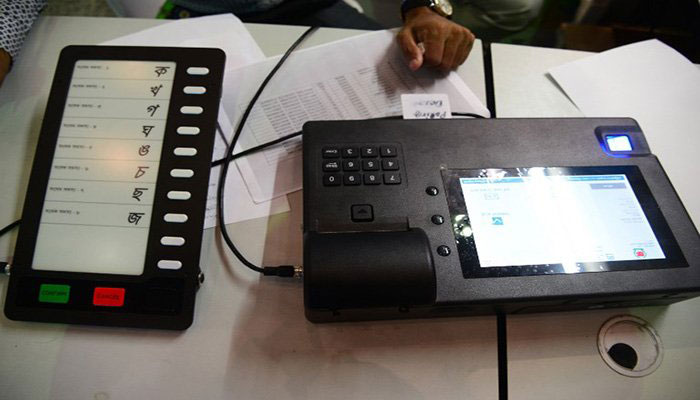
ISLAMABAD: The government faces an uphill task to introduce the electronic voting machines (EVMs) in the next parliamentary polls in the face of unqualified rejection of the apparatus not only by the Election Commission of Pakistan (ECP) but even the independent organisations and experts.
Only the Pakistan Tehreek-e-Insaf (PTI) ministers, who are members of the Senate standing committee on parliamentary affairs, supported the use of the EVMs while the MPs belonging to their allied parties, figuring in the panel, kept quiet during its important proceedings.
The government has given the impression that the process of consultations within the parliamentary forum was conclusive, and the committee has been asked to present its report in the Senate on or before September 12. This clearly shows that the government wants to push the amendments in the Elections Act through the Upper House of Parliament, and in case of their rejection, to present them in the joint sitting of the Senate and National Assembly where it hopes it will succeed in getting them passed.
What may have surprised the government was the universal dismissal of the EVMs as a suitable toll by all others, who are part of the parliamentary committee. Most significant was the briefing of two reputed expert bodies - Pakistan Institute of Legislative Development and Transparency (Pildat) and Free and Fair Election Network (Fafen). Former ECP Secretary Kanwar also raised doubts about the efficacy and transparency of the EVMs.
However, the government is apparently not bothered about the widespread rejection of the EVMs and is insistent upon introducing them in future elections. The EVM is the only matter on which Prime Minister Imran Khan has got maximum briefings and demonstrations over the past few months. President Dr Arif Alvi has consistently assisted the government in this campaign as he too had been calling the concerned officials and institutions for presentations on the EVM. But it seems that this extensively publicized narrative has not created too many takers.
The ECP under Chief Election Commissioner (CEC) Sikandar Sultan Raja is different from its predecessors. The previous ECP used to earn flak of political parties on the charge of electoral manipulation.
When the ECP had reviewed the government-sponsored amendments in the Elections Act, 2017, which had been passed by the National Assembly and are awaiting approval of the Senate, it had objected to 45 out of 72 proposed changes and made its stand public to bring it to the people's notice. It had pointed out which amendments were against the Constitution, which encroached upon its constitutionally mandated functions and powers and which were against the Elections Act. It had reached this conclusion after a thorough study of the electoral reforms package.
Same has happened in the case of EVMs. Again, the ECP experts had a very close look at the possible use of these machines and came out with their objections in black and white. "It is nearly impossible to ensure that every machine is honest," the ECP stated and cited issues including lack of ballot secrecy, lack of capacity at all levels and lack of ensuring security and chain of custody for the machines at rest and during transportation. "There would be no evidence available in case of election dispute. Data integration and configuration issues may crop up due to court orders at the eleventh hour regarding a change in ballot paper."
Pildat president Ahmed Bilal Mehboob articulated the view that it would not be appropriate to introduce EVM in haste, in the absence of a consensus. "The EVM would be susceptible to manipulation through radio device and fall short to address the issues of counting of votes and transmission of results. It is not foolproof and there is a room for manipulation of results. Any hacking of the system would have potential to influence the polls."
The Fafen representative opined that it was unclear whether the ECP could procure machines that include facility of voter authentication and verification and that such technology could compromise a voter's secrecy and his choice might be tracked.







-
 Dua Lipa Wishes Her 'always And Forever' Callum Turner Happy Birthday
 -
 Police Dressed As Money Heist, Captain America Raid Mobile Theft At Carnival
 -
 Winter Olympics 2026: Top Contenders Poised To Win Gold In Women’s Figure Skating
 -
 Inside The Moment King Charles Put Prince William In His Place For Speaking Against Andrew
 -
 Will AI Take Your Job After Graduation? Here’s What Research Really Says
 -
 California Cop Accused Of Using Bogus 911 Calls To Reach Ex-partner
 -
 AI Film School Trains Hollywood's Next Generation Of Filmmakers
 -
 Royal Expert Claims Meghan Markle Is 'running Out Of Friends'
 -
 Bruno Mars' Valentine's Day Surprise Labelled 'classy Promo Move'
 -
 Ed Sheeran Shares His Trick Of Turning Bad Memories Into Happy Ones
 -
 Teyana Taylor Reflects On Her Friendship With Julia Roberts
 -
 Bright Green Comet C/2024 E1 Nears Closest Approach Before Leaving Solar System
 -
 Meghan Markle Warns Prince Harry As Royal Family Lands In 'biggest Crises' Since Death Of Princess Diana
 -
 Elon Musk Weighs Parenthood Against AI Boom, Sparking Public Debate
 -
 'Elderly' Nanny Arrested By ICE Outside Employer's Home, Freed After Judge's Order
 -
 Keke Palmer On Managing Growing Career With 2-year-old Son: 'It's A Lot'