
Parliamentary proceedings can’t be challenged in court, IHC told
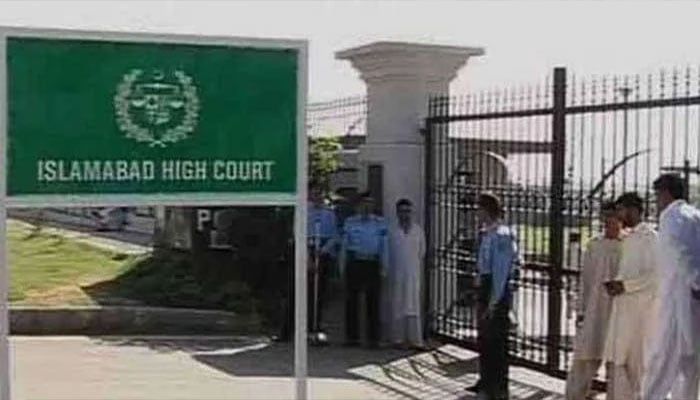
ISLAMABAD: Any decision associated with parliamentary proceedings could not be challenged in the court, Senate Chairman Sadiq Sanjrani's lawyer argued before the Islamabad High Court (IHC) in the Senate election case.
A two-judge bench comprising Justice Aamer Farooq and Justice Tariq Mehmood Jahangiri heard the plea of the Pakistan People's Party (PPP) Senator Syed Yusuf Raza Gilani who had challenged the rejection of his seven votes by the presiding officer in elections for the Senate chairman.
Barrister Ali Zafar pleaded that the powers of Parliament, its officers, committees and members could not be challenged under the law. He said only a single party had challenged the decision of the presiding officer. He said parliamentary or any of its committee's decision could only be discussed in the House.
Justice Aamer Farooq inquired the counsel that in case of any clash between the members of Parliament, either they could register a first information report (FIR) against each other. To this, Barrister Ali Zafar said an FIR could only be registered if anyone was killed in the fight.
Quoting another country's precedence of a quarrel in Parliament, he said the Parliament served a contempt notice to lawyers who challenged the parliamentary violence in the court. He said English courts also treated the parliamentary proceedings as their inner subject. The courts could not interfere directly or indirectly in the affairs of parliament, he contended. The lawyer said Pakistan's Parliament had the same privilege as the British Parliament kept.
Justice Aamer Farooq said traditions were also followed in several matters in Britain. Barrister Ali Zafar said the basic affairs here were similar to the British Parliament. His arguments were based on three points including freedom of expression, sovereignty and powers of Parliament and its members, he said, adding that the institution could not be strengthened without these basic points. He said the House had freedom of expression under Article 66(1) and it had powers to make rules for regulating its procedure and the conduct of its business under Article 67. He said neither a parliamentary matter could be challenged in any court under Article 68 of the Constitution nor the court could raise question on the parliamentary proceedings under Article 69.
The Senate chairman's lawyer said Article 66 also mentioned the privilege of parliamentary members. The 66(1) stated that the speech or vote of any member also could not be challenged in courts. The Constitution had drawn a clear line regarding the powers of Parliament and courts, he said. The court instructed the lawyer to conclude his arguments on the next hearing and adjourned the case till August 10.







-
 John F. Kennedy Jr. Wife Carolyn Bessette's Last Minute Bridal Crisis Revealed
 -
 Mary Cosby Remembers Son Robert Cosby Jr. After His Tragic Death
 -
 Prince Harry, Meghan Markle Face 'largely Unfair' Criticism After Jordan Trip
 -
 Priscilla Presley Makes Sweet Confession About TV Role: 'I Lied'
 -
 Prince Harry Feels 'hurt' For Archie, Lilibet
 -
 Keith Urban, Nicole Kidman's Daughters Choose One Parent To Side With
 -
 Sarah Ferguson's Hidden Trait Exposed As Expert Dismantles Shadow Side To Her Personality
 -
 Sarah Ferguson Backed By Powerful Friends Amid Epstein Fallout
 -
 PINK’s Latest Move Sparks Speculations About Replacing Major Celebrity On Show
 -
 Planetary Parade 2026: Here's How To See Six Planets Aligning Today
 -
 Christopher Nolan Reveals Why He's A Fan Of 'Fast & Furious' Movies
 -
 Ben Affleck Unable To Accept A New Lover Post Jennifer Lopez Divorce As He Still Grieves End Of Bennifer 2.0
 -
 Why Is Demi Moore Being Called Ozempic Victim?
 -
 Kaley Cuoco Makes Honest Comparison Of 'Big Bang Theory' And 'Charmed' Gigs
 -
 Robert Picardo Shares Surprising Reaction On Returning To The 'Star Trek' Franchise
 -
 AI Feud Deepens As Musk Targets OpenAI Over Safety Concerns