
Sindh finally criminalises corporal punishment at schools, workplaces
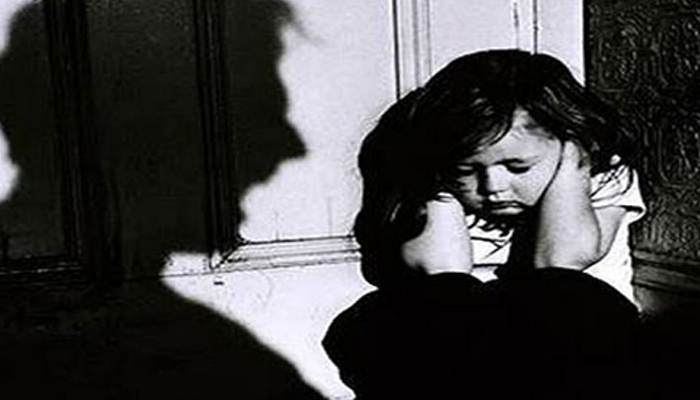
Under the Sindh Prohibition of Corporal Punishment Act 2016, the provincial government has criminalised corporal punishment, mental torture and abuse of children at schools, madrasas and workplaces.
The school education & literacy department had notified the rules of the act on Monday, banning every kind of physical and mental violence against children. According to the rules, educational institutes are to ensure the protection and safety of their students. They are to also take every possible measure to protect and prevent the children under their care from physical punishment, mental torture and abuse.
The rules state that no student must be harmed physically, mentally or emotionally, or be subjected to abuse by any person employed in the institution, which may affect the mental or physical growth of the student.
Protection committees
The law binds educational institutions to form at least one child protection committee to strictly implement the rules. The committee is to include the head of the institute, representatives of the departments regulating educational institutions, and parents or guardians of students.
The committee is to investigate every complaint about violence against students, protect the affected children, and provide every possible emotional, psychological, physical and mental support needed.
The body is to also identify the requirements to keep students safe in consultation with the district coordination committee. Along with maintaining a proper record, the committee is to organise awareness sessions for children to provide them with information about their rights and the prohibition of corporal punishment.
How to file complaints
Parents, children or anyone can submit an application to register a complaint with the child protection committee, which is to consider anonymous complaints of physical punishment, mental torture and abuse.
The education department will maintain an online complaint procedure through its website, and post all the laws, rules, reports, instructions and other documents related to corporal punishment.
After receiving a complaint, the committee’s head is to share it with the other members of the body, following which they are to open an investigation to decide the complaint within 15 days. After recording their findings and decision, the committee is to refer the case to the relevant department for necessary action.
If the body reaches no conclusion or fails to find a relevant clause in the act, it is to immediately inform the police, child helpline 1121 or the relevant child protection officer of the Sindh Child Protection Authority.
Confidential probes
The notified rules state that every investigation must be conducted in a manner that protects the identity of the student and maintains the integrity of the procedure. If any child, who has been subjected to physical or mental violence, needs protection and safe accommodation, the social welfare department and its child protection units will make arrangements for them.
Punishment for offence
Any person who abets, attempts, incites, assists or directly commits an act of violence against children will be punished in accordance with sections 334 and 336 of the Pakistan Penal Code. Section 334 states that whoever commits an action with the intention to cause hurt to anyone will be punished with qisas. And if the qisas is not executable, keeping in view the principles of equality, the offender will be punished with imprisonment for a term that may extend to 10 years.
Section 336 states that whoever causes hurt by a corrosive substance will be punished with imprisonment for life or imprisonment that will not be less than 14 years and a minimum fine of Rs1 million.
On repeating the offence, the offender who has been punished once under the act will be liable to additional punishment and fine as determined by the court of competent jurisdiction. The fine recovered from the offenders will be realised by the parent or guardian, who will be bound to use the amount for the rehabilitation of the victim. However, for any dispute that arises with regard to the interpretation of the rules, the orders of the minister or adviser concerned will be final.







-
 Victoria Wood's Battle With Insecurities Exposed After Her Death
 -
 Prince Harry Lands Meghan Markle In Fresh Trouble Amid 'emotional' Distance In Marriage
 -
 Goldman Sachs’ Top Lawyer Resigns Over Epstein Connections
 -
 How Kim Kardashian Made Her Psoriasis ‘almost’ Disappear
 -
 Gemini AI: How Hackers Attempt To Extract And Replicate Model Capabilities With Prompts?
 -
 Palace Reacts To Shocking Reports Of King Charles Funding Andrew’s £12m Settlement
 -
 Megan Fox 'horrified' After Ex-Machine Gun Kelly's 'risky Behavior' Comes To Light
 -
 Prince William's True Feelings For Sarah Ferguson Exposed Amid Epstein Scandal
 -
 Nick Jonas Gets Candid About His Type 1 Diabetes Diagnosis
 -
 King Charles Sees Environmental Documentary As Defining Project Of His Reign
 -
 James Van Der Beek Asked Fans To Pay Attention To THIS Symptom Before His Death
 -
 Portugal Joins European Wave Of Social Media Bans For Under-16s
 -
 Margaret Qualley Recalls Early Days Of Acting Career: 'I Was Scared'
 -
 Sir Jackie Stewart’s Son Advocates For Dementia Patients
 -
 Google Docs Rolls Out Gemini Powered Audio Summaries
 -
 Breaking: 2 Dead Several Injured In South Carolina State University Shooting