
‘Pfizer vaccine distribution to provinces, federating units begins’
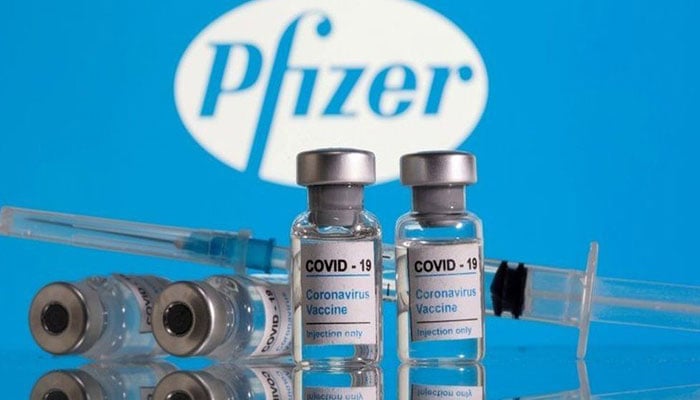
KARACHI: The federal health authorities on Tuesday started distribution of Pfizer-BioNTech’s Covid-19 mRNA vaccine to the provinces and federating units with clear directives to administer the vaccine to immunocompromised people only.
“The distribution of Pfizer’s Covid-19 vaccine to the provinces and federating units has started. It would only be administered to the immunocompromised people only at the moment due to limited supplies,” Special Assistant to Prime Minister (SAPM) on Health Dr Faisal Sultan told The News.
Pakistan received 106,000 doses of Pfizer’s Covid-19 vaccine through COVAX a couple of weeks back but due to its high demand and pressure from different quarters, the vaccine remained stored at the Ultra Cold Chain (UCC) Refrigerators in Islamabad for distribution to the provinces.
Officials at the National Health Services, Regulations and Coordination (NHS,R&C) said 51,000 doses of Pfizer’s Covid-19 vaccine have been provided to the provinces and federating units.
“Punjab was provided 26,000 doses of the mRNA vaccine, Sindh received 12,000 doses, Khyber Pakhtunkhwa got 8,000 doses while Balochistan got 2,000 doses of the vaccine. The Islamabad Capital Territory (ICT), Gilgit-Baltistan and Azad Jammu Kashmir (AJK) will get 1,000 doses each,” the NHS official added.
As per utilisation instructions, the mRNA vaccine would only be administered to people with impaired immune systems and such people should provide medical documents during screening and verification.
“The decision to administer the vaccine to immunocompromised people has been taken only in view of limited availability of the Pfizer vaccine. Guidelines to be revised as soon as further supplies arrive, including bilateral procurement,” the official said, adding Pakistan is initially planning to procure 1 million doses of the Pfizer vaccine directly from the manufacturer through NDMA.
According to the interim guidelines issued by the federal health authorities, individuals aged 18 years and older who are clinically extremely vulnerable (CEV)2 being at a high risk of severe illness from Covid-19, who have not received other currently available Covid-19 vaccines are eligible for Pfizer-BioNTech vaccine.
“These include Solid Organ Transplant (SOT) recipients, pre-transplant patients, complete vaccine course at least two weeks prior to transplantation if possible. Post-transplant patients may receive vaccine 1 month after transplantation.
No adjustment of immunosuppressive medications required prior to vaccination,” the guidelines say. Similarly, Hematopoietic Stem Cell Transplant (HSCT) recipients and those being planned for HSCT and those suffering from Primary Immune Deficiency Diseases (PIDDS) are also eligible to get the vaccine while immunosuppression due to disease or treatment, including patients undergoing chemotherapy leading to immunosuppression, patients undergoing radical radiotherapy, HIV infection at all stages and multiple myeloma, can also get the vaccine.
Individuals who are receiving immunosuppressive or immunomodulating biological therapy, including, but not limited to, anti-TNF, alemtuzumab, ofatumumab, rituximab, patients receiving protein kinase inhibitors or PARP inhibitors, and individuals treated with steroid sparing agents such as cyclophosphamide and mycophenolate mofetil, are also eligible for getting the mRNA vaccine.
The guidelines further state that individuals treated with or likely to be treated with systemic steroids for more than a month at a dose equivalent to prednisolone at 20mg or more per day for adults (if they have not received other currently available vaccines) can also get the mRNA vaccine7.
“Women who are pregnant and lactating, falling under all above listed categories can also receive PfizerBioNTech Vaccine,” the guidelines further said.
As per the interim guidelines, individuals having fever at the time of coming for vaccination (can be rescheduled after the illness is settled) and those patients with active Covid-19 should not receive the vaccine but those with mild Covid-19 can receive the vaccine once the isolation period complete. Similarly, those with severe Covid-19 can receive the vaccine once they become stable while those who have already received any other Covid-19 vaccine regardless of CEV or antibody levels should not get the vaccine. Individuals with history of severe allergic reaction (anaphylaxis) or an immediate allergic reaction, even if it was not severe, to any ingredient in an mRNA Covid-19 vaccine (such as polyethylene glycol) or to first dose of an mRNA Covid-19 vaccine, should not get the mRNA vaccine, the guideline stated.







-
 Marc Anthony On Why Bad Bunny’s Super Bowl Show Mattered
 -
 Kid Rock Gets Honest About Bad Bunny’s Performance At Super Bowl
 -
 Kylie Jenner Reveals Real Story Behind Her 'The Moment' Casting
 -
 Halsey Marks Fiancé Avan Jogia's Birthday With Emotional Note
 -
 China: Stunning Drone Show Lights Up Night Sky Ahead Of Spring Festival 2026
 -
 Andrew's Epstein Scandal: Will King Charles Abdicate Following King Edward's Footsteps?
 -
 Billy Joel Leaves Loved Ones Worried With His 'dangerous' Comeback
 -
 Prince William Dodges Humiliating Question In Saudi Arabia
 -
 Dax Shepard Describes 'peaceful' Feeling During Near-fatal Crash
 -
 Steve Martin Says THIS Film Has His Most Funny Scene
 -
 Kensington Palace Shares Update As Prince William Continues Saudi Arabia Visit
 -
 Fugitive Crypto Scammer Jailed For 20 Years In $73m Global Fraud
 -
 Will Andrew Mountbatten-Windsor Finally Go To Jail Now That King Charles Has Spoken Out? Expert Answers
 -
 Melissa McCarthy Reveals Her Tried And Tested ‘corpse’ Night Time Routine That’s Lost Her 95lbs
 -
 Horrifying Pictures Of The Kidnapper Of Savannah Guthrie's Mother Released
 -
 Andrew's Ex-girlfriend Launches Brazen Attack On Epstein Victims On Piers Morgan Show