
Indian variant becomes global threat
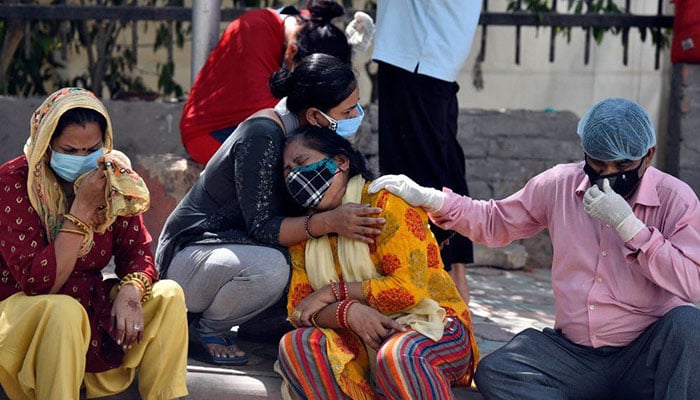
GENEVA: The World Health Organisation (WHO) had announced that it reclassifying the highly contagious triple-mutant Covid variant in India as a “variant of concern,” indicating that it’s become a global health threat, foreign media reported on Tuesday.
The announcement was made by WHO lead COVID-19 scientist, Maria van Kerkhove, who said, "There is some available information to suggest increased transmissibility of the B.1.617." She also said that this new variant is not the only one circulating in India, noting that the British B.1.1.7 variant, which has been shown to have increased transmissibility, is also present there.
Will vaccines still work on the new Indian variant? After noting that the Indian variant may be more resistant to vaccines, the US epidemiologist said, "as such, we are classifying this as a variant of concern at the global level." She said the variant had already spread to other countries outside India.
Van Kerkhove promised more information on Tuesday, when the WHO presents its weekly epidemiological update, though she said "we don't have anything to suggest that our diagnostics or therapeutics and our vaccines don't work."
WHO Chief Scientist Soumya Swaminathan said there was no data on the impact of the variant on diagnostics, therapeutics or vaccine effectiveness. However, it was "more transmissible, based on which it is a VOC."
Observers fear that the variant may be what is driving India's skyrocketing infection and death rates, though van Kerkhove said a number of other factors were at work, including "social mixing and the relaxation of some public health and social measures."
On Monday, health authorities in the South Asian country reported 370,000 new coronavirus infections and 3,700 deaths. The virus has utterly overwhelmed India's health system and experts say the actual numbers are likely far higher.
What is a variant of concern?
Variants of concern are those considered more dangerous than the original form of the virus first seen in China in late 2019. That danger stems from a variant's higher transmissibility, lethality and resistance to vaccines. The Indian variant will now join the Brazilian, British and South African mutations also classified as being "of concern" by the global health authority.
Experts fear that as the virus continues to spread it will seek ideal conditions and continue to mutate. "We will continue to see variants of concern around the world and we must do everything that we can to really limit the spread," van Kerkhove said.
The WHO says that although most regions around the world are currently registering fewer infections, South Asia and Southeast Asia are experiencing dramatic increases.







-
 ChatGPT Caricature Prompts Are Going Viral. Here’s List You Must Try
 -
 James Pearce Jr. Arrested In Florida After Alleged Domestic Dispute, Falcons Respond
 -
 Cavaliers Vs Kings: James Harden Shines Late In Cleveland Debut Win
 -
 2026 Winter Olympics Snowboarding: Su Yiming Wins Bronze And Completes Medal Set
 -
 Trump Hosts Honduran President Nasry Asfura At Mar-a-Lago To Discuss Trade, Security
 -
 Cuba-Canada Travel Advisory Raises Concerns As Visitor Numbers Decline
 -
 Anthropic Buys 'Super Bowl' Ads To Slam OpenAI’s ChatGPT Ad Strategy
 -
 Prevent Cancer With These Simple Lifestyle Changes
 -
 Air Canada Flight Diverted St John's With 368 Passengers After Onboard Incident
 -
 Experts Reveal Keto Diet As Key To Treating Depression
 -
 Inter Miami Vs Barcelona SC Recap As Messi Shines With Goal And Assist
 -
 David Beckham Pays Tribute To Estranged Son Brooklyn Amid Ongoing Family Rift
 -
 Jailton Almeida Speaks Out After UFC Controversy And Short Notice Fight Booking
 -
 Extreme Cold Warning Issued As Blizzard Hits Southern Ontario Including Toronto
 -
 Lana Del Rey Announces New Single Co-written With Husband Jeremy Dufrene
 -
 Ukraine-Russia Talks Heat Up As Zelenskyy Warns Of US Pressure Before Elections