
Farmers block trains in northern India
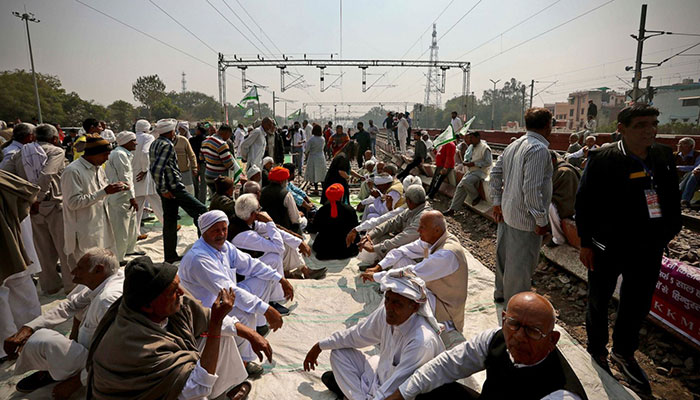
NEW DELHI: Thousands of protesting farmers blocked trains on Thursday by sitting on railroad tracks in parts of northern India to press their demand for the repeal of new agricultural reform laws that have triggered months of massive protests.
Samyukta Kisan Morcha, or Joint Farmers’ Front, organised four-hour blockades of trains at two dozen locations. Television showed protesters sitting on railroad tracks in Hapur, Modinagar, Kurukshetra and several other places in Haryana, Punjab and Uttar Pradesh states. Railroad authorities halted train movements in the affected areas.
Authorities deployed thousands of security forces at railroad stations and tracks to prevent any violence. The protesters carried banners and flags denouncing the three laws approved by Parliament in September, which they say will leave them poorer and at the mercy of corporations.
“The farmers have decided that the struggle to get these three laws repealed is connected to our lives, connected to our future, connected to our children and connected to our daily bread. Either we will survive, and our assets will survive, or the country won’t be able to get by as they will not get anything to eat,” said Hari Prakash, a 70-year-old farmer who was blocking a track on the outskirts of New Delhi.
Rakesh Tikait, a farmer leader, said they will not end their protests until the government repeals the laws. The protests turned violent on Jan. 26, India’s Republic Day, when a group of farmers riding tractors stormed the 17th century Red Fort in New Delhi.
Hundreds of police officers and scores of farmers were injured and one protester died. Tens of thousands of farmers have been camping on the outskirts of New Delhi since November. Eleven rounds of talks between the farmers and Agriculture Minister Narendra Singh Tomar have failed to produce any breakthroughs.
The government says the laws are necessary to modernize Indian agriculture. It has offered to delay their implementation for 18 months to deal with farmer objections. That’s not acceptable to the farmers, who are demanding their repeal.
The farmers believe the legislation will devastate their earnings by ending guaranteed prices for wheat and rice and force them to sell to powerful corporations at cheaper prices.
Tomar said the laws will lead to more private investment in agriculture and raise earnings by setting up warehouses where farmers can store crops and sell them when prices are favorable.







-
 Columbia University Sacks Staff Over Epstein Partner's ‘backdoor’ Admission
 -
 Ozzy Osbourne's Family Struggles Behind Closed Doors
 -
 Dua Lipa Claims Long-distance Relationship 'never Stops Being Hard'
 -
 BTS Moments Of Taylor Swift's 'Opalite' Music Video Unvieled: See Photos
 -
 Robin Windsor's Death: Kate Beckinsale Says It Was Preventable Tragedy
 -
 Rachel Zoe Shares Update On Her Divorce From Rodger Berman
 -
 Kim Kardashian Officially Takes Major Step In Romance With New Boyfriend Lewis Hamilton
 -
 YouTube Tests Limiting ‘All’ Notifications For Inactive Channel Subscribers
 -
 'Isolated And Humiliated' Andrew Sparks New Fears At Palace
 -
 Google Tests Refreshed Live Updates UI Ahead Of Android 17
 -
 Ohio Daycare Worker 'stole $150k In Payroll Scam', Nearly Bankrupting Nursery
 -
 Michelle Yeoh Gets Honest About 'struggle' Of Asian Representation In Hollywood
 -
 Slovak Fugitive Caught At Milano-Cortina Olympics To Watch Hockey
 -
 King Charles Receives Exciting News About Reunion With Archie, Lilibet
 -
 Nvidia Expands AI Infrastructure With Nevada Data Centre Lease
 -
 Royal Family Shares Princess Anne's Photos From Winter Olympics 2026