
‘Let’s admit separation of East Pakistan was due to our fault’
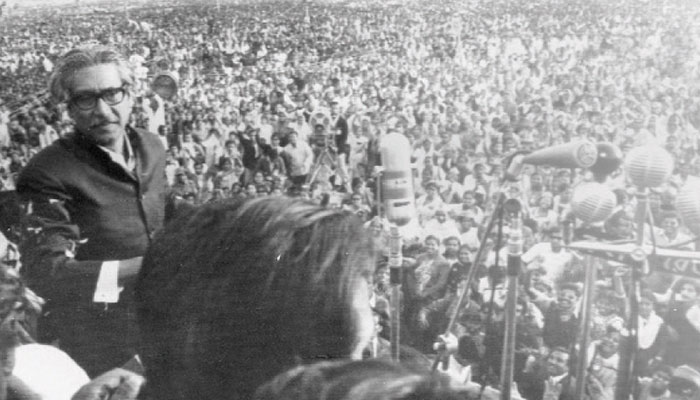
This is high time we admitted that the separation of East Pakistan in 1971 was due to our fault. Historian Dr Mubarak Ali said this on Thursday as he spoke at an online talk on Brig (retd) AR Siddiqui’s recent book on former president Yahya Khan, titled ‘General Agha Mohammad Yahya Khan: The Rise and Fall of a Soldier’. He said Bangladesh got independence on December 16, 1971, and we should call that day independence of Bangladesh rather than Fall of Dhaka.
The talk was moderated by academic Prof Dr Riaz Shaikh. He said Yahya was a major character in the incidents that led to the separation of East Pakistan, but not many books had been written on him. He praised Brig (retd) Siddiqui for writing on the former president.
The author, who retired from the army in 1973, shed light on the fights in Kashmir just after Partition. He remarked that we called that fight Jihad; however, it was led at that time by British officers. He recalled that after Partition, the air force and the navy of Pakistan were called Royal Pakistan Air Force and Royal Pakistan Navy.
The author then described events that led to the 1965 war and his account was quite different from what is generally taught in our textbooks. Discussing the 1971 war, he said it was something avoidable.
International relations expert Dr Huma Baqai, who wrote the preface to the book, commented that the book not only provided knowledge about Yahya and the 1971 debacle but also provided insight into the conflict that Pakistan had with itself since its creation.
She remarked that the book reminded us how the country had repeatedly suffered a leadership crisis. Yahya was not a leader and definitely not someone who could lead in the time of crisis, she remarked.
Former bureaucrat Tasneem Siddiqui, who served in East Pakistan, highlighted how we failed Bengalis multiple times. He said Bengalis were at the forefront in the creation of Pakistan as they had been exploited by the British and they thought their welfare was tied with the creation of Pakistan.
He particularly criticised Ayub Khan’s era that is often called the decade of development. No development took place in East Pakistan during Ayub’s era, he said. He recalled that he was in Dhaka when Yahya postponed the first session of the new elected parliament scheduled for March 3, 1971, and how disappointed the people of East Pakistan were due to that.
Tasneem said Ayub used a derogative term for Bengalis in his book, which showed how much he detested them. He lamented that our attitude forced Bengalis to break away in spite of the fact that they used to celebrate August 14 with more passion than the people of West Pakistan.
Academic Durriya Kazi praised the author for his style, saying that his style of narration makes the readers feel that they are present in that time and witnessing the events themselves.







-
 Mexico’s President Considers Legal Action Over Elon Musk Cartel Remark
 -
 Prince William Hits The Roof With The Andrew Saga Bleeding Into Earthshot
 -
 HBO Gives Major Update About 'Industry' Season Five And Show's End
 -
 Donnie Wahlberg Responds To 'Boston Blue' Backlash: 'Nobody Was More Disappointed Than Me'
 -
 Jennifer Garner Gets Emotional Over Humble Career Start: 'It Makes Me Want To Cry'
 -
 Princess Beatrice Told An Acquaintance That She ‘likes’ Jeffrey Epstein: Grim Verdict Drops
 -
 Late Katherine Short's Neighbours Give Insights Into Her 'peace Loving' Personality Post Suicide
 -
 Fresh Details Of King Charles, Queen Camilla's US Visit Emerge Amid Andrew Investigation
 -
 Iran 'set To Buy' Chinese Carrier-killer Missiles As US Forces Gather In Region
 -
 Prince Harry And Meghan Unlikely To Meet Royals In Jordan
 -
 Hero Fiennes Tiffin Shares Life-changing Advice He Received From Henry Cavill
 -
 Savannah Guthrie's Fans Receive Disappointing News
 -
 Prince William Steps Out For First Solo Outing After Andrew's Arrest
 -
 Jake Paul Chooses Silence As Van Damme Once Again Challenges Him To Fight
 -
 Google Disrupts Chinese-linked Hacking Groups Behind Global Cyber Attacks
 -
 Four People Killed In Stabbing Rampage At Washington Home