
Sacked IHC judge requests Supreme Court to decide his case before retirement
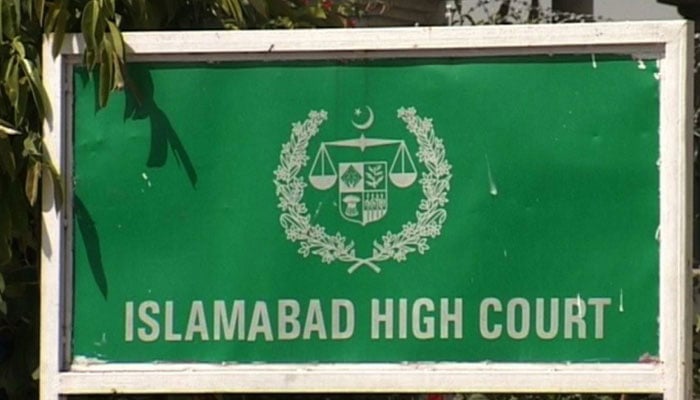
ISLAMABAD: The Supreme Court was requested on Wednesday to decide the petition challenging the notification of president of Pakistan terminating the services of Shaukat Aziz Siddiqui, former Judge of the Islamabad High Court (IHC), before his retirement due next year in June.
A five-member bench of the apex court, headed by Justice Umar Ata Bandial, heard the petition of former judge of Islamabad High Court Justice Shaukat Azizi Siddiqui. Hamid Khan, counsel for the sacked judge of Islamabad High Court (IHC), requested the court that the petitioner was going to retire next year in June, therefore, his instant petition may be decided on merit before his retirement. Justice Umar Ata Bandial observed that the instant case was very important and the court will look into the request of the learned counsel and will decide the matter on merit.
Justice Siddiui had challenged before the apex court, the decision of the Supreme Judicial Council (SJC), recommending his removal for misconduct as well as notification of the government issued on October 11, 2018, terminating his service.
During the course of proceedings on Wednesday, Rashid A Razvi, counsel for the Karachi Bar Association, and Salahuddin, counsel for Islamabad High Court Bar Association, also appeared before the court and requested for clubbing their instant petitions with the matter in hand. Razvi informed the court that he had also filed a petition challenging the president’s notification, however, it was not yet fixed for hearing with the main petition. The court, however, informed the learned counsel that the registrar’s office had raised objections over his petition.
Justice Ijazul Ahsen, another member of the bench, drew the attention of the learned counsel to the letter forwarded to him through Advocate-on-Record (AOR) intimating him about the objections raised by the registrar’s office on his petition after which he did not file the amended petition. Justice Ahsen also read out the letter and pointed out to Rashid A Razvi, pages and paragraphs on which objections were raised. Rashid A Razvi, however, contended that he went to the registrar’s office and asked for handing over the copy of the registrar’s objections, however, he was not given.
Similarly, Salahuddin, counsel for Islamabad Bar Association, informed the court that he had also filed an amended petition in response to the objections raised by the registrar’s office; however, it was neither fixed nor clubbed with the main case. Justice Ijazul Ahsen observed that in accordance with the objections of the registrar’s office, the learned counsel had used tough and scandalous language. Salahuddin, however, submitted that he had filed an amended petition in this regard and prayed the court to fix it with the main petition.
Meanwhile, the court directed its office to issue a letter to Rashid A Razvi for filing an amended petition and if the amended petition was found to be satisfactory, it be clubbed and fixed with the main petition. The court also directed its office to examine the amended petition filed by the Islamabad Bar Association and if found satisfactory, it should also be fixed and clubbed with the main petition.
In his amended petition, Salahuddin, counsel for the Islamabad Bar Association, had contended that the allegations made by a sitting High Court judge about manipulation of judicial proceedings by the intelligence outfit deserved a proper factual inquiry.
“In particular, such inquiry (entailing full-fledged trial) was imperative where the allegations were made in writing specially naming high-ranking military officers of whom two were said to have personally visited a High Court judge (in the presence of witnesses) to seek cooperation in judicial matters,” he had submitted.
The Islamabad Bar Association counsel further contended that after refusing to enter into inquiry regarding the correctness of the allegations of Respondent No 3 and refusing him the opportunity to prove the same, the Supreme Judicial Council could not have, thereafter, faulted him for making unsubstantiated allegations. “The very purpose behind the Article 209 of the Constitution is to ensure that the stream of justice is unsullied and public confidence in the judicial institution remains intact,” the counsel submitted. However, he contended that the manner of Respondent No 3’s removal from office without bothering to hold a full-fledged inquiry has actually strengthened the perception (whether justified or not) that intelligence agencies exercise great influence over the judiciary and have destroyed public confidence in the judiciary.
Meanwhile, Hamid Khan, counsel for the sacked judge of Islamabad High Court, sought an adjournment for a week. Justice Umar Ata Bandial, however, observed that when big cases come to the court and when benches are constituted having members more than three, then routine cases of the apex court are affected, that’s why they always try to decide the cases as soon as possible so that other cases may not be affected.
“We will be hearing you in detail and hope that we learn more from you as well,” Justice Bandial told Hamid Khan adding that they know that the legal fraternity is playing its effective role in the supremacy of the Constitution and the rule of law. Meanwhile, the court adjourned the hearing for the next year in January.
On the previous hearing, the court had directed counsel of sacked judge of Islamabad High Court (IHC) Justice Shaukat Aziz Siddiqui to address the Article-211 of the Constitution that clipped the jurisdiction of challenging the proceedings of the Supreme Judicial Council (SJC) in any court of law. The said article relates to bar jurisdiction which says that the proceedings before the Council, its report to the President and the removal of a judge under Clause 6 of Article 209 shall not be called in question in any court. “There is a bar of Article 211 of the Constitution that stipulates that the proceedings of the SJC as well as it report cannot be challenged in any court of law”, Justice Umar Ata Bandial had observed adding that the learned counsel of the petitioner will have to cross the hurdle of Article 211 of the Constitution.







-
 Benny Blanco Explains Why His Feet Were Dirty During Podcast Debut
 -
 Jake Humphrey Shares The Powerful Meaning Behind His Wrist Tattoo
 -
 Matthew Lillard Weighs In On His Return To The 'Scream' Franchise After Decades Of Persistence
 -
 Travis, Jason Kelce Share Blunt Dating Advice For Men: 'She's Gonna Hate You'
 -
 Australia To Launch First High-speed Bullet Train After 50-years Delay
 -
 Meghan Markle Turns To Desperate Bids & Her Kids Are Her ‘saving Grace’: Here’s What They’ll Do
 -
 King Charles Gives A Nod To Sister Anne's Latest Royal Visit
 -
 Christian Bale Shares Rare Views On Celebrity Culture Urging Fans Not To Meet Him In Person
 -
 Ariana Grande To Skip Actor Awards Despite Major Nomination
 -
 North Carolina Teen Accused Of Killing Sister, Injuring Brother In Deadly Attack
 -
 Ryan Gosling Releases Witty 'Project Hail Mary' Ad With Sweet Reference To Eva Mendes
 -
 Teyana Taylor Reveals What Lured Her Back To Music After Earning Fame In Acting Industry
 -
 Prince William Shows He's Ready To Lead The Monarchy Amid Andrew Scandal
 -
 Lux Pascal Gushes Over Role In Tom Ford's 'Cry To Heaven': 'I Just Wanted To Be Part Of This Picture'
 -
 Near-blind Refugee Found Dead In Buffalo After Release By US Border Patrol
 -
 Firm Steps In Forcing Andrew’s Hand: ‘Can No Longer Keep A Promise'