
Protesters slam students’ arrests in Quetta, seek Internet access to pursue education
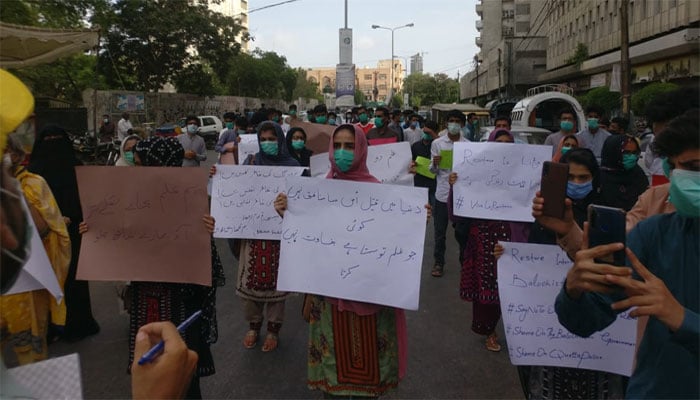
A large number of students, civil society and political activists gathered outside the Karachi Press Club on Thursday to show solidarity with Balochistan students who had been arrested and tortured by police in Quetta for protesting for the provision of access to the internet to pursue their higher education.
On Wednesday, police arrested over two dozen students in Quetta while they staged a protest from the Quetta Press Club to the Balochistan Assembly, demanding access to the internet for online classes.
Condemning the arrest and torture on the peaceful students who were protesting for their genuine and legitimate demands, speakers at the Karachi protest said the students of Balochistan had been staging demonstrations for the past few weeks to demand of the government to provide them the Internet service and electricity in the province so that they could pursue their higher education online. “But instead of fulfilling their demands, the government has been using police to arrest and torture them. It is highly condemnable,” said a speaker.
Speakers demanded releasing all the students immediately and taking action against those who had ordered the police to use force against them. The Balochistan government had closed all educational institutions in the province in March after a spike in coronavirus cases. However, the educational institutions had announced that they would be conducting online classes during this period, compelling students to protest against the decision because of poor Internet facilities in the province.
An uninterrupted access to the Internet has become vital for a majority of students in the remote areas of Balochistan after Pakistan’s Higher Education Commission (HEC) directed all universities to switch to online classes in view of the lockdown to limit the spread of the coronavirus in the country.
“The HEC should revisit its policy of online classes for Balochistan because most of the areas in the province lack the basic facilities of electricity and the Internet,” said another speaker. “The majority of students do not even own laptops or smartphones.”
Saazen Baloch, Mahnaz Rahman, Naghma Iqtidar, Dur Bibi, Dostain Baloch, Waseema Baloch, Bakhtwar Baloch, Imran Saqib, and Samar Abbas were prominent among the participants. On June 11, students had arranged donations to arrange transportation for students from various districts of Balochistan to participate in the protest in Karachi in the hope that the mainstream media could highlight their demand for the provision of Internet services.







-
 Belgium Watchdog Launches Antitrust Probe Into Google Ads Business
 -
 Andrew Ready To Fight Back: 'He's Very Vengeful'
 -
 After Surpassing 100 Million YouTube Subscribers, BLACKPINK Returns With New Release
 -
 Rihanna Sends Fans Into Frenzy With BTS Footage Of Music Making: Watch
 -
 More Americans Say They Sympathise With Palestinians Than Israelis, Poll Finds
 -
 Princess Finally Releases Meghan Markle, Prince Harry's Photos
 -
 Victoria Beckham Makes Exciting Announcement Amid Ongoing Rift With Brooklyn Beckham
 -
 King Charles Receives Major Blow After Meghan Markle, Harry's Trip
 -
 Kate Middleton Apologizes After Her Umbrella Bumps Child's Head
 -
 Retired US Fighter Pilot Arrested Over Alleged Training Of Chinese Military
 -
 Why Sarah Ferguson's Next Move Matters?
 -
 Kris Jenner's Plan For Kylie Jenner To 'seal The Deal' With Timothee Chalamet Unveiled
 -
 Kim Kardashian Changes Approach To Dating Amid Lewis Hamilton Romance
 -
 Andy Cohen Gets Emotional As He Addresses Mary Cosby's Devastating Personal Loss
 -
 Andrew Feeling 'betrayed' By King Charles, Delivers Stark Warning
 -
 Andrew Mountbatten's Accuser Comes Up As Hillary Clinton Asked About Daughter's Wedding