
Pakistan tax collection 62pc below its potential: IMF
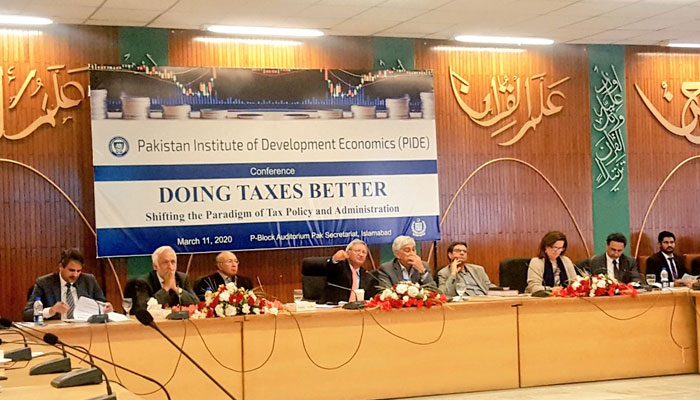
ISLAMABAD: The IMF’s Resident Chief, Teresa Daban Sanchez, has said that Pakistan’s tax collection is 62 percent below than its potential but this level of FBR collection was equivalent compared to peer regional economies.
“Pakistan’s tax collection is over 60 percent below what it should be collected at the moment but it is equivalent compared to peer regional economies,” Ms Teresa said while addressing one-day conference titled “Doing Taxes Better: Shifting the Paradigm of Tax Policy and Administration” organised by PIDE here at P Block auditorium at Pak Secretariat on Wednesday.
She said that Pakistan’s tax effort was very low as it was standing at 62 percent compared with peer economies. The IMF chief said that General Sales Tax (GST) in its existing shape was eroding competitiveness, as it became a major hurdle to boosting exports. The lack of cascading effect has been resulting in burdening firms more and they are becoming uncompetitive, she added.
The fragmented GST, she said, was increasing problems for compliant taxpayers and she mentioned three options for harmonisation of GST including introduction of constitutional amendment, second striking agreement between the federal and provincial governments for filing of single return and payment of tax into unified portal and third finding out solution through use of technology. The GST is critical for Pakistan and increased tax rates are making the country’s tax system more complicated, she maintained.
She said that Pakistan’s excessive reliance of tax collection on imports because it was easy to collect. At the moment, the country collects around 50 percent revenues at import stage including Customs Duty, Withholding Tax, GST, Additional Customs Duty and Regulatory Duty.
She said that the complexity and distortions into tax system were making the tax structure complicated. The certain sectors, which were contributing to GDP growth but their contribution to taxes was meager, she said. To a query, she said that the increased tax collection could provide fiscal space for meeting requirements of social sector as the allocation for protection of poor increased and almost doubled in the current fiscal year.
FBR’s Member Inland Revenue (IR) Policy Dr Hamid Ateeq Sarwar also spoke on the occasion and said that the elite culture and cronyism of the economy resulted in granting tax concessions/cuts to the influential and total tax exemptions cost ballooned to Rs1.5 trillion for the current fiscal year 2019-20 against Rs1 trillion in last fiscal year 2018-19 and figures of tax expenditure had published in the last Economic Survey for 2018-19.
He said that the tax exemptions created problems for fair taxation system because every sector started vying for getting tax cuts. He said that the taxation policy should aim at generation of tax revenues but in our case different objectives are achieved such as for granting incentives and promoting investment. He said that instead of granting exemptions the government should collect due taxes and then provide subsidies/incentives where it wants to promote any specific sector.
These distortions, he said, resulted in decline of FBR’s tax to GDP ratio as it stood at 11.6 percent of GDP in 2017-18 that had nosedived to 10 percent of GDP in 2018-19. The revenue growth remained negative as the collection reduced from Rs3,842 billion in 2017-18 to Rs3,829 billion in 2018-19.
The FBR, he said, agreed with the World Bank to reduce number of Withholding Taxes as the number of WHT stood at 62 that would be reduced drastically. The presumptive taxation regime would be abolished, he maintained.
He said that the agriculture sector contributed 18 percent in GDP and livestock share into agriculture growth stood at 8 percent of GDP but it remained unorganised sector so it became difficult to bring into tax net.
The FBR, he said, collects major chunk of tax collection in the range of 60 percent from manufacturing sector. He said that Pakistan’s tax base was broad but the revenue collection points were less that needs to be expanded.
He said that the FBR abolished zero rating regime for export-oriented sector in the last budget as textile sector was tackling $20 billion trading share both at domestic and export sector but its contribution to taxes was standing at just Rs4 billion per annum basis. Now the FBR estimated to pay back refunds of Rs120 billion in the current fiscal year, he added.
He said that the granting tax exemption power was given back to the National Assembly of Pakistan by sticking to the principle of no taxation without representation.
On the proposal of restoration of Wealth Tax and imposing Inheritance Tax, he said that the Wealth Tax was not into domain of the federal government. On inheritance tax, he said that the Council of Islamic Ideology (CCI) opposed such proposal. For way forward, he proposed that the tax should be imposed for raising revenues instead of using it as tool for incentivising or boosting any sector, moving towards Value Added Tax (VAT) mode and keeping food, health and education out of tax burden. He said that the FBR would consider abolishing/reducing withholding tax on school fees in the next budget.
Dr Ikramul Haq, Senior Advocate Supreme Court and tax expert proposed the establishment of National Tax Agency for the purpose of integration of taxes data and collection. He said that there should be unified tax service on the pattern of police as their respective IGs were appointed with the approval of the federal government. He said that in the aftermath of 18th Constitutional amendments, there was need of federalised tax policy under Article 167 (4) and cited example that the federal government granted tax exemption but its cost had to bear by Balochistan in its share of 9 percent in federal divisible pool under NFC arrangement.
The VC PIDE Dr Nadeem Ul Haq, former SBP governor Shahid Kardar, former member FBR Dr Manzoor Ahmad, former FBR member Customs Jawad Uwais Agha, Professor Aather Maqsood and others also spoke in the conference.







-
 Jonathan Majors Set To Make Explosive Comeback To Acting After 2023 Conviction
 -
 Next James Bond: Why Jacob Elordi May Never Get 007 Role?
 -
 Maddox Drops Pitt From Surname In Credits Of Angelina Jolie’s New Film 'Couture' Despite Truce From Father's End In Legal Battle
 -
 Burger King Launches AI Chatbot To Track Employee Politeness
 -
 Andrew’s Woes Amid King Charles’ Cancer Battle Triggers Harry Into Action For ‘stiff Upper Lip’ Type Dad
 -
 Experts Warn Andrew’s Legal Troubles In UK Could Be Far From Over
 -
 Teyana Taylor Reflects On Dreams Turning Into Reality Amid Major Score
 -
 Jennifer Garner Drops Parenting Truth Bomb On Teens With Kylie Kelce: 'They're Amazing'
 -
 AI Is Creating More Security Problems Than It Solves, Report Warns
 -
 'Game Of Thrones' Prequel 'A Knight Of The Seven Kingdoms' New Ratings Mark Huge Milestone
 -
 Apple Seeks To Dismiss Fraud Suit Over Siri AI, Epic Injunction
 -
 Delroy Lindo Explains The Crucial Role Of Musical Arts In Setting Up His Career Trajectory
 -
 Timothée Chalamet Reveals How He Manages To Choose The Best Roles For Himself
 -
 Princesses Beatrice, Eugenie’s Conflict Gets Exposed As Mom Fergie Takes Over The Media
 -
 Kate Middleton Plays Rock-paper-scissors In The Rain
 -
 Lindsay Lohan On 'confusing' Teen Fame After 'Mean Girls': 'I Should Have Listened To My Mom And Dad'