
Even Paralympians could struggle in Rio
RIO DE JANEIRO: With their Mad Max-style wheelchairs, tattoos, and aggression-filled faces, Rio de Janeiro’s wheelchair rugby players would seem near impossible to stop.But in the city hosting the Paralympic Games a year from this Monday (today), just one typically broken sidewalk is enough to bring the toughest to a
By our correspondents
September 07, 2015
RIO DE JANEIRO: With their Mad Max-style wheelchairs, tattoos, and aggression-filled faces, Rio de Janeiro’s wheelchair rugby players would seem near impossible to stop.
But in the city hosting the Paralympic Games a year from this Monday (today), just one typically broken sidewalk is enough to bring the toughest to a halt.
“Accessibility is our number one problem,” said Gilson Dias Wirzma Junior, 28, part of the national Brazilian wheelchair rugby team and a hopeful for the Summer Paralympics, which start September 7, 2016 in Rio.
In his Rio suburb of Sao Goncalo, for example, “there are no real sidewalks,” said Junior, who was left a tetraplegic when he was dumped by a wave while swimming in 2007. “Taking the bus is nearly impossible. There’s only one bus on my route that has wheelchair access. You can wait for up to two hours.”
Rio de Janeiro, the “Marvelous City,” will attract visitors from around the world during the Paralympics and the Olympics in August. But anyone relying on wheelchairs — fans and athletes alike — will face Olympian-sized hurdles.
Preparing for practice at a spartan court in northern Rio, members of the Santer wheelchair rugby club traded horror stories of broken pavements, missing ramps and malfunctioning elevators.
“Sadly, that,” said Junior, “is what we are living with.”
Wheelchair rugby players are not complainers.
When their game was invented in the 1970s in Canada, early participants called it “murderball.”
Becoming a full Paralympic medal sport in 2000, murderball features teams of four dodging, passing, sprinting and battering their way with a ball to the opposing end line. It’s full on.
The wheelchairs, fitted with battering rams and special wheel covers, look more like miniature battle wagons from a dystopian movie than the symbol of people who have been crippled. And while striking with hands is not allowed, the wheelchair-on-wheelchair hits are brutal.
During training, Santer members raced around the basketball-sized court, strapped into their chairs, and using their partially disabled hands and arms to power themselves with surprising speed and agility.
One of the heaviest players, a tall bearded man with a number 7 shirt, was knocked clean over, requiring two assistants to pick him up and put the chair back on its wheels.
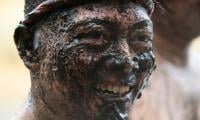
“The hits are what I really enjoy,” veteran player Eduardo Mayr, 43, said with a great smile from his heavily scarred wheelchair, before wiping the sweat from his face and racing off again.
Some 4,350 athletes from 178 countries are expected at the Rio Paralympics. But the city is barely ready.
“Just to accommodate the athletes, welcome the athletes and help them in — we have to make an effort,” Rio 2016 organizing committee spokesman Mario Andrada admitted last month.
By way of example, he pointed out that the biggest private vehicle currently available for carrying wheelchair passengers has a capacity of only eight. That’s not one full squad from a typical wheelchair rugby team.
Even with all their skill and strength, wheelchair rugby players are no different when it comes to the Rio obstacle course.
“One of the symbols of Rio are the Portuguese sidewalks,” said another player, Renan Prestes, 28, referring to the stylish, but uneven black and white mosaic paving common in southern neighborhoods. “But for us they’re a nightmare.”
Crossing Rio’s busy streets can be equally frustrating and more dangerous.
“You find streets where there’s a ramp on one side, but not the other and you’re half way across the street when you realize,” Prestes said.
“You’re stuck.”
Prestes, who suffered spinal cord injuries during a swimming accident, drives a car, but even so he is not in the clear.
“The handicapped parking spaces are constantly taken,” his girlfriend Tarcila Formiga, who is able-bodied, said while watching from on the sidelines of the rugby court.
But in the city hosting the Paralympic Games a year from this Monday (today), just one typically broken sidewalk is enough to bring the toughest to a halt.
“Accessibility is our number one problem,” said Gilson Dias Wirzma Junior, 28, part of the national Brazilian wheelchair rugby team and a hopeful for the Summer Paralympics, which start September 7, 2016 in Rio.
In his Rio suburb of Sao Goncalo, for example, “there are no real sidewalks,” said Junior, who was left a tetraplegic when he was dumped by a wave while swimming in 2007. “Taking the bus is nearly impossible. There’s only one bus on my route that has wheelchair access. You can wait for up to two hours.”
Rio de Janeiro, the “Marvelous City,” will attract visitors from around the world during the Paralympics and the Olympics in August. But anyone relying on wheelchairs — fans and athletes alike — will face Olympian-sized hurdles.
Preparing for practice at a spartan court in northern Rio, members of the Santer wheelchair rugby club traded horror stories of broken pavements, missing ramps and malfunctioning elevators.
“Sadly, that,” said Junior, “is what we are living with.”
Wheelchair rugby players are not complainers.
When their game was invented in the 1970s in Canada, early participants called it “murderball.”
Becoming a full Paralympic medal sport in 2000, murderball features teams of four dodging, passing, sprinting and battering their way with a ball to the opposing end line. It’s full on.
The wheelchairs, fitted with battering rams and special wheel covers, look more like miniature battle wagons from a dystopian movie than the symbol of people who have been crippled. And while striking with hands is not allowed, the wheelchair-on-wheelchair hits are brutal.
During training, Santer members raced around the basketball-sized court, strapped into their chairs, and using their partially disabled hands and arms to power themselves with surprising speed and agility.
One of the heaviest players, a tall bearded man with a number 7 shirt, was knocked clean over, requiring two assistants to pick him up and put the chair back on its wheels.
“The hits are what I really enjoy,” veteran player Eduardo Mayr, 43, said with a great smile from his heavily scarred wheelchair, before wiping the sweat from his face and racing off again.
Some 4,350 athletes from 178 countries are expected at the Rio Paralympics. But the city is barely ready.
“Just to accommodate the athletes, welcome the athletes and help them in — we have to make an effort,” Rio 2016 organizing committee spokesman Mario Andrada admitted last month.
By way of example, he pointed out that the biggest private vehicle currently available for carrying wheelchair passengers has a capacity of only eight. That’s not one full squad from a typical wheelchair rugby team.
Even with all their skill and strength, wheelchair rugby players are no different when it comes to the Rio obstacle course.
“One of the symbols of Rio are the Portuguese sidewalks,” said another player, Renan Prestes, 28, referring to the stylish, but uneven black and white mosaic paving common in southern neighborhoods. “But for us they’re a nightmare.”
Crossing Rio’s busy streets can be equally frustrating and more dangerous.
“You find streets where there’s a ramp on one side, but not the other and you’re half way across the street when you realize,” Prestes said.
“You’re stuck.”
Prestes, who suffered spinal cord injuries during a swimming accident, drives a car, but even so he is not in the clear.
“The handicapped parking spaces are constantly taken,” his girlfriend Tarcila Formiga, who is able-bodied, said while watching from on the sidelines of the rugby court.






-
 Jonathan Majors Set To Make Explosive Comeback To Acting After 2023 Conviction
 -
 Next James Bond: Why Jacob Elordi May Never Get 007 Role?
 -
 Maddox Drops Pitt From Surname In Credits Of Angelina Jolie’s New Film 'Couture' Despite Truce From Father's End In Legal Battle
 -
 Burger King Launches AI Chatbot To Track Employee Politeness
 -
 Andrew’s Woes Amid King Charles’ Cancer Battle Triggers Harry Into Action For ‘stiff Upper Lip’ Type Dad
 -
 Experts Warn Andrew’s Legal Troubles In UK Could Be Far From Over
 -
 Teyana Taylor Reflects On Dreams Turning Into Reality Amid Major Score
 -
 Jennifer Garner Drops Parenting Truth Bomb On Teens With Kylie Kelce: 'They're Amazing'
 -
 AI Is Creating More Security Problems Than It Solves, Report Warns
 -
 'Game Of Thrones' Prequel 'A Knight Of The Seven Kingdoms' New Ratings Mark Huge Milestone
 -
 Apple Seeks To Dismiss Fraud Suit Over Siri AI, Epic Injunction
 -
 Delroy Lindo Explains The Crucial Role Of Musical Arts In Setting Up His Career Trajectory
 -
 Timothée Chalamet Reveals How He Manages To Choose The Best Roles For Himself
 -
 Princesses Beatrice, Eugenie’s Conflict Gets Exposed As Mom Fergie Takes Over The Media
 -
 Kate Middleton Plays Rock-paper-scissors In The Rain
 -
 Lindsay Lohan On 'confusing' Teen Fame After 'Mean Girls': 'I Should Have Listened To My Mom And Dad'