
Fitch says SBP likely to devalue rupee in coming months
Fitch Solutions on Monday said the State Bank of Pakistan (SBP) is expected to devalue rupee against US dollar again in the coming months, as the currency will remain under depreciatory pressures with weaker external finances.
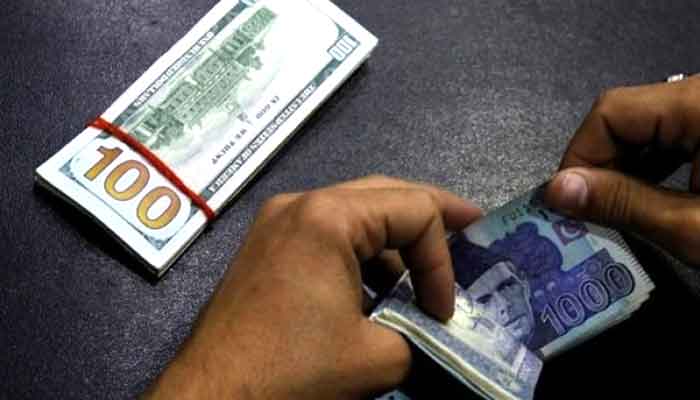
KARACHI: Fitch Solutions on Monday said the State Bank of Pakistan (SBP) is expected to devalue rupee against US dollar again in the coming months, as the currency will remain under depreciatory pressures with weaker external finances.
Just last week the rating agency had warned Pakistan of larger economic distortions and greater pain in future for seeking unconventional funding sources to avert the balance of payment crisis, and little appetite for austerity and economic reforms.
The rupee fell over 25 percent in 2018 driven by a large current account deficit and increased foreign debt repayments. This has also put inflationary pressures on the cost of inputs for many domestic manufacturers, including the pharmaceutical companies.
In a report on the country's pharmaceutical sector, Fitch quoted Zahid Saeed, chairman Pakistan Pharmaceutical Manufacturers Association (as saying that the manufacturing cost of medicines in the country had surged four percent, given the record devaluation of rupee and increase in duties and taxes on the industry.
Given that local pharmaceutical companies fulfil nine percent of the medicine need of the country, “recommendations were necessary to save the industry”.
Pakistan’s pharmaceutical market continues to face a number of headwinds that make it decidedly difficult for multinational drug makers. Besides several shortcomings in Pakistan’s regulatory and business environment along with endemic political instability, the country’s pricing environment continues to be an impediment to the pharmaceutical sector.
“Government of Pakistan aims to increase the prices of medicines, which bodes well for the domestic drug makers,” said the Fitch Solution’s industry trend analysis of the pharmaceutical sector. "The revenue generating opportunities for local pharmaceutical companies in Pakistan would improve following the decision."
The government’s decision to link medicine price increases to the consumer price index (CPI) starting from July 1, 2016 aimed to create a more stable system to manage the increase in medicine prices.
According to industry estimates, this translated into a more stable four percent increase annually for medicine prices in the country. The policy also helps to address the inflationary pressures on the cost of inputs which have outpaced the rise in medicine prices, according to the PPMA.
In 2017, it was announced that annual price increases for scheduled drugs (those that were essential for treating serious illnesses) would be limited to 50 percent of the increase by the CPI, up to a limit of four percent. Price increases for non-scheduled drugs would be limited to 70 percent, with a cap of six percent and equal to inflation in case of low-priced medicines.
Thus, in January 2019, the government raised the maximum retail price of medicines by nine to 15 percent to provide much-needed relief to both local and multinational drug manufacturers after considerable rupee devaluation in 2018, the high cost of utilities and a shortage of raw material supplies.
“We believe this is largely positive for the pharmaceutical industry of Pakistan as it will not only address the long due demand of the pharmaceutical industry to raise drug prices, but will also provide some respite to the industry's margins, which have come under pressure owing to rupee devaluation,” Fitch said.
However, it warned that the plan to increase medicine prices would restrict patient access to vital medicines. Medicine pricing in Pakistan remains uncertain, posing a threat to the operations of multinational drug makers. This stems in part from the strained relations between the pharmaceutical industry and the Drug Regulatory Authority of Pakistan (DRAP) over drug pricing policy.
Further complicating the pricing environment in Pakistan is the significant political pressure facing the DRAP. Due to the limited public information available, there have been competing claims in Pakistan on the extent of medicine price increases announced by the DRAP.
While the DRAP noted a 1.4 percent to 2.9 percent increase for pharmaceuticals in 2016, the Young Pharmacists Association alleged in August 2016 that drug makers increased the prices of pharmaceuticals by more than 100 percent.
That same year, Pakistan Wholesale Chemist Association President Ghulam Muhammad Noorani noted that eight percent of the essential medicines in Pakistan saw their prices increase by 300 percent.







-
 King Hospitalized In Spain, Royal Family Confirms
 -
 Japan Launches AI Robot Monk To Offer Spiritual Guidance
 -
 Japan Plans Missile Deployment Near Taiwan By 2031 Amid Growing Regional Tensions
 -
 Meghan Markle, Prince Harry Spark Reactions With Latest Announcement
 -
 Kate Hudson Reflects On Handling Award Season With No Expectations
 -
 6 Celebrities Who Have Been Vocal About Anxiety And 'panic Attacks'
 -
 Is This The Future Of Train Travel? Robot Dogs, Drones Are Redefining Public Transit Safety Through China’s New Metro Station Deployment
 -
 Sarah Ferguson Seeks Hollywood Backing As Epstein Files Resurface
 -
 China’s AI Milestone: ByteDance’s Doubao Chatbot Hits 100M Users During Lunar New Year
 -
 Think You Know ChatGPT? Here Are 5 AI Levels You’ve Never Seen
 -
 Bitcoin Bounces From $62,000 As On-chain Metrics Signal Prolonged Weakness: Here Is Everything To Know
 -
 Elon Musk Teases Official Grok CLI For Developers As AI Rivalry With Anthropic Heats Up
 -
 Jennifer Aniston Ready To Walk Down The Aisle Again?
 -
 Sarah Ferguson’s Plan Now That Andrew Is Thrown Into The Fire: ‘She’s Not Certain She’ll Come Out The Other Side’
 -
 ‘The AI Doc’: What AI Leaders Told Daniel Roher Will Keep You Up At Night
 -
 Sarah Ferguson In Hiding As Arrest Fears Grow After Andrew Was Taken Into Custody