
Road to Kalam
For the last six years I have been consistently, but vainly, highlighting the plight of the locals of the tourist heaven, Kalam and its valleys. But my observations have fallen on deaf ears as we have so far seen no change in the plight of these ethno-linguistic marginalised groups. We
By Zubair Torwali
January 27, 2015
For the last six years I have been consistently, but vainly, highlighting the plight of the locals of the tourist heaven, Kalam and its valleys. But my observations have fallen on deaf ears as we have so far seen no change in the plight of these ethno-linguistic marginalised groups.
We have always been ruled by cold-blooded leaders whose priority, if any, has always remains confined to the big cities. Those elected from these areas are also cunningly inefficient. The local leaders can bring hundreds of migrated voters back to the area before their scheduled return in the wake of the winters but never ask for the rights of these marginalised communities after being elected into office.
Equally shallow is the media’s role. They broadcast news of snowfall and rains in these places with much enthusiasm but never try to show how such ‘enchanting weather’ becomes a source of yet more plight for the locals. Obviously the supposed audience of such news are the wealthy city people.
Being a son of the mountains I love to live here, and sometimes visit the valleys in the winter. I happened to visit Kalam recently and saw only a few people in the bazaar all wrapped poorly in clothing not fit for the time. There were just a few people because over 70 percent of the local population has fled the severe winters and want to spend it in the plains of Charsadda or other parts in the province. Many would think they do so to spend their winter in a comparatively warm environment; and maybe for better education for their children.
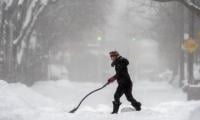
Unfortunately that isn’t the case. They simply can’t afford to live the rough winter here. The snow season in these valleys is really charming but given the poor infrastructure and the consistent neglect it becomes a disaster for the locals. An elderly man once told me that he had his kidney operated upon in the Kalam Civil Hospital in 1969, the year Swat state along with Kalam was merged into Pakistan. Though narrow, a fine metal road was intact at the time from Saidu Sharif to Kalam and beyond. Schools were functional even in the faraway villages of Utror and Ushu.
What happened after the merger is a sad story of neglect and marginalisation. The hospitals and schools gradually became dysfunctional; and the road turned into rubble. The only improvement we see now is the increasing number of ‘foreign funded’ madressahs. In the valleys of Kalam and beyond one can see a startling difference between the high-quality buildings of madressahs and the poverty-stricken houses of the local population. Madressahs are increasing in number because schools become dysfunctional.
The majority of schools remain dysfunctional mainly because of appointment of non-local teaching staff while children who go to the few primary schools have to pause their education for seven months because of the seasonal migration of their parents. The hospital is made functional only in the summer, mainly for tourists – otherwise the locals aren’t regarded human.
The road to Kalam was never great since the merger but it was still not as bad as it has been after the floods in 2010.
Poverty has been made the fate of the locals. Because of this pervasive poverty the locals had sold their lands; now among the over 200 hotels there only a couple of them are owned by them.
Tourism is still a great source of income for the locals but here, too, the great chunk of the income goes to non-locals. Whatever little income of tourism the locals get can’t sustain them through the long winter and so the majority of them migrate to other areas as cheap labour.
If the PTI-led government really wants to make Khyber Pakhtunkhwa an example of the change it has promised it must focus on peripheries like Kalam and the valleys. Being the most attractive tourist heavens in the province, the valleys of Kalam and Bahrain need to be prioritised for both summer and winter tourism along with giving special benefits to those employed by the government. The area needs to be declared a ‘hardship area’ with quota for locals in all educational institutions and government employment.
The writer heads IBT, an independentorganisation dealing with education anddevelopment in Swat.
Email: ztorwali@gmail.com
We have always been ruled by cold-blooded leaders whose priority, if any, has always remains confined to the big cities. Those elected from these areas are also cunningly inefficient. The local leaders can bring hundreds of migrated voters back to the area before their scheduled return in the wake of the winters but never ask for the rights of these marginalised communities after being elected into office.
Equally shallow is the media’s role. They broadcast news of snowfall and rains in these places with much enthusiasm but never try to show how such ‘enchanting weather’ becomes a source of yet more plight for the locals. Obviously the supposed audience of such news are the wealthy city people.
Being a son of the mountains I love to live here, and sometimes visit the valleys in the winter. I happened to visit Kalam recently and saw only a few people in the bazaar all wrapped poorly in clothing not fit for the time. There were just a few people because over 70 percent of the local population has fled the severe winters and want to spend it in the plains of Charsadda or other parts in the province. Many would think they do so to spend their winter in a comparatively warm environment; and maybe for better education for their children.
Unfortunately that isn’t the case. They simply can’t afford to live the rough winter here. The snow season in these valleys is really charming but given the poor infrastructure and the consistent neglect it becomes a disaster for the locals. An elderly man once told me that he had his kidney operated upon in the Kalam Civil Hospital in 1969, the year Swat state along with Kalam was merged into Pakistan. Though narrow, a fine metal road was intact at the time from Saidu Sharif to Kalam and beyond. Schools were functional even in the faraway villages of Utror and Ushu.
What happened after the merger is a sad story of neglect and marginalisation. The hospitals and schools gradually became dysfunctional; and the road turned into rubble. The only improvement we see now is the increasing number of ‘foreign funded’ madressahs. In the valleys of Kalam and beyond one can see a startling difference between the high-quality buildings of madressahs and the poverty-stricken houses of the local population. Madressahs are increasing in number because schools become dysfunctional.
The majority of schools remain dysfunctional mainly because of appointment of non-local teaching staff while children who go to the few primary schools have to pause their education for seven months because of the seasonal migration of their parents. The hospital is made functional only in the summer, mainly for tourists – otherwise the locals aren’t regarded human.
The road to Kalam was never great since the merger but it was still not as bad as it has been after the floods in 2010.
Poverty has been made the fate of the locals. Because of this pervasive poverty the locals had sold their lands; now among the over 200 hotels there only a couple of them are owned by them.
Tourism is still a great source of income for the locals but here, too, the great chunk of the income goes to non-locals. Whatever little income of tourism the locals get can’t sustain them through the long winter and so the majority of them migrate to other areas as cheap labour.
If the PTI-led government really wants to make Khyber Pakhtunkhwa an example of the change it has promised it must focus on peripheries like Kalam and the valleys. Being the most attractive tourist heavens in the province, the valleys of Kalam and Bahrain need to be prioritised for both summer and winter tourism along with giving special benefits to those employed by the government. The area needs to be declared a ‘hardship area’ with quota for locals in all educational institutions and government employment.
The writer heads IBT, an independentorganisation dealing with education anddevelopment in Swat.
Email: ztorwali@gmail.com






-
 Lana Del Rey Announces New Single Co-written With Husband Jeremy Dufrene
 -
 Ukraine-Russia Talks Heat Up As Zelenskyy Warns Of US Pressure Before Elections
 -
 Lil Nas X Spotted Buying Used Refrigerator After Backlash Over Nude Public Meltdown
 -
 Caleb McLaughlin Shares His Resume For This Major Role
 -
 King Charles Carries With ‘dignity’ As Andrew Lets Down
 -
 Brooklyn Beckham Covers Up More Tattoos Linked To His Family Amid Rift
 -
 Shamed Andrew Agreed To ‘go Quietly’ If King Protects Daughters
 -
 Candace Cameron Bure Says She’s Supporting Lori Loughlin After Separation From Mossimo Giannulli
 -
 Princess Beatrice, Eugenie Are ‘not Innocent’ In Epstein Drama
 -
 Reese Witherspoon Goes 'boss' Mode On 'Legally Blonde' Prequel
 -
 Chris Hemsworth And Elsa Pataky Open Up About Raising Their Three Children In Australia
 -
 Record Set Straight On King Charles’ Reason For Financially Supporting Andrew And Not Harry
 -
 Michael Douglas Breaks Silence On Jack Nicholson's Constant Teasing
 -
 How Prince Edward Was ‘bullied’ By Brother Andrew Mountbatten Windsor
 -
 'Kryptonite' Singer Brad Arnold Loses Battle With Cancer
 -
 Gabourey Sidibe Gets Candid About Balancing Motherhood And Career