
Comment: Is India’s military ready for a hot war?
Red alert: the IAF currently fields approximately 31 squadrons
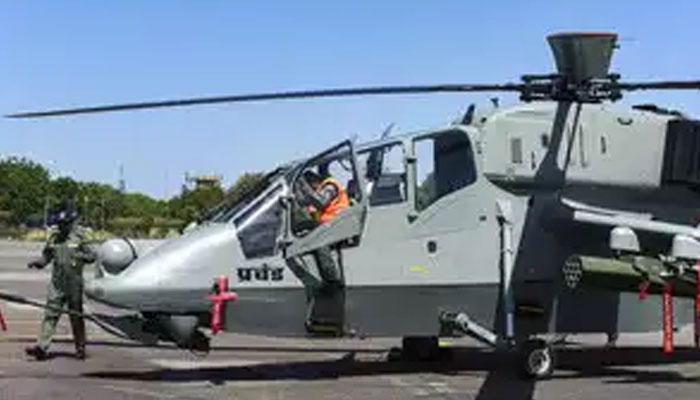
Is the Bharatiya Sena, the Indian Army, with its 1.2 million active-duty personnel, mission-ready for a potential hot war -- characterised as a large-scale, high-intensity conventional engagement involving maneuver warfare and combined arms operations? Is the Indian Air Force (IAF) operationally capable, with sufficient sortie generation rates, integrated air defence systems and combat-ready assets to dominate contested airspace?
Here’s one foundational air combat metric: Doctrinal air superiority requirements stipulate a minimum of 42 fighter squadrons to neutralise a two-front kinetic threat in a high-intensity conventional engagement. Red alert: the IAF currently fields approximately 31 squadrons, reflecting a critical deficit of over 200 airframes, severely constraining its combat-effective force projection.
For the record, the IAF’s obsolescent platforms, such as the recently decommissioned MiG-21, have not been sufficiently recapitalised with modern multirole fighters. The Tejas Light Combat Aircraft, despite its potential as a fourth-generation platform, is hampered by persistent production bottlenecks, with Hindustan Aeronautics Limited (HAL) grappling to fulfill the 2021 contract for 83 Tejas Mk-1A jets, critical for bolstering squadron strength and operational readiness.
Here’s another foundational air combat metric: The Rafale fleet, capped at a mere 36 jets, is woefully insufficient for executing deep-strike missions requiring precision-guided munitions and standoff capabilities against a peer adversary like Pakistan, particularly in contested environments demanding robust electronic warfare and survivability against integrated air defense systems.
Here’s another foundational air combat metric: the IAF faces a shortage of trained pilots, with a pilot-to-aircraft ratio below the ideal 1.5:1, exacerbated by delays in simulator-based training for new platforms like the Rafale. In a hot war, where rapid decision-making and specialised skills are critical, these manpower gaps could prove catastrophic against well-trained adversaries.
Transitioning to the Bharatiya Sena, a Comptroller and Auditor General of India (CAG) report underscored critical shortfalls in three key munitions categories: artillery projectiles, main battle tank (MBT) ammunition, and anti-tank guided missiles (ATGMs). Current stockpiles are alarmingly limited, sufficient for only 10 days of high-intensity kinetic operations, starkly deficient against the mandated 40-day war wastage reserve (WWR) required for sustained combined arms engagements.
For the record, the Bharatiya Sena’s artillery modernisation programme, encompassing 155mm towed and self-propelled howitzers, remains critically delayed, with only 145 M777 ultra-light howitzers integrated into the force structure against a projected requirement of 1,500 systems. Persistent deficiencies in critical munitions stockpiles and combat-essential equipment continue to erode the army’s capacity to sustain protracted high-intensity maneuver warfare operations.
India’s border infrastructure along the Line of Control (LoC) and contiguous sectors remains severely underdeveloped, hampering sustained operational readiness against Pakistan. Inadequate hardened fortifications in LoC-adjacent areas expose Indian positions to Pakistan’s precision-guided munitions and cross-border artillery barrages.
Indian military’s deficiencies in real-time ISR (Intelligence, Surveillance, and Reconnaissance) infrastructure along the LoC impede situational awareness, leaving Indian forces vulnerable to Pakistan’s asymmetric tactics and rapid mobilisation.
In the face of a high-intensity hot war, the Bharatiya Sena and Indian Air Force confront four critical deficiencies: combat-ready airframes, munitions stockpiles, border infrastructure, and ISR capabilities. With depleted fighter squadrons, inadequate war wastage reserves, and underdeveloped LoC fortifications, India’s forces are ill-equipped to execute sustained combined arms operations or dominate contested battlespaces against peer adversaries like Pakistan. These gaps, compounded by manpower shortages and delayed modernisation, risk catastrophic failure in high-intensity maneuver warfare.







-
 Inside Cardi B's Real Feelings Related To Stefon Diggs Split Post One Year Of Romance
 -
 Former Sri Lankan Intelligence Chief Arrested Over 2019 Easter Bombings
 -
 Kristen Bell Shares One Rule For 'SAG' Awards Ceremony That She Will Ditch This Time: 'Happy And Fun'
 -
 Woman Suing Meta Platforms, YouTube Over Social Media Addiction Sticks To Claims After Trial
 -
 Shakira Applauded For 'gracious' Behaviour By Fans As She Blends Work With Family Downtime
 -
 Prince William Hits The Roof With The Andrew Saga Bleeding Into Earthshot
 -
 Mexico’s President Considers Legal Action Over Elon Musk Cartel Remark
 -
 HBO Gives Major Update About 'Industry' Season Five And Show's End
 -
 Donnie Wahlberg Responds To 'Boston Blue' Backlash: 'Nobody Was More Disappointed Than Me'
 -
 Jennifer Garner Gets Emotional Over Humble Career Start: 'It Makes Me Want To Cry'
 -
 Princess Beatrice Told An Acquaintance That She ‘likes’ Jeffrey Epstein: Grim Verdict Drops
 -
 Late Katherine Short's Neighbours Give Insights Into Her 'peace Loving' Personality Post Suicide
 -
 Fresh Details Of King Charles, Queen Camilla's US Visit Emerge Amid Andrew Investigation
 -
 Iran 'set To Buy' Chinese Carrier-killer Missiles As US Forces Gather In Region
 -
 Prince Harry And Meghan Unlikely To Meet Royals In Jordan
 -
 Hero Fiennes Tiffin Shares Life-changing Advice He Received From Henry Cavill