
Normality proved to be a mirage in IIOJ&K: expert
According to Sawhney, three major factors have converged since India revoked Articles 370 and 35A in August 2019
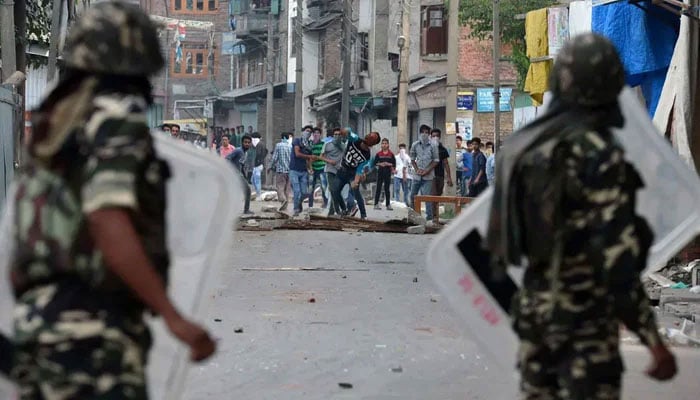
NEW DELHI: Experts on Indian Illegally Occupied Jammu and Kashmir (IIOJK) have been issuing warnings for some time now that showcasing tourism figures as a “normalcy symbol” could prove fatal. The “normalcy narrative”, commentators pointed out, was problematic in more ways than one.
Anuradha Bhasin, managing editor of the respected English newspaper Kashmir Times and author of ‘A Dismantled State: The Untold Story of Kashmir After Article 370’, told Frontline magazine that “normalcy has proved to be a mirage in Kashmir”.
Pravin Sawhney, a former army officer and presently editor of Force magazine that covers India’s national security and defence affairs, ruled out that this incident could lead to an all-out India-Pakistan war. But he also warned that New Delhi walking out of the Indus Waters Treaty (1960) could be a disaster move.
According to Sawhney, three major factors have converged since India revoked Articles 370 and 35A in August 2019. “First, the constant narrative perpetrated by Indian media channels that Kashmir is normal. This is what also led to tourists going to Pahalgam. This is wrong. The reality is that Kashmir is a war zone,” Sawhney told Frontline, and Indian magazine. He said that evidence suggests that there is no reduction in the presence of armed forces in Kashmir. “Every Friday, Mirwaiz Umar Farooq is placed under house arrest and not allowed to lead the prayers. You have over 83,000 domicile certificates being issued to outsiders [non-Kashmiris] for permanent residency to change the demography of the place. And then there is a Chief Minister [Omar Abdullah], who has a mandate of 50 MLAs, but looks like more of an assistant to the Lieutenant Governor [Manoj Sinha].”
Sawhney emphasised the external dimension of the Kashmir issue. The third important factor, as per the defence expert, is China. “China does not want war, but Beijing is committed to supporting Pakistan’s sovereignty since August 2019. This means that both in peace and war times, China’s huge non-kinetic abilities will be available to the Pakistan military. As far as war is concerned, the Chinese PLA and the Pakistani Army have interoperability and interchangeability.” A war will thus not be in India’s favour by any stretch of the imagination.







-
 King Hospitalized In Spain, Royal Family Confirms
 -
 Japan Launches AI Robot Monk To Offer Spiritual Guidance
 -
 Japan Plans Missile Deployment Near Taiwan By 2031 Amid Growing Regional Tensions
 -
 Meghan Markle, Prince Harry Spark Reactions With Latest Announcement
 -
 Kate Hudson Reflects On Handling Award Season With No Expectations
 -
 6 Celebrities Who Have Been Vocal About Anxiety And 'panic Attacks'
 -
 Is This The Future Of Train Travel? Robot Dogs, Drones Are Redefining Public Transit Safety Through China’s New Metro Station Deployment
 -
 Sarah Ferguson Seeks Hollywood Backing As Epstein Files Resurface
 -
 China’s AI Milestone: ByteDance’s Doubao Chatbot Hits 100M Users During Lunar New Year
 -
 Think You Know ChatGPT? Here Are 5 AI Levels You’ve Never Seen
 -
 Bitcoin Bounces From $62,000 As On-chain Metrics Signal Prolonged Weakness: Here Is Everything To Know
 -
 Elon Musk Teases Official Grok CLI For Developers As AI Rivalry With Anthropic Heats Up
 -
 Jennifer Aniston Ready To Walk Down The Aisle Again?
 -
 Sarah Ferguson’s Plan Now That Andrew Is Thrown Into The Fire: ‘She’s Not Certain She’ll Come Out The Other Side’
 -
 ‘The AI Doc’: What AI Leaders Told Daniel Roher Will Keep You Up At Night
 -
 Sarah Ferguson In Hiding As Arrest Fears Grow After Andrew Was Taken Into Custody