
Contentious canals
Water has long been politically and emotionally charged issue in Sindh
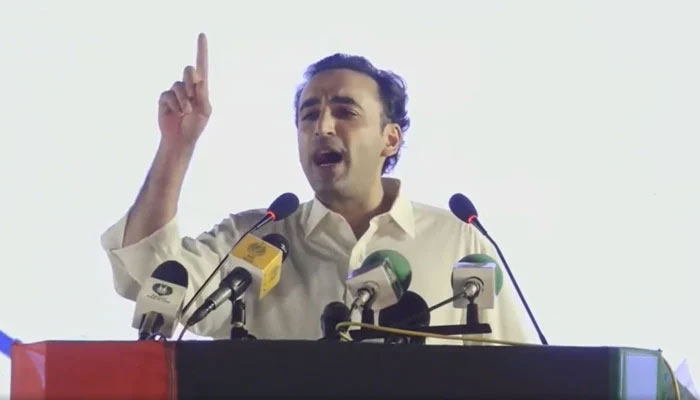
The simmering political fault lines between key federal coalition partners have floated right up – and it’s all about water. On Monday, Adviser to the Prime Minister on Political and Public Affairs Rana Sanaullah had assured Sindh Senior Minister Sharjeel Memon during a second telephonic conversation that all concerns regarding the controversial canals project would be addressed. Coming two days after PPP Chairman Bilawal Bhutto Zardari’s threat to quit the ruling coalition if the federal government failed to resolve the matter, this is a much-needed – albeit belated – step towards defusing what could easily become a full-blown political and interprovincial crisis. The main offending issue for Sindh is the federal government’s plan to construct six canals to divert water from the Indus River to irrigate the Cholistan desert in Punjab. The PPP and several Sindhi nationalist parties have vocally opposed the project, seeing it as a direct threat to Sindh’s already precarious water supply. To be fair, their fears are neither new nor unfounded. Water has long been a politically and emotionally charged issue in Sindh – one that has fueled nationalist movements and defined electoral battle lines for decades.
While some PML-N leaders have reportedly suggested that the PPP’s stance is a response to pressure from nationalist quarters, this reading ignores the historical context and political realities in Sindh. The PPP is reported to have initially raised the issue behind closed doors, only going public when water-related protests erupted across the province. The party also cannot afford to appear weaker than the nationalist parties on this issue, not without risking its political capital in its home province. The comparisons with past failed water projects – most notably the Kalabagh Dam, which was shelved in the face of opposition from Sindh and Khyber Pakhtunkhwa – are instructive. Despite the political exile of both Benazir Bhutto and Nawaz Sharif at the time, Gen Pervez Musharraf was unable to push the dam through. The lesson remains: water is not just a resource; it is a question of survival and identity, particularly so in Sindh.
Experts warn that this is not simply a Sindh-versus-Punjab issue. Punjab, too, faces water shortages. However, since opposition to the project is currently most vocally coming from Sindh, the project risks being perceived as an act of majoritarianism by the centre. More dangerously, such perceptions feed into the longstanding grievances of smaller provinces against federal overreach and inequitable resource distribution. In a country already teetering under economic strain, political instability and climate change vulnerabilities, this is a fire the centre can ill afford to stoke. The environmental implications of the proposed canals are also grave. Diverting Indus waters to a new irrigation project in the Cholistan desert could spell ecological disaster for the Indus delta, further endangering the already threatened livelihoods of communities in lower Sindh. With Pakistan ranked among the top ten most climate-vulnerable countries, embarking on projects that may worsen desertification, salinity, and water scarcity is just reckless. Encouragingly, both sides have shown signs of willingness to talk. Reportedly, Rana Sanaullah has stated that Prime Minister Shehbaz Sharif will take the final decision, and that Sindh is open to discussion. But this discussion cannot be a mere formality. It must be transparent, inclusive and scientifically informed, with a particular focus on the downstream effects of such a project. Any long-term resolution must also revisit the 1991 Water Apportionment Accord. Though it was necessary at the time, the accord is now over three decades old. Demographics have shifted, water levels have declined, and climate patterns have drastically changed. Essentially, the federal government should put aside any notions of unilateralism and act as a facilitator between provinces in an already fragile national unity.







-
 'Sinners' Creator Ryan Coogler's Bombshell Statement Comes To Light After Oscar Nomination
 -
 Teddi Mellencamp Pens Sweet Message As Daughter Dove Turns 6: 'Love You So Much'
 -
 James Hetfield's Health Struggle Amid His 2026 Las Vegas Sphere Residency
 -
 Princess Beatrice, Eugenie Are Now Facing The Same Wait As Their Parents: ‘Their Future Has To Be Decided’
 -
 Trump’s Tariff Turmoil Yet To Significantly Dent Growth In Emerging Economies, Despite Raising Trade Tensions
 -
 Will There Be 'Smiling Friends' Season 4? Animated Series' Creators Make Big Announcement
 -
 Jennifer Aniston, Boyfriend Jim Curtis Prepare To Move In After 'hard Launching' Their Relationship?
 -
 Lamar Odom Details Struggle With Addiction And ‘amazing’ Rehab Experience
 -
 Nvidia Vs Intel: Jensen Huang Braces Investors For Renewed Battle As Chip Wars Reignite
 -
 Heidi Montag Reveals Why She Felt 'robbed' On 'The Masked Singer' After Her Elimination
 -
 Australia’s Former PM Gives His Honest Take Against The British Monarchy: ‘It Remains This Anachronism’
 -
 Bombshell Reason Behind Cardi B, Stefon Diggs' Breakup Revealed
 -
 Hilary Duff Details How She Protected Her Children’s Mental Health Amid Divorce
 -
 'The Masked Singer's Snow Cone's Identity Revealed
 -
 Kash Patel Fires FBI Officials Behind Trump Mar-a-Lago Documents Probe, Reports Say
 -
 Martin Short's Daughter Katherine's Death Takes Shocking Turn As Terrific Details Emerge