
Structural reforms driving steady economic recovery: commerce minister
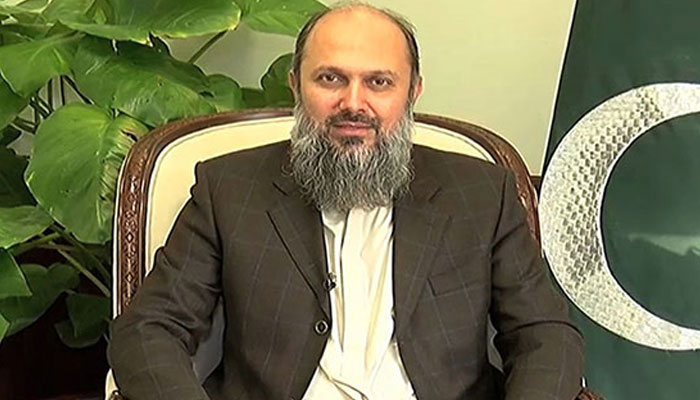
LAHORE: Minister for Commerce Jam Kamal Khan said on Saturday that Pakistan’s economy is on a path of steady improvement, thanks to recent structural reforms, international recognition of economic policies and the continued support of the business community.
He was speaking at the Lahore Chamber of Commerce and Industry (LCCI). The minister noted that while the country faced significant economic challenges until a few months ago, the last 18 months have brought noticeable progress. He added that even global institutions such as the IMF have acknowledged Pakistan’s economic reforms and recovery efforts. The strong participation of international delegates in events such as the HEMS Expo and the Mineral Expo reflects growing global confidence in Pakistan.
Khan said that the export finance scheme (EFS) is being customised to better serve the business sector, and that reforms are being designed through constant consultation with stakeholders. He revealed that the prime minister personally participates in business-to-business meetings during international visits, highlighting the government’s commitment to promoting trade.
He added that the Export Development Fund (EDF) is undergoing restructuring, and that the Trade Development Authority of Pakistan (TDAP) has seen significant institutional reforms. While acknowledging that exports remain limited to a few products and regions, he stressed that there is immense untapped potential in emerging markets such as East Africa.
The minister also said his recent meeting with the Afghan commerce minister helped resolve several key trade-related issues. He emphasised that Afghanistan serves as a vital corridor for overland trade access to Central Asia. A new trade policy is currently being formulated, and for the first time, sector-specific meetings on tariff issues have been held, which will be reviewed by the Tariff Board.
In his address, LCCI President Mian Abuzar Shad emphasised that exports cannot grow unless the challenges faced by the industrial sector are addressed. He highlighted several pressing concerns, including the depreciation of the rupee, high energy tariffs, the imposition of maximum demand indicator (MDI) charges on non-operational industries, soaring land prices in industrial estates, and heavy duties and taxes on raw materials and intermediate goods.







-
 Fukushima Decommissioning: Japan Deploys Snake-like Robot To Remove Nuclear Debris
 -
 Brenda Song Turns Macaulay Culkin's 'Home Alone' Into 'terrible' Lesson: 'Children Have To Be A Little Scared'
 -
 MrBeast Vows To Book Only Starlink-equipped Flights As Global Airline Adoption Surges
 -
 Kim Jong Un Says North Korea Ready To ‘get Along’ With US But Sets Key Condition
 -
 Andrew Fears What Comes Next As Jeffrey Epstein Scandal Deepens
 -
 Inside Meghan Markle's 'scary' Postpartum Preeclampsia Journey
 -
 'Sinners' Creator Ryan Coogler's Bombshell Statement Comes To Light After Oscar Nomination
 -
 Teddi Mellencamp Pens Sweet Message As Daughter Dove Turns 6: 'Love You So Much'
 -
 James Hetfield's Health Struggle Amid His 2026 Las Vegas Sphere Residency
 -
 Princess Beatrice, Eugenie Are Now Facing The Same Wait As Their Parents: ‘Their Future Has To Be Decided’
 -
 Trump’s Tariff Turmoil Yet To Significantly Dent Growth In Emerging Economies, Despite Raising Trade Tensions
 -
 Will There Be 'Smiling Friends' Season 4? Animated Series' Creators Make Big Announcement
 -
 Jennifer Aniston, Boyfriend Jim Curtis Prepare To Move In After 'hard Launching' Their Relationship?
 -
 Lamar Odom Details Struggle With Addiction And ‘amazing’ Rehab Experience
 -
 Nvidia Vs Intel: Jensen Huang Braces Investors For Renewed Battle As Chip Wars Reignite
 -
 Heidi Montag Reveals Why She Felt 'robbed' On 'The Masked Singer' After Her Elimination