
Heat, hail, havoc
What is usually refreshing change in weather turned into terrifying ordeal, with residents scrambling for shelter
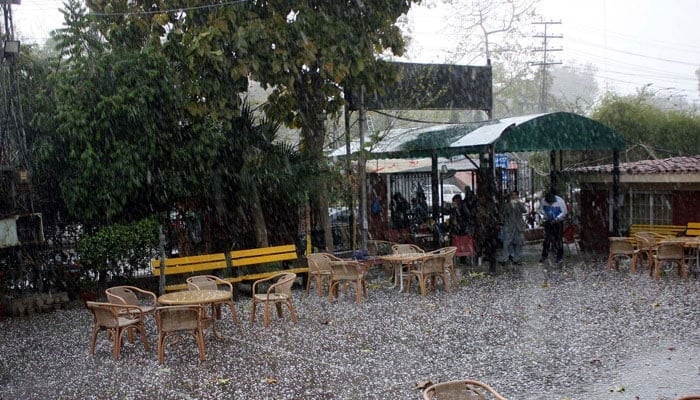
In a scene that felt ripped from a dystopian novel, golf ball-sized hailstones pounded Islamabad and parts of Khyber Pakhtunkhwa (KP) on Wednesday. The storm’s intensity was severe, damaging buildings and vehicles, and injuring several people. What is usually a refreshing change in weather turned into a terrifying ordeal, with residents scrambling for shelter. Coincidentally, the day also marked the anniversary of last year’s record-breaking rains in the United Arab Emirates, which had brought life to a standstill. This latest episode is a stark reminder of the many faces of climate change – unpredictable, destructive and increasingly frequent. It is also a reminder of the global nature of the crisis, emphasising the urgent need for developed nations to stop backtracking on their climate financing pledges to vulnerable countries like Pakistan.
What made the hailstorm even more surprising was that just days earlier, the Meteorological Department had issued a nationwide heatwave warning. Temperatures in Sindh and Punjab were expected to rise 6–8 Celsius above the seasonal average. This dramatic swing from heat to hail makes one thing clear: climate change is no longer a distant threat. It is here, and it is catching people off guard. This situation isn’t solely a result of government inaction. Yes, the stakes for international responsibility are high, but Pakistan must also accept that, for the most part, we are on our own. Our unchecked interference with natural ecosystems, all in the name of development, must come to an end. Rich nations will not step in to fix the damage we continue to inflict on ourselves.
To its credit, the government has taken some commendable steps – including promoting electric vehicles and offering incentives like lower electricity tariffs for EV charging stations. But much more is needed, especially to support low-income communities that are most vulnerable to extreme weather. These are the people often left without shelter, forced to pick up the pieces of their lives with little to no support. If this kind of weather event can escape even the world’s most advanced forecasting models, there’s only so much authorities can do at the moment. However, we still have the power – and the responsibility – to prepare better. A robust green policy focused on gradually phasing out fossil fuels is no longer optional. While Pakistan contributes only around one per cent to global carbon emissions, the damage we suffer is devastating and growing. We cannot afford to ignore it any longer.







-
 Is Human Mission To Mars Possible In 10 Years? Jared Isaacman Breaks It Down
 -
 ‘Stranger Things’ Star Gaten Matarazzo Reveals How Cleidocranial Dysplasia Affected His Career
 -
 Google, OpenAI Employees Call For Military AI Restrictions As Anthropic Rejects Pentagon Offer
 -
 Peter Frampton Details 'life-changing- Battle With Inclusion Body Myositis
 -
 Waymo And Tesla Cars Rely On Remote Human Operators, Not Just AI
 -
 AI And Nuclear War: 95 Percent Of Simulated Scenarios End In Escalation, Study Finds
 -
 David Hockney’s First English Landscape Painting Heads To Sotheby’s Auction; First Sale In Nearly 30 Years
 -
 How Does Sia Manage 'invisible Pain' From Ehlers-Danlos Syndrome
 -
 Halsey Mentions How She 'gained Control' Over Endometriosis Condition
 -
 Teyana Taylor Says Choosing Movies Over Music 'dumb' Choice?
 -
 Poland Joins Spain In Move To Ban Social Media For Children Under 15
 -
 Shia LaBeouf Sent To Rehab For Not Taking ‘alcohol Addiction Seriously’
 -
 ‘Stingy’ Harry, Meghan Markle Crack Open A Chasm Despite Donation: ‘Do So At Your Own Peril’
 -
 Research Explores How TikTok’s Recommendation System May Influence Teen Beliefs
 -
 Google Wins Approval To Export South Korea’s High-precision Maps After 20 Years—With Strict Conditions
 -
 King Charles’ Health Battle: What Has Been Revealed About His Cancer So Far