
Senate panel approves bill to amend Family Courts law
It examined report on legislative proposals contained in Family Courts (Amendment) Bill, 2024
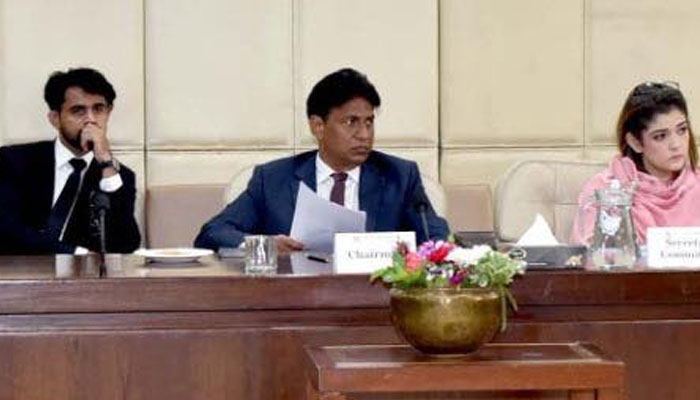
ISLAMABAD: A sub-committee of the Senate Standing Committee on Law and Justice on Monday approved the Family Courts (Amendment) Bill, 2024, which requires the family courts to set a monthly maintenance amount for divorcees and their children at the first hearing of a case.
The meeting of the Senate Standing Committee on Law and Justice’s Sub-Committee was chaired by Senator Zamir Hussain Ghumro. The bill was moved by Senator Samina Mumtaz Zehri to reduce the impact of prolonged divorce cases on women with no source of income. It examined the report on the legislative proposals contained in the Family Courts (Amendment) Bill, 2024, introduced by Senator Zehri during the Senate sitting held on September 9, 2024.
The sub-committee members unanimously emphasized the need for the swift resolution of divorce cases, which often remain pending in Family Courts for extended periods. Members highlighted the financial hardships faced by divorcees and their children during these delays and stressed the importance of fixing a monthly interim maintenance amount for their sustenance.
Senator Zehri noted that approximately 90 percent of women in Pakistan do not have an independent source of income, and leaving them without any monetary support is a cruel act. She underlined the need for a legally fixed maintenance amount to support the affected parties.
The Family Courts(Amendment) Bill, 2024 proposes that the Court shall, at the first hearing, fix a maintenance amount for the divorcee and her children. It further stipulates that if the defendant fails to pay the fixed maintenance amount by the 14th day of each month, their defence shall be struck off, and the Family Court shall decree the suit for maintenance based on the averments in the plaint and any supporting documentation on record.
The additional secretary of the Ministry of Law and Justice stated that similar amendments have recently been enacted in Punjab, and clarified that the Ministry’s jurisdiction is limited to the federal domain. The convener remarked that, under Article 35 of the Constitution, the state is liable to protect the marriage, the family, the mother, and the child. He stressed that leaving a divorcee and her children without any monetary support establishes a grave societal concern.
Senator Anusha Rahman Ahmad Khan virtually attended the meeting and endorsed the remarks of the convener. While mentioning the importance of the bill, she encouraged the mover and stressed for introduction of more bills for the empowerment of women in Pakistan. Convener Senator Zamir Hussain Ghumro and Senator Anusha Rahman Ahmad Khan supported the bill and it was unanimously passed as introduced and forwarded to the relevant committee for further transmission to the Senate House.







-
 Savannah Guthrie Mom Update: Unexpected Visitors Spark Mystery Outside Nancy's Home
 -
 Elle Fanning Shares Detail About Upcoming Oscars Night Plan With Surprise Date
 -
 Demi Lovato Spills Go-to Trick To Beat Social Anxiety At Parties
 -
 Benny Blanco Looks Back At The Time Selena Gomez Lost Her Handrwritten Vows Days Before Wedding
 -
 Naomi Watts Reveals Why She Won't Get A Facelift In Her 50s
 -
 Travis Kelce's Mom Donna Fires Back At Critic With Sarcastic Reply After Body Jab
 -
 Kendall Jenner Gets Candid About Her Differences With The Kardashian Clan Over Style Choices
 -
 Sam Altman Opens Up About OpenAI, Anthropic, Pentagon Conflict
 -
 Brenda Song Confesses Fascination With Conspiracy Theories
 -
 Lunar Eclipse 2026: Time, Date, Sighting Locations, Know Every Detail
 -
 Death Toll Climbs To 54 As Floods Wreck South-eastern Brazil
 -
 Katie Price Drops Bombshell Plan To Cash In On Marriage
 -
 Ryan Gosling Shares How Daughters' 'honest' Feedback Keeps Him Grounded
 -
 Neve Campbell Explains Why She Avoids Watching Scary Movies As She Returns To 'Scream 7'
 -
 Milan Tram Crash Leaves Two Dead, 39 Injured
 -
 Timothee Chalamet Touches On His Personality's Relatability With 'Marty Supreme' Role