
New power technologies termed key to sustainable energy future
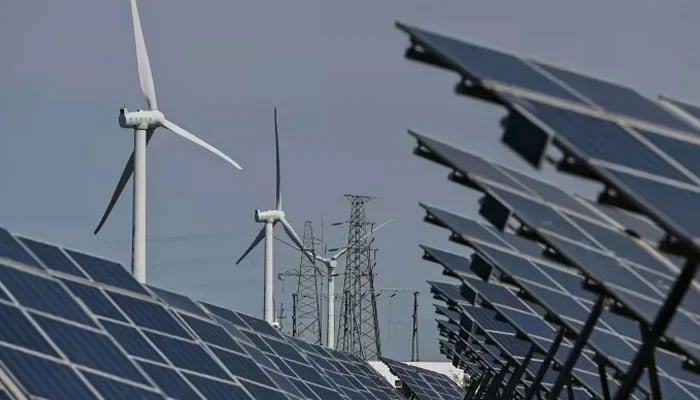
SWABI: Speakers at the International Conference on Emerging Power Technologies (ICEPT-2025) at Ghulam Ishaq Khan Institute of Engineering Sciences and Technology said that these technologies were crucial for a sustainable and efficient energy future while meeting the increasing power needs of industry and consumers.
The two-day conference was organized by the Faculty of Electrical Engineering (FEE) in collaboration with the Institute of Electrical and Electronics Engineers (IEEE), Islamabad chapter.Haseeb Saqib, general manager of National Engineering Services Pakistan (NESPAK), was the chief guest at the inaugural session. The conference, attended by academicians from across the country, featured speakers who presented their presentations.
Executive Director of the Society for Promotion of Engineering Sciences and Technology in Pakistan (SOPREST) and former WAPDA chairman Shakeel Durrani was also present on the occasion.
Haseeb Saqib said that Pakistan’s power sector was at a crossroads, over the past decade, Pakistan has made significant strides in increasing its generation capacity, yet, the power sector faces persistent, deeply structural challenges that must be urgently addressed.
He highlighted several issues, including seasonal demand imbalance, leading to underutilisation of capacity in winters and peak shortages in summers; high capacity charges, burdening consumers with inflated tariffs; chronic circular debt, caused by poor recoveries, misaligned subsidies, and inefficiencies in governance; dependence on imported fuels, exposing the system to global volatility and forex pressures; aging transmission and distribution networks, leading to high system losses and frequent disruptions; evacuation constraints, especially from the hydropower-rich northern and coal-based southern regions; and a lack of implementation policies.
“Leveraging emerging technologies to drive transformation, overcome these barriers, and align with global energy transitions, Pakistan must urgently embrace emerging power technologies through strategic, systemic reform,” he added.
Prof Dr Syed Muhammad Hassan Zaidi, rector of GIK Institute, said that emerging technologies - from artificial intelligence and machine learning to smart grids, block chain-based energy trading, battery innovations, and renewable integration - are enabling this transformation. “These technologies are not futuristic concepts anymore. These are actively being developed, tested and deployed in many parts of the world, including here in Pakistan,” he added.
Dr Arbab Abdur Rahim said that the conference has provided a platform for academia and industry representatives to discuss the increasing energy needs and devise plans to conduct research while meeting power demands in an environment of artificial intelligence-driven technology.







-
 Kash Patel Fires FBI Officials Behind Trump Mar-a-Lago Documents Probe, Reports Say
 -
 Martin Short's Daughter Katherine's Death Takes Shocking Turn As Terrific Details Emerge
 -
 Patrick Dempsey Reacts To Tragic Death Of His 'Grey's Anatomy' Co-star Eric Dane
 -
 Sidney Crosby Injury News Shakes Penguins After Olympic Tournament
 -
 Yankees Honour CC Sabathia With No. 52 Retirement This September
 -
 Cuban Government Says Boat Full Of Armed Men Fired On Border Guards, Killing 4
 -
 Lily Collins Faces Intense Pressure After Landing Audrey Hepburn Role: Source
 -
 FIFA World Cup Security Concerns Spike After Recent Cartel Violence In Mexico
 -
 Shamed Andrew Ordered To Curb Hobby: ‘It’s A Bad Look’
 -
 Cardi B 'no-nonsense' Move: Why She Distanced Herself From Stefon Diggs? Source
 -
 Metallica Announce 2026 ‘Life Burns Faster’ Las Vegas Sphere Residency
 -
 ‘From Dating Scams To Fake Lawyers’: OpenAI Bans ChatGPT Accounts Over Misuse
 -
 Amy Schumer Reveals She Pushed Through Illness Mid-performance: 'Proud I Made It'
 -
 Shamed Andrew Can No Longer Take The ‘heat’ Of His Actions
 -
 Royals Adamant To Show Andrew Is ‘just One Bad Apple’
 -
 Jessie Buckley Reveals Why BAFTA Win Felt Extra 'special' With Cillian Murphy