
No water, no food
Country’s water shortage woes have reached critical level, and Sindh reporting an overall 50% water shortage
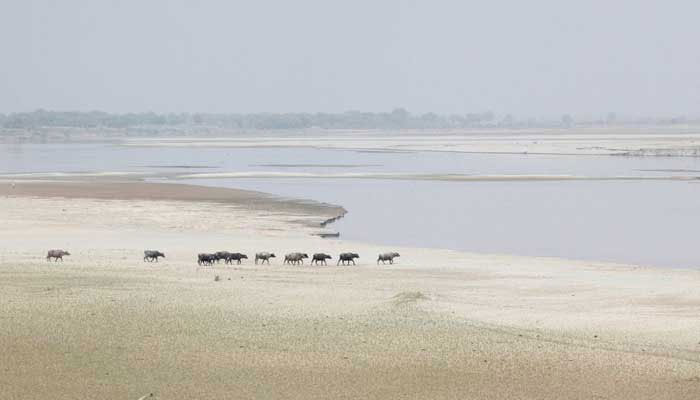
With agriculture making up almost a quarter of Pakistan’s GDP and well over a third of its employment, Kharif (sowing) season is an incredibly important time of year for the country. What happens for farmers now, for good or ill, may well have an outsized impact on what the rest of the country pays for its food. Sadly, reports suggest that this Kharif season is shaping up towards the ill side. The country’s water shortage woes have reached a critical level, with both the Tarbela and Mangla Dams at dead level and Sindh reporting an overall 50 per cent water shortage. The situation is so dire that, on Wednesday (March 26), the Advisory Committee of the Indus River System Authority held a meeting and decided to make only drinking supplies available for April. According to an official statement “the summer 2025 weather outlook presented by Pakistan Meteorological Department (PMD), approved the water availability only for the month of April 25 with 43pc system shortfall”. The PMD also points out that below-normal rain and above-normal temperatures are forecast for April, May and June and that winter snowfall in the catchments of Indus and Jhelum was recorded as 26.8 inches against the normal of 49.7 inches, reducing water inflows by almost a third. All of this raises the potential for an acute shortage of water for irrigation, which could have serious consequences for crop production.
So how did the country reach such a precipitous stage of water scarcity? For one, it is not as though this problem came entirely unforeseen. For years, experts have been warning of Pakistan’s declining per capita water availability, which fell by 400 per cent between 1947 and 2021. The latter was the year in which some experts began warning that the country would have only very limited usable water by 2025. Well, we are now in 2025. According to World Bank predictions, water availability will fall below the minimum threshold of 1000 cubic meters per person by the end of this year. The problem has only been compounded by accelerating global warming, depriving Pakistan of the glaciers and rains that it needs to feed its rivers. The glaciers in the mountainous regions that the Indus River, our main source of freshwater for irrigation and drinking, flows from have lost 16 per cent of their mass in just the past five years. It also does not help that Pakistan has among the most wasteful water infrastructure and management networks in the world.
Today’s water crisis, if not handled, will become tomorrow’s food crisis. Already, an estimated 82 per cent of the population cannot afford a healthy diet. The country might not be able to do much about long-term trends like climate change, considering how little it contributes in terms of global emissions, but a good start would be to make the country’s water infrastructure more efficient. Right now, we waste an estimated 10 trillion gallons annually, with the irrigation system alone wasting 60 per cent of the water it receives during conveyance and use. There are also political undertones to this water crisis, with some provinces seeming to bear a disproportionate share of the burden. If allowed to fester, they could further divide an already very polarised country while also making it harder to reach the consensus needed to solve the material problem at hand. Simply put, a nation cannot last without water.







-
 UK Asylum System Faces Changes As Refugees Will Get Temporary Protection Only
 -
 Meghan Markle Has Realised ‘star Power’ Is Not Enough After Jordan Trip
 -
 USC Leading Scorer Chad Baker-Mazara Leaves Program Amid Losing Streak
 -
 Google Is Winding Down Popular App 'Pixel Studio': Here's Why
 -
 Zendaya, Tom Holland Secretly Married?
 -
 Dove Cameron Reveals Why She's Limiting Relationship Talk After Damiano David Engagement
 -
 Bulls Vs Bucks: Giannis Out, Simons And Williams Sidelined
 -
 Princess Beatrice Is ‘haunted’ By Dreadful Shamed Andrew Arrest
 -
 Panthers Vs Islanders: Dmitry Kulikov Returns From Injured Reserve As Schwindt Hits IR
 -
 SAG-AFTRA Drops SAG Awards Name To Rebrand
 -
 Next Full Moon: How To Watch The Total Lunar Eclipse On March 3
 -
 Bhad Bhabie Shares Tender Moment With Daughter Amid Cancer Setback Hint
 -
 Silver, Gold Prices Surge Amid Geopolitical Uncertainty After US-Israel Attack On Iran
 -
 Britain To Trial Social Media Ban For Hundreds Of Thousands Of Children Under-16
 -
 Prince Harry Should Face Same Fate As Shamed Andrew, Says Expert
 -
 Oil Price Jumps, Stocks Fall After US And Israel Strike Iran