
Fasting among children may cause growth problems
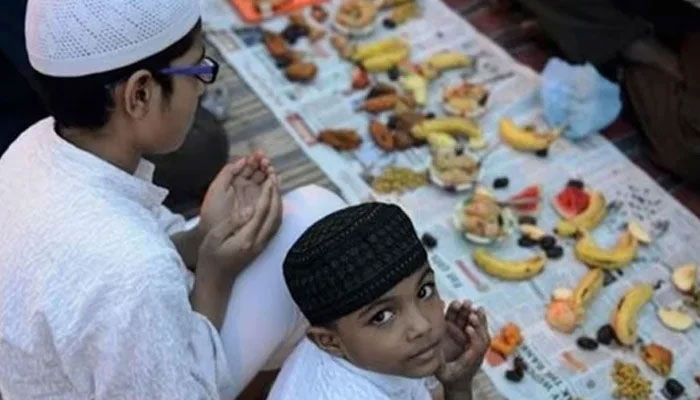
Rawalpindi : The weather has started becoming hot while the fasting duration, from ‘sehr’ to ‘iftar’ is over thirteen-and-a-half hours and in the existing conditions, according to paediatricians, frequent fasting among children particularly below 11 or 12 years of age may not be recommended.
Studies have revealed that because of having smaller reserves in their body, children while fasting for long hours may face growth-related problems. Paediatricians believe that fasting among small children may affect their mental health along with physical growth. Children can have smaller meals and they need these after small intervals and that is why they cannot afford to observe fast for over 13 to 14 hours. Paediatricians say that parents should not encourage regular fasting among children in the holy month of Ramazan.
It is important that Islamic fasting becomes an obligation on a Muslim when he or she reaches puberty usually after the age of 11 or 12 and there is no need of putting the health of a child at stake due to fasting particularly when it is not an obligation. In Pakistan, it has become a common practice that children below 10 or 11 years of age do fast off and on following their passion and parents along with relatives encourage them. Health experts say that the majority of parents are unaware of the effects of fasting on the health of their children.
Medically, children while fasting may suffer from dehydration and hypoglycaemia (lowering of glucose in the blood) and it can affect their immunity making them more vulnerable to severe infections such as diarrhea and recurrent pneumonia. Paediatricians say that parents must keep in mind that most of the children in Pakistan are already malnourished and they may face severe complications in result of a little carelessness while fasting.
Research has shown that the brain operates at a heightened metabolic rate, primarily relying on the oxidative utilization of glucose. The brain function can be impacted by glucose deprivation, under hypoglycaemic conditions and even minor fluctuations in central glucose availability can influence neural and thus cognitive performance of a child. An optimal supply of glucose to the brain is crucial for maintaining cognitive functions.
Medically, a child of six years of age or above needs at least one-and-a-half to two litres of water in a day that he cannot take while fasting because of having a small stomach. It is not possible for a child to take a large quantity of food or fluids at one time, at ‘Sehr’, like adults, rather he needs small but frequent meals after every three to four hours. Parents must be aware of the fact that insufficient intake of food or fluid may affect growth of a fasting child.







-
 Andrew, Sarah Ferguson Refuse King Charles Request: 'Raising Eyebrows Inside Palace'
 -
 Adam Sandler Reveals How Tom Cruise Introduced Him To Paul Thomas Anderson
 -
 Washington Post CEO William Lewis Resigns After Sweeping Layoffs
 -
 North Korea To Hold 9th Workers’ Party Congress In Late February
 -
 All You Need To Know Guide To Rosacea
 -
 Princess Diana's Brother 'handed Over' Althorp House To Marion And Her Family
 -
 Trump Mobile T1 Phone Resurfaces With New Specs, Higher Price
 -
 Factory Explosion In North China Leaves Eight Dead
 -
 Blac Chyna Opens Up About Her Kids: ‘Disturb Their Inner Child'
 -
 Winter Olympics 2026: Milan Protestors Rally Against The Games As Environmentally, Economically ‘unsustainable’
 -
 How Long Is The Super Bowl? Average Game Time And Halftime Show Explained
 -
 Natasha Bure Makes Stunning Confession About Her Marriage To Bradley Steven Perry
 -
 ChatGPT Caricature Prompts Are Going Viral. Here’s List You Must Try
 -
 James Pearce Jr. Arrested In Florida After Alleged Domestic Dispute, Falcons Respond
 -
 Cavaliers Vs Kings: James Harden Shines Late In Cleveland Debut Win
 -
 2026 Winter Olympics Snowboarding: Su Yiming Wins Bronze And Completes Medal Set