
Why textile titans must transform
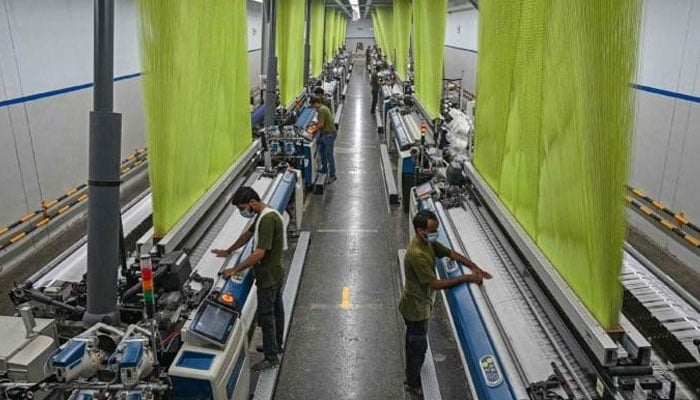
LAHORE: The resilience demonstrated by Pakistan’s textile sector in recent years indicates its potential for further growth, provided the business environment improves -- particularly through better governance, reliable energy sources and reduced input costs.
The sector’s ability to fulfil export orders on time, despite challenges such as security concerns and rising business costs, highlights several key strengths. Pakistani textile manufacturers prioritise honouring commitments and maintaining credibility in global markets, even in the most adverse conditions. This reliability fosters long-term relationships with buyers.
With a long history of export-oriented operations, the industry benefits from established systems, skilled labour and production processes that continue to function despite external disruptions. Textile workers and management teams have consistently adapted to challenges, demonstrating a strong work ethic and a problem-solving mindset to ensure production continuity.
Despite inefficiencies, the government has often supported the textile sector during times of crisis (eg, energy subsidies, export incentives) to keep factories operational. International buyers rely on Pakistani textiles for their competitive pricing and quality, which compels manufacturers to meet deadlines and maintain business relationships. Over time, firms have developed mechanisms to mitigate risks, including alternative supply chain strategies, security investments, and backup production arrangements.
Given that textiles account for over 60 per cent of Pakistan’s exports, businesses simply cannot afford to miss orders, which forces them to operate under any circumstances. Even in the current challenging environment, where government inefficiencies are expected to persist in the medium term, the country’s wealthy textile players have the opportunity to unlock the sector’s full export potential by taking proactive measures.
Pakistan’s wealthy textile players cannot afford to wait for government reforms. Instead, they must spearhead the transformation by taking bold steps to modernise, diversify and optimise their operations.
They should invest in captive power generation by setting up solar, wind and hybrid power plants to reduce reliance on expensive and unreliable grid electricity. Moreover, adopting energy-saving technologies in spinning, weaving and dyeing processes will help lower operational costs.
There is a need to bolster supply chains by investing in the local production of raw materials (eg synthetic fibres, dyes and chemicals) to reduce reliance on costly imports. Besides this, establishing shared warehousing and private transportation networks could help bypass supply chain bottlenecks.
Rather than waiting for state intervention, textile tycoons should mobilise capital currently tied up in real estate or the capital market to shift towards value-added products. These products fetch much higher prices and can offset the inefficiencies created by government shortcomings. The focus should be on high-end fashion, technical textiles and home furnishings, rather than just basic yarn and fabric. By adding value, manufacturers can expand their e-commerce capabilities and directly sell to international consumers via online platforms, bypassing traditional bulk buyers.
Instead of relying on government institutions to provide the skilled workforce they require, textile leaders should establish dedicated training institutes to improve worker productivity. Furthermore, investment in automated dyeing, digital printing, and AI-driven quality control will enhance operational efficiency.
Targeting new markets and expanding exports to non-traditional regions (eg Africa, South America and Eastern Europe) is crucial to reduce reliance on the EU and US markets. Simultaneously, developing partnerships with foreign brands and establishing distribution centres in key markets will provide greater flexibility and access.
The textile tycoons possess enough influence to advocate for self-regulation within the industry and influence policy. By collaborating, large players can develop private industrial zones with uninterrupted utility supplies. Negotiating with buyers for better payment terms, lower financing costs and stronger supplier partnerships will further strengthen the sector’s competitiveness.







-
 Lana Del Rey Announces New Single Co-written With Husband Jeremy Dufrene
 -
 Ukraine-Russia Talks Heat Up As Zelenskyy Warns Of US Pressure Before Elections
 -
 Lil Nas X Spotted Buying Used Refrigerator After Backlash Over Nude Public Meltdown
 -
 Caleb McLaughlin Shares His Resume For This Major Role
 -
 King Charles Carries With ‘dignity’ As Andrew Lets Down
 -
 Brooklyn Beckham Covers Up More Tattoos Linked To His Family Amid Rift
 -
 Shamed Andrew Agreed To ‘go Quietly’ If King Protects Daughters
 -
 Candace Cameron Bure Says She’s Supporting Lori Loughlin After Separation From Mossimo Giannulli
 -
 Princess Beatrice, Eugenie Are ‘not Innocent’ In Epstein Drama
 -
 Reese Witherspoon Goes 'boss' Mode On 'Legally Blonde' Prequel
 -
 Chris Hemsworth And Elsa Pataky Open Up About Raising Their Three Children In Australia
 -
 Record Set Straight On King Charles’ Reason For Financially Supporting Andrew And Not Harry
 -
 Michael Douglas Breaks Silence On Jack Nicholson's Constant Teasing
 -
 How Prince Edward Was ‘bullied’ By Brother Andrew Mountbatten Windsor
 -
 'Kryptonite' Singer Brad Arnold Loses Battle With Cancer
 -
 Gabourey Sidibe Gets Candid About Balancing Motherhood And Career