
Scholar from Malakand unveils groundbreaking research on AI security risks
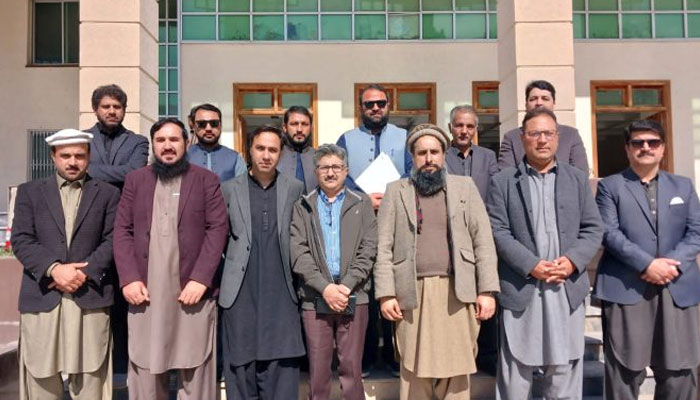
Malakand : Malik Zubair, an MPhil scholar at the University of Malakand’s Department of Computer Science & IT, has successfully defended his research on the cybersecurity threats posed by Artificial Super Intelligence (ASI), proposing innovative solutions to counter these emerging risks, says a press release.
Under the supervision of Dr. Siffat Ullah Khan, Malik Zubair’s research explores the unprecedented challenges ASI presents, including existential risks, next-generation cyber-attacks, regulatory voids, loss of human control, and ethical concerns. His work sheds light on the pressing need for stringent governance models to prevent unintended consequences arising from unchecked AI advancements.
During his defence, the scholar emphasized that existing cybersecurity frameworks are ill-equipped to handle ASI-driven threats, which could surpass human capabilities and operate beyond traditional control mechanisms. He argued that without proactive countermeasures, the world could face an era of unpredictable digital security crises.
To address these vulnerabilities, Zubair proposed a series of strategic solutions. His recommendations include constrained optimization techniques to ensure AI systems function within ethical parameters, a Human-AI Empowerment (HAIE) model to reinforce human oversight, and Multi-Agent Reinforcement Learning (MARL) to develop self-regulating AI environments. Additionally, he advocated for the implementation of kill switches, AI sandboxing techniques, and a comprehensive ethical and regulatory framework to safeguard against ASI-related risks.
The external examiner, Professor Dr. Muhammad Nawaz of IM Sciences, Peshawar, commended the research, describing it as a crucial contribution to the ongoing global discourse on AI security. He noted that as artificial intelligence rapidly evolves, research like Zubair’s is essential to shaping regulatory frameworks and ensuring AI development remains aligned with human interests.
With AI safety becoming an increasingly critical concern worldwide, Malik Zubair’s work stands as a testament to the role academia can play in preempting technological risks. His research serves as a guiding framework for policymakers and cybersecurity experts striving to regulate AI before it surpasses human control.







-
 Prince Harry And Meghan Unlikely To Meet Royals In Jordan
 -
 Hero Fiennes Tiffin Shares Life-changing Advice He Received From Henry Cavill
 -
 Savannah Guthrie's Fans Receive Disappointing News
 -
 Prince William Steps Out For First Solo Outing After Andrew's Arrest
 -
 Jake Paul Chooses Silence As Van Damme Once Again Challenges Him To Fight
 -
 Google Disrupts Chinese-linked Hacking Groups Behind Global Cyber Attacks
 -
 Four People Killed In Stabbing Rampage At Washington Home
 -
 Meghan Pushes Prince Harry Into Territory That’s Dangerous To His Brand: ‘She Isn’t Hearing A Word Of It’
 -
 Christina Applegate Reflects On Lasting Impact Of Being Molested In Childhood
 -
 Martin Short Makes Big Decision Following Tragic Death Of Daughter
 -
 Antarctica’s Mysterious ‘gravity Hole’: What’s Behind The Evolution Of Earth’s Deep Interior?
 -
 Hilary Duff Addresses Ashley Tisdale's 'toxic Mom Group' Claims And Matthew Koma's Firey Response
 -
 Jack Hughes's Proximity To Trump Angers Tate McRae Fans
 -
 Neve Campbell Opens Up About Her 'difficult Decision' To Not Sign 'Scream 6'
 -
 Nobel-winning Scientist Resigns From Columbia University After Epstein Links Revealed
 -
 Prince William Remarks At BAFTAs 'indicative' Of King Charles Physical, Mental Health Too