
LHCBA conference stresses alternative dispute resolution
System offered low-cost alternative to traditional litigation, says SC Justice Mansoor Ali Shah
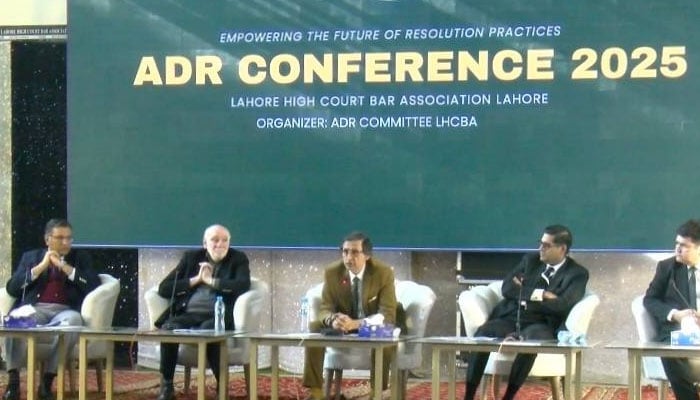
LAHORE: The Lahore High Court Bar Association (LHCBA) organised a conciliation conference here on Saturday where senior Supreme Court judge Justice Mansoor Ali Shah highlighted the cultural compatibility and effectiveness of the conciliation system in resolving disputes.
He highlighted that the system offered a swift, low-cost alternative to traditional litigation and eliminated the social and financial challenges associated with prolonged court cases. He noted that in 2023, 1.7 million cases were decided across Pakistan, yet a significant backlog remains due to the shortage of judges—only 13 judges per million people. He called for alternative dispute resolution (ADR) methods to alleviate the burden on the judiciary and provide litigants with timely resolutions.
“Delays in case decisions often result from strikes, systemic inefficiencies, and cultural adherence to outdated practices,” Justice Shah said. “Adopting conciliation has become a necessity, as it can resolve disputes within hours or days, without requiring new legislation. It is a solution deeply rooted in our culture and provides cost-effective outcomes for litigants while protecting lawyers’ financial interests.”
Justice Jawad Hassan stressed the need to change the mindset of legal practitioners toward adopting ADR mechanisms. He highlighted that while conciliation laws exist, their implementation has been hindered by resistance to change. He pointed out that Pakistan still relies on the outdated Conciliation Act of 1940, while neighbouring countries like India updated their frameworks decades ago.
“Despite challenges, progress has been made,” Justice Hassan stated, noting that 20 conciliation-related judgments were issued by the Lahore High Court last year alone. However, he called for mandatory conciliation provisions and stronger enforcement of existing laws to ensure widespread adoption.
Justice Sultan Tanveer Ahmed addressed concerns among lawyers about potential financial impacts, urging them to embrace conciliation centres as viable sources of income. He said that conciliation reduces fees for clients while allowing lawyers to play a pivotal role in resolving disputes efficiently.
Justice Asim Hafeez underscored the importance of proper arrangements and training for conciliation, particularly for the growing number of civil and commercial cases. “Lawyers have the power to lead the conciliation process and build a sustainable future through it,” he remarked, calling for reforms in legal education to include ADR-focused curriculums.
The conference concluded with a consensus on the necessity of conciliation as a complementary system to traditional litigation, aiming to address Pakistan’s judicial backlog and improve access to justice.







-
 Jennifer Aniston Already Decided Her Wedding Dress?
 -
 Prince Harry, Meghan’s Hollywood Party Drama Exposes Chaotic PR Strategy
 -
 Jennifer Garner Reacts To Savannah Guthrie's Video As Search For Nancy Guthrie Continues
 -
 Bad Bunny Leaves Fans Worried With Major Move After Super Bowl Halftime Show
 -
 Captain Jason Talks Personal Hardships He Faced Ahead Of 'Below Deck' Season 4
 -
 Anti-monarchy Group Reacts To Prince William, Kate Middleton Statement On Epstein Scandal
 -
 Andrew 'must' Apologize Not Wider Royal Family For Jeffrey Epstein Links
 -
 Super Bowl 2026: Why Didn't Epstein Survivors Ad Air On TV?
 -
 'Harry Potter' TV Series Exec Teases 'biggest Event In Streaming': Deets
 -
 Camila Mendes Finally Reveals Wedding Plans With Fiancé Rudy Mancuso
 -
 Beatrice, Eugenie Blindsided By Extent Of Sarah Ferguson’s Epstein Links
 -
 Girl And Grandfather Attacked In Knife Assault Outside Los Angeles Home
 -
 Super Bowl Halftime Show 2026: What Did Trump Say About Bad Bunny?
 -
 Piers Morgan Defends Bad Bunny's Super Bowl Performance, Disagrees With Trump Remarks
 -
 Andrew Lands In New Trouble Days After Royal Lodge Eviction
 -
 Instagram, YouTube Addiction Case Trial Kicks Off In California