
Bhutan thrives while Pakistan misses crypto revolution
Bhutan emerges as fifth-largest holder of Bitcoin with its reserves constituting 35% of its GDP
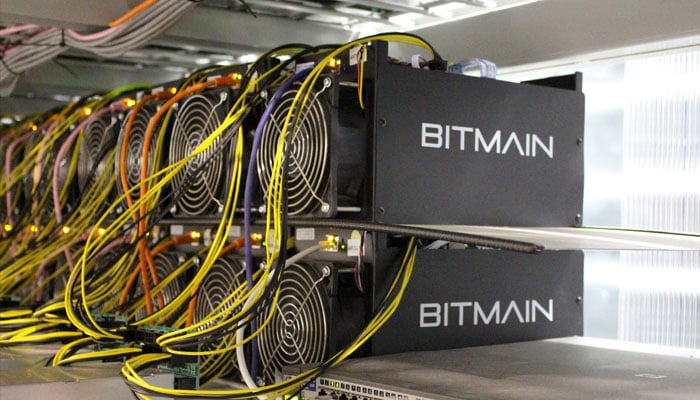
ISLAMABAD: Although Pakistan and Bhutan are 2,000 kilometers apart, both ventured into crypto-mining at the same time, hoping to boost their economies.
While Pakistan failed to move beyond making headlines, Bhutan quietly made significant progress. Today, Bhutan has emerged as the fifth-largest holder of Bitcoin, after the US, China, the UK, and Ukraine. The country’s Bitcoin reserves now constitute 35 percent of its GDP.
Back in 2020, the government of Khyber Pakhtunkhwa (KP) was excited about the potential of Bitcoin mining to generate revenue. The project was conceived by Waqar Zaka and Ghulam Ahmed Roomi, two crypto experts, and backed by Zia Ullah Bangash, the chief minister’s adviser on science and technology. Roomi, a miner with two operational mining farms in Shangla, offered to use them as pilot projects.
KP was an ideal location for such a venture. The province’s abundant water reservoirs could generate sufficient electricity to power mining operations. A government study estimated that KP had the potential to produce 30,000 megawatts of electricity through hydropower.
Cryptocurrency mining involves using powerful computers to solve complex mathematical problems, a process that requires significant electricity and forms a major part of operational costs. Miners are rewarded with coins for validating transactions, providing a potentially lucrative revenue source. This could have been a lifeline for KP, which struggles to pay government employees’ salaries and has seen its tourism industry decline due to terrorism.
In December 2020, the KP provincial assembly passed a resolution urging the federal government, led by Imran Khan, to legislate on cryptocurrencies. A committee, chaired by Bangash and including provincial finance officials and crypto experts, was formed in February 2021 to draft recommendations. A bill to regulate crypto-mining was prepared and ready for cabinet approval.
However, a sudden turn of events derailed the project. On the eve of presenting the draft bill to the provincial cabinet, Bangash received calls from the Prime Minister’s Office instructing him not to proceed, without providing any reason. Frustrated by the lack of support, Bangash resigned in protest. In an interview with The News, he confirmed his resignation was due to the obstacles created by the federal government.
Meanwhile, one of Roomi’s mining farms was raided by the Federal Investigation Agency (FIA), which confiscated equipment despite lacking jurisdiction over such operations. Bangash revealed that over 300 overseas Pakistanis had expressed interest in investing in crypto-mining if proper regulations were in place. Even international media, including Reuters, highlighted KP’s forward-thinking vision. Yet, the federal government’s follow-up committee turned out to be ineffective, leaving Pakistan’s crypto ambitions unrealised.
While Pakistan stumbled, Bhutan advanced quietly, much like its approach to Pakistan’s nuclear programme decades ago. Bhutan’s sovereign investment arm, Druk Holding & Investments (DHI), spearheaded the crypto-mining initiative. Although some sources suggest operations began in 2019, evidence indicates they ramped up in 2020.
Bhutan leveraged its abundant hydropower resources, with a potential of 23,760 megawatts, to power large-scale Bitcoin mining operations sustainably. The decline in tourism, exacerbated by Covid-19, prompted the country to diversify its revenue sources.
By 2021, Bhutan expanded its scope, investing millions in digital assets. Today, the country’s Bitcoin holdings are valued at $1.2 billion, even after cashing out portions to pay government salaries. Bhutan aims to increase its mining capacity to 600 megawatts in partnership with Singapore-based company Bitdeer.
Beyond cryptocurrency, Bhutan’s DHI, which contributes 25 percent of its GDP, has ventured into other emerging technologies, including artificial intelligence, the metaverse, and blockchain. One of its most notable initiatives is the world’s first decentralised national identity platform, a concept Pakistan is now exploring through recent legislation.






-
 Michael B. Jordan Makes Bombshell Confession At Actor Awards After BAFTA Controversy: 'Unbelievable'
 -
 Prince William Willing To Walk Road He ‘loathes’ For ‘horror Show’ Escape: ‘He’s Running Out Of Allies Fast’
 -
 Pentagon Says No Evidence Iran Planned Attack On US, Undercutting Strike Justification
 -
 Prince William’s Changes Priorities With Harry After Kate Middleton’s Remission: ‘It Couldn't Be Worse’
 -
 Justin Bieber Gets Touching Tribute From Mom Pattie Mallette On Turning 32 Amid Limited-edition Birthday Drop
 -
 Jada Pinkett Smith Details How Her Memoir Combats 'shame' Around Alopecia
 -
 Harrison Ford Reflects On Career As He Receives Life Achievement Award At 2026 Actor Awards
 -
 Timothee Chalamet's Red Carpet Date For Actor Awards Not Kylie Jenner This Year
 -
 Weather Forecast For Tomorrow: Wintry Mix Overnight And Warmer Temps Midweek
 -
 Keith Urban 'solitary' Life Laid Bare After Nicole Kidman Split
 -
 SAG Actor Awards 2026 Winners: Complete List
 -
 UK Asylum System Faces Changes As Refugees Will Get Temporary Protection Only
 -
 Meghan Markle Has Realised ‘star Power’ Is Not Enough After Jordan Trip
 -
 USC Leading Scorer Chad Baker-Mazara Leaves Program Amid Losing Streak
 -
 Google Is Winding Down Popular App 'Pixel Studio': Here's Why
 -
 Zendaya, Tom Holland Secretly Married?