
PIMS struggling with 50% staff amid patients load
Hospital’s Executive Director, Dr Rana Imran Sikander, presents a grim picture of staffing crisis
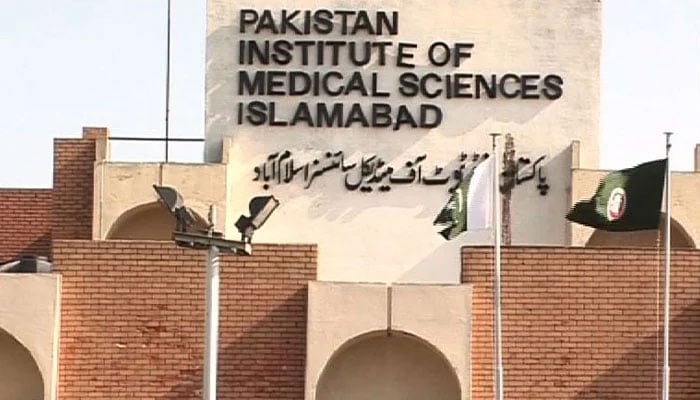
ISLAMABAD: The Pakistan Institute of Medical Sciences (PIMS) Islamabad is operating at half its capacity due to a severe 50pc shortage of staff, including doctors, nurses, paramedics, and other support personnel, while being overwhelmed with patients from Khyber Pakhtunkhwa, Kashmir, Gilgit-Baltistan, and many areas of Punjab, PIMS officials have told a National Assembly standing committee.
During a meeting of the National Assembly Standing Committee on National Health Services, Regulations, and Coordination on Monday, chaired by Dr Mahesh Kumar Malani, the hospital’s Executive Director, Dr Rana Imran Sikander, presented a grim picture of the staffing crisis. He informed the committee that out of 4,153 sanctioned posts, only 2,856 were filled, leaving 1,297 vacancies. The committee was alarmed by the acute shortage of staff in critical departments such as the burn centre which treated over 700 patients in 2024 despite having only 20 beds and 12 ventilators. Committee members stressed the urgent need to expedite recruitments to ease the burden on the hospital and improve its capacity to provide care.
Dr Mahesh emphasized that filling these vacancies would directly enhance the hospital’s efficiency and enable it to better serve the increasing influx of patients. The officials informed the committee that while restrictions on hiring for grades 17 and above delayed recruitments, plans were underway to hire the staff on a contractual basis and to advertise vacancies for lower grades soon. The committee also discussed the resurgence of polio cases in Pakistan, expressing alarm over the challenges in administering vaccinations, especially in Khyber Pakhtunkhwa.
Dr Amjad Ali Khan, a member of the committee, highlighted the social barriers to immunization in certain areas and called for a comprehensive plan involving all stakeholders to eradicate the disease.
The committee resolved to summon provincial health secretaries in upcoming meetings to devise strategies for effective polio eradication, focusing on public awareness campaigns and addressing resistance to vaccination efforts.
Another pressing issue raised during the meeting was the regulation of rehabilitation centres in Islamabad. Officials from the Ministry of National Health Services disclosed that only 25 out of 55 rehabilitation centres in the capital were registered, raising concerns about the standards of care and compliance. The committee members including Dr Shazia Sobia Aslam called for an immediate audit of these facilities to ensure they meet minimum requirements, including the availability of qualified psychiatrists. She pointed to incidents such as the Noor Mukadam case, questioning the ministry’s oversight of such facilities. The ministry officials assured the committee that a detailed report on sealed and de-sealed centres would be submitted soon.
Several key legislative matters including amendments to Pakistan Nursing Council, Pakistan Medical and Dental Council, Islamabad Healthcare Regulation, and the Pharmacy Act were deferred due to the absence of the movers. Discussions on three starred questions were also postponed.
Additionally, committee member Aliya Kamran raised concerns about the financial management of the Polyclinic Hospital, particularly regarding funds allocated for land acquisition. The officials clarified that land in G-11/3 had been procured following legal disputes over Argentina Park, but further details on fund utilization would be presented in future meetings.
The standing committee concluded the meeting by urging reforms to address systemic issues in healthcare governance, including transparency in financial matters, adequate staffing of public hospitals, and improved regulation of private healthcare facilities. The next meeting will focus on the Pakistan Medical and Dental Council (PMDC) and other legislative priorities. The session underscored the critical need for swift and coordinated efforts to address Pakistan’s healthcare challenges.






-
 Is Human Mission To Mars Possible In 10 Years? Jared Isaacman Breaks It Down
 -
 ‘Stranger Things’ Star Gaten Matarazzo Reveals How Cleidocranial Dysplasia Affected His Career
 -
 Google, OpenAI Employees Call For Military AI Restrictions As Anthropic Rejects Pentagon Offer
 -
 Peter Frampton Details 'life-changing- Battle With Inclusion Body Myositis
 -
 Waymo And Tesla Cars Rely On Remote Human Operators, Not Just AI
 -
 AI And Nuclear War: 95 Percent Of Simulated Scenarios End In Escalation, Study Finds
 -
 David Hockney’s First English Landscape Painting Heads To Sotheby’s Auction; First Sale In Nearly 30 Years
 -
 How Does Sia Manage 'invisible Pain' From Ehlers-Danlos Syndrome
 -
 Halsey Mentions How She 'gained Control' Over Endometriosis Condition
 -
 Teyana Taylor Says Choosing Movies Over Music 'dumb' Choice?
 -
 Poland Joins Spain In Move To Ban Social Media For Children Under 15
 -
 Shia LaBeouf Sent To Rehab For Not Taking ‘alcohol Addiction Seriously’
 -
 ‘Stingy’ Harry, Meghan Markle Crack Open A Chasm Despite Donation: ‘Do So At Your Own Peril’
 -
 Research Explores How TikTok’s Recommendation System May Influence Teen Beliefs
 -
 Google Wins Approval To Export South Korea’s High-precision Maps After 20 Years—With Strict Conditions
 -
 King Charles’ Health Battle: What Has Been Revealed About His Cancer So Far