
Life in a ‘posh’ area
Everyone in Karachi is billed monthly for water, but many never get this water
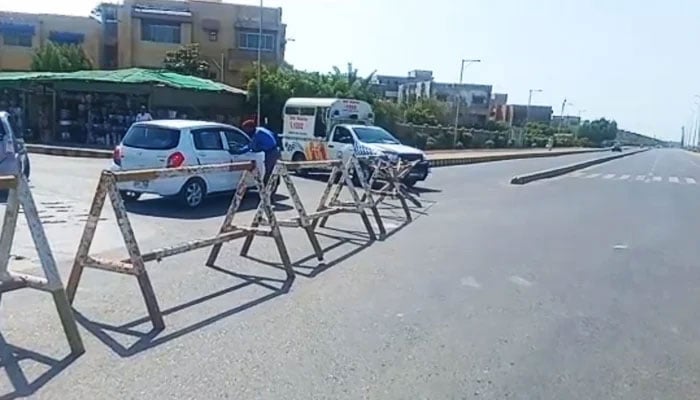
In most ‘posh’ neighbourhoods in Pakistan – and in particular in Karachi – residents must often do things on their own and pay for them even while they pay taxes and other charges for these very services.
Take the case of water.
Everyone in Karachi is billed monthly for water, but many never get this water. Instead, they pay for water through expensive tankers and the cost can run into tens of thousands every month for a household of 6-8 people plus domestic help. Some areas get water for 1-2 hours every 10-12 days and many don’t get even a drop.
The most obvious question is that if there’s enough water to be supplied through water tankers then why can’t it be supplied through the piped network? And the answer to that is that yes there should be enough water to supply to all city residents (after all, they are billed every month for water supply to their homes) but it is wilfully diverted by a cabal of greedy officials, politicians, policemen, and other important and powerful members of society. And this happens because on an annual scale, the profits of controlling Karachi’s residential water supply, or at least partially controlling, is a multi-billion rupee enterprise and in this each player – from bottom to the top – has a cut.
And who pays? Karachi’s hapless residents. And there’s not much by way of protest, presumably because most of these people – who also pay monthly water charges to the city’s water authority – are able to afford paying thousands extra every month for water tankers. Only when the political leadership itself turns off the hydrants that supply water to Karachi’s tanker mafia will this matter be fixed and this relentless robbery of residents come to an end.
Then there is the matter of security: many residents in these ‘posh’ areas have security guards at their homes, or even offices. They also take these security guards whenever they need to step out of their homes. The result is often men dressed in civvies sitting in the open back of a Vigo brandishing weapons (which violates a law against the display of weapons in public by anyone other uniformed police or law enforcement personnel). Many people have private security guards even though the Sindh Police (and through it the Karachi police) gets the largest chunk of funds from the annual provincial budget.
Then take the case of basic street cleaning and garbage collection. While there are some areas that do have a reasonably functional garbage collection system, they are the exception and not the rule as far as the city of Karachi is concerned. You often see debris lying around – in many cases caused by roadwork carried out by the municipal agency – but when residents ask that it be picked up the requests are ignored for months. Then there’s the habit of many residents to treat empty plots as makeshift sites for waste landfill. Of course, these wouldn’t fill up if waste collection was widely available.
As for street cleaning, only the major roads in Karachi’s posh areas are swept on a daily basis. These have the most traffic and sweeping these traffic arteries more or less ensures that all the important people notice that the streets are being cleaned. However, the story is quite different in most of the side streets, where the road cleaning staff, by and large, doesn’t even venture. In fact, it is a common sight to see residents pay the staff on the side to spruce up the stretch of street right outside their gate and home.
Regarding other issues, for instance noise pollution, it seems these areas are a free-for-all. Anyone who wants to explode fireworks in the dead of night because of a wedding in the family, or simply because they like to see fireworks in the dead of night, is able to do that without facing any hindrance or issue from the municipal authority. The same goes for aerial firing, which is very common in ‘posh’ neighbourhoods, and happens mainly because powerful people live in them and they have guards, and these guards seem to think that firing a round from an automatic weapon in the dead of night is perfectly fine.
Encroachments and unauthorised use of premises meant for residential purposes but being used commercially is also very common in ‘posh’ areas. Land zoning regulations governing this are practised more in the breach and that explains why practically on every street in Karachi’s Clifton area, one can find a commercial establishment – school, doctor’s clinic, restaurant. As a result, posh areas come with their own traffic mess and jams, especially during the morning and afternoon school time.
The writer is a journalist based in Karachi. He tweets/posts @omar_quraishi and can be reached at: omarrquraishi@gmail.com







-
 Luke Grimes Reveals Hilarious Reason His Baby Can't Stop Laughing At Him
 -
 Why Kate Middleton, Prince William Opt For ‘show Stopping Style’
 -
 Here's Why Leonardo DiCaprio Will Not Attend This Year's 'Actors Award' Despite Major Nomination
 -
 Ethan Hawke Reflects On Hollywood Success As Fifth Oscar Nomination Arrives
 -
 Tom Cruise Feeling Down In The Dumps Post A Series Of Failed Romances: Report
 -
 'The Pitt' Producer Reveals Why He Was Nervous For The New Ep Of Season Two
 -
 Maggie Gyllenhaal Gets Honest About Being Jealous Of Jake Gyllenhaal
 -
 'Bridgerton' Star Luke Thompson Gets Honest About Season Five
 -
 Prince William On Verge Of Breakdown Because Of 'disgraced' Andrew
 -
 Tig Notaro Reflects On Oscar Nod For 'Come See Me In The Good Light': 'I Was Sleeping'
 -
 Kenyon Sadiq Sets 40-yard Dash Record At NFL Scouting Combine, Eyes First Round
 -
 Talk Show Host Drops Hint About Taylor Swift, Travis Kelce Wedding Date
 -
 Andrew Scandal Brings New Worries For Prince Harry, Meghan Markle
 -
 King Charles Imposes New Restrictions On Ex-Prince Andrew In Surprise Move
 -
 Chris Hemsworth Reveals How Elsa Pataky Guides His Career Moves
 -
 Was Travis Barker In A Relationship With Kim Kardashian Before Marrying Her Sister?