
‘Peace, justice not hindered by religion’

Islamabad:Challenges to peace and justice largely arise from the misinterpretations and actions of followers rather than the essence of religion itself. Manipulated religious teachings, used for personal, political, or ideological gains, frequently fuel conflicts. In this context, a common ground for global unity through diverse paths can be established by teaching and embodying the true essence of faith.
This was said by Justice Dr Syed Muhammed Anwer, judge, Federal Shariat Court, at the concluding session of an international seminar titled “The Role of Religions in Fostering Peace, Harmony, and Justice,” held at the Institute of Policy Studies (IPS), Islamabad. The session was also addressed by Khalid Rahman, chairman IPS, Ambassador (r) Syed Abrar Hussain, vice chairman, IPS, and Prof Dr Mohyuddin Hashmi, dean, Faculty of Arabic and Islamic Studies, Allama Iqbal Open University, Islamabad.
Justice Syed Anwer, drawing attention to Pakistan’s unique constitutional and symbolic recognition of religious minorities, highlighted the reflection of religious inclusivity in the national flag and its definition of minorities. Unlike many nations, Pakistan’s framework considers minorities solely based on religious beliefs, not caste, colour, or creed, ensuring equal constitutional rights for all citizens. However, he acknowledged that the ideal of equality is not always reflected in practice, urging a renewed focus on teaching and promoting the true values of religion.
Exploring the contrasting experiences of minorities in secular and religious states, the speaker pointed out that secular states often face challenges in ensuring the safety and rights of their minority populations. He emphasised the multifaceted nature of the issue, noting that faith communities need to prioritize the dissemination of their core messages of peace and mutual respect.
Presenting his insights on the way forward, Khalid Rahman underscored the complexity of creating a just environment, emphasizing that the prevailing narratives and structures are often shaped by powerful elites who primarily benefit from the status quo. He stressed that the challenges attributed to religion are equally rooted in governance and decision-making processes dominated by these elite groups.
He argued that the inequities and conflicts observed globally are not the result of religious teachings but stem from systemic issues perpetuated by those in authority. Highlighting the global arms trade as an example, he noted that the largest weapons producers are also the nations advocating peace, illustrating the contradictions in elite-driven policies.
He called for a critical examination of governance structures and the roles of all stakeholders, urging a shift from assigning blame to religion toward addressing the socio-political systems and economic interests that drive inequality and conflict.





-
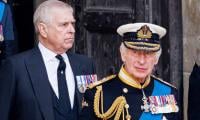 ‘Disgraced’ Andrew Still Has Power To Shake King Charles’ Reign: Expert
 -
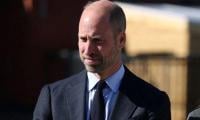 Why Prince William Ground Breaking Saudi Tour Is Important
 -
 AOC Blasts Jake Paul Over Bad Bunny Slight: 'He Makes You Look Small'
 -
 At Least 53 Dead After Migrant Boat Capsizes Off Libya
 -
 'God Of War' Announces Casting Major Key Role In Prime Video Show
 -
 Real Reason Prince William, Kate Broke Silence On Andrew Scandal Revealed
 -
 Drew Barrymore Responds To 'Charlie's Angels' Costar's Comments About Her
 -
 Shakira Slips Hard On Stage During Life Show
 -
 King Charles Speaks Out Over Andrew's Scandal: 'Stand Ready To Help Police'
 -
 Dax Shepard Recalls Horrifying Accident That Almost Killed Him
 -
 Logan Paul's Bodyguard Hits Fan On Super Bowl Day
 -
 Epstein Files: Anne Hathaway Mentioned As Highly Desired Guest For Bill Gates?
 -
 Prince Harry Under A Lot Of Stress As Meghan Markle Makes Bizarre Demands
 -
 Princess Beatrice, Eugenie's Subtle Break From Disgraced Parents Exposed
 -
 Baby Left In Running Bathtub Dies After Father ‘forgets’ Him
 -
 King Charles Takes A Major Step To Keep Horrified Prince William Out Of The Loop On Andrew: Insider