
Trump is back
Having lost the presidency to Joe Biden in 2020, Trump has staged a remarkable comeback
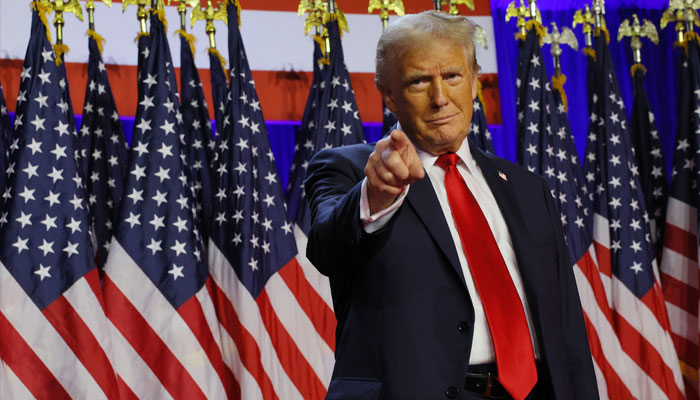
Donald Trump’s return to the White House is historic by any measure, marking an unusual and dramatic shift in American politics. Having lost the presidency to Joe Biden in 2020, Trump has staged a remarkable comeback, winning back key battleground states like Pennsylvania, Wisconsin, and Georgia, and securing a victory over Kamala Harris. This electoral feat not only returns Trump to the Oval Office but also potentially places all three branches of government – the Presidency, the Senate, and the House of Representatives – under Republican control. This resounding Republican sweep is a seismic moment for the US, and Trump’s victory speech, notably subdued and surprisingly somewhat gracious, suggests a conscious pivot, though many remain sceptical of what a second Trump term will bring. For the Democrats, this outcome is a moment of reckoning. Their campaign strategy, fraught with missteps, left voters disillusioned. Opting first for Biden despite signs of waning health, then hastily substituting him with Kamala Harris after a difficult debate season, the Democrats failed to project confidence or consistency. Instead of focusing on the substantive issues facing American voters – an unstable economy, a staggering cost of living, and an increasingly contentious immigration system – the campaign appeared centred on the dangers of a Trump presidency. Instead of listening to their progressive base, they ended up wanting to appease the more right wing among their voters. And instead of saying sorry we funded a genocide, we saw Kamala and her choice of rally speakers almost snigger at pro-Palestine protesters. This reactive approach, devoid of a positive agenda, left voters without a clear choice regarding solutions. The Democrats must now undertake a deep introspection, examining why they prioritised satisfying donors and internal power structures over listening to their base. Without such an introspection, their future risks becoming bleak indeed.
Trump’s victory taps into a well of discontent that the Biden administration could not mitigate. Rising prices, economic uncertainty, and immigration challenges were daily realities for many Americans, and the perception grew that the Democrats were more focused on lofty ideals than practical solutions. These issues, amplified by a hyper-polarised media landscape, created an environment ripe for Trump’s brand of populism to once again resonate strongly. Internationally, Trump’s re-election could have ripple effects that extend beyond American shores. His past relationship with European allies, often tense, has already stirred concern among European leaders, who fear a return to strained transatlantic ties. There is also uncertainty about the US’s commitment to supporting Ukraine in its war against Russia, as Trump has previously hinted at a less interventionist approach. His policy towards Israel will likely mirror, if not exceed, the pro-Israel stance of his previous administration, potentially complicating the Middle East landscape further. Domestically, the implications of Trump’s return could be more profound, especially for marginalised communities and undocumented immigrants. Trump’s promise to unify, made in his victory speech, will face its first test here: will he genuinely seek to bridge divides?
A second Trump administration with a united Republican Congress will have unprecedented latitude to push through a conservative agenda. While Trump’s speech struck an unusually conciliatory tone, his critics warn that this facade of unity may be short-lived. With an empowered party backing him, Trump could accelerate changes on judicial appointments, healthcare, climate policy, and other areas that define the country’s ideological landscape. The question for the next four years is whether Trump will seek to govern differently or double down on the divisive style that characterised his first term. For the Democrats, Trump’s return is a wake-up call. To secure relevance and voter trust, they must confront their strategic failures and recalibrate around the concerns of ordinary Americans. This election may indeed become a watershed moment, signaling a potential long-term shift in American political dynamics if they fail to adapt. However, going by past record, one thing the Democrats have failed at miserably in the past few years is reading the room.







-
 Extreme Cold Warning Issued As Blizzard Hits Southern Ontario Including Toronto
 -
 Lana Del Rey Announces New Single Co-written With Husband Jeremy Dufrene
 -
 Ukraine-Russia Talks Heat Up As Zelenskyy Warns Of US Pressure Before Elections
 -
 Lil Nas X Spotted Buying Used Refrigerator After Backlash Over Nude Public Meltdown
 -
 Caleb McLaughlin Shares His Resume For This Major Role
 -
 King Charles Carries With ‘dignity’ As Andrew Lets Down
 -
 Brooklyn Beckham Covers Up More Tattoos Linked To His Family Amid Rift
 -
 Shamed Andrew Agreed To ‘go Quietly’ If King Protects Daughters
 -
 Candace Cameron Bure Says She’s Supporting Lori Loughlin After Separation From Mossimo Giannulli
 -
 Princess Beatrice, Eugenie Are ‘not Innocent’ In Epstein Drama
 -
 Reese Witherspoon Goes 'boss' Mode On 'Legally Blonde' Prequel
 -
 Chris Hemsworth And Elsa Pataky Open Up About Raising Their Three Children In Australia
 -
 Record Set Straight On King Charles’ Reason For Financially Supporting Andrew And Not Harry
 -
 Michael Douglas Breaks Silence On Jack Nicholson's Constant Teasing
 -
 How Prince Edward Was ‘bullied’ By Brother Andrew Mountbatten Windsor
 -
 'Kryptonite' Singer Brad Arnold Loses Battle With Cancer