
Pollution a ‘serial killer’ in Pakistan amid climate crisis
Sherry Rehman says cannot build a wall; we must adopt measures to control pollution
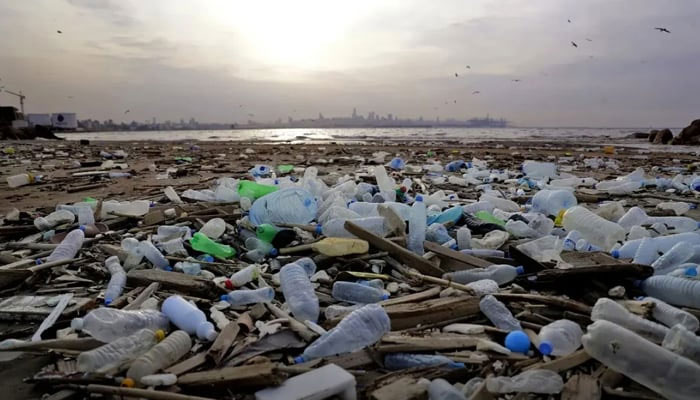
ISLAMABAD: In a stark address underscoring the escalating environmental crisis in Pakistan, Senator Sherry Rehman, chairperson of the Senate Standing Committee on Climate Change and Environmental Coordination, declared pollution a “serial killer”.
While acknowledging the transboundary pollution stemming from crop residue burning in India, she pointed out, “We cannot build a wall; we must adopt measures to control pollution,” she asserted.
She said, “According to data, Pakistan ranks as the fifth most vulnerable country to climate change. However, I believe our risk is even higher, given our population’s lack of preparedness for climate emergencies,” she remarked.
She said this during the ‘Pioneering Solutions for Climate Resilience’ event organized by SDPI and the ministry of climate change here on Monday. Her remarks resonated with the urgency of addressing the country’s pervasive smog problem, highlighting the interconnectedness of local and regional environmental issues.
Rehman emphasized the necessity for collective action, suggesting that even minor adjustments, such as tuning vehicle engines, could mitigate the smog that has plagued cities like Lahore.
Rehman pointed out that Pakistanis exhibit one of the highest per capita water usages globally, characterizing water as a “finite, precious” resource that necessitates careful stewardship. Drawing parallels with countries like South Africa that have implemented water rationing, she stressed the importance of reducing consumption to avoid a similar fate.
Highlighting environmental degradation, Rehman criticized the daily discharge of unfiltered sewage into Rawal Dam, the primary water source for Rawalpindi and Islamabad, and painted a grim picture of the ecological decline she has witnessed over the decades. “Two of the provinces were green when I was a little girl; now they are brown,” she lamented.
She further warned of the health implications of microplastics infiltrating the food supply, contributing to rising disease rates and antibiotic resistance, while noting that a mere one percent of the 30 million tonnes of solid waste produced globally is recycled.







-
 Sweden's Princess Sofia Explains Why She Was Named In Epstein Files
 -
 Activist Shocks Fellow Conservatives: 'Bad Bunny Is Winner'
 -
 Noel Gallagher Challenges Critics Of Award Win To Face Him In Person
 -
 Minnesota Man Charged After $350m IRS Tax Scam Exposed
 -
 Meghan Markle 'terrified' Over Possible UK Return
 -
 Did Opiate Restrictions Lead To Blake Garrett's Death?
 -
 Royal Expert Reflects On Princess Eugenie, Beatrice 'priorities' Amid Strained Relationship With Sarah, Andrew
 -
 Prince William's 'concerning' Statement About Andrew Is Not Enough?
 -
 50 Cent Gets Called Out Over Using Slur For Cardi B
 -
 Scientists Discover Rare Form Of 'magnets' That Might Surprise You
 -
 Nancy Guthrie’s Kidnapper Will Be Caught Soon: Here’s Why
 -
 AI Innovation Could Make Trade Secrets More Valuable Than Patents, Says Billionaire Investor
 -
 King Charles Heckling: Calls For 10 BAFTAs And A Knighthood For Sign Language Interpreter
 -
 Royal Expert On Andrew, Sarah Ferguson’s ‘entitled’ Behaviour Since Marriage
 -
 Kim Kardashian Leaves Meghan Markle 'upset' With Latest 'cheap Shot'
 -
 Instagram And YouTube Accused Of Engineering Addiction In Children’s Brains