
CJP concerned at over 100,000 inmates in prisons with capacity for 66,000
Punjab faces severe challenges, with 67,837 prisoners confined in prisons built to accommodate just 36,365
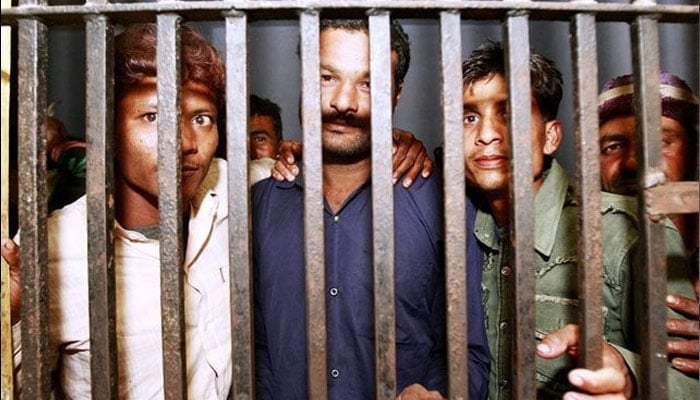
LAHORE: Chief Justice of Pakistan (CJP) Yahya Afridi Saturday expressed his deep concerns that 108,643 inmates had been housed in prisons across the country that had an authorised capacity of only 66,625 people.
He was holding a consultative meeting in Lahore, marking the inaugural discussion for developing a National Jail Reform Policy, focusing on prison reforms and the welfare of inmates as part of a broader criminal justice reform strategy for the country.
“Punjab faces particularly severe challenges, with 67,837 prisoners confined in prisons built to accommodate just 36,365. Further analysis shows that 36,128 of these are under-trial prisoners, many of whom have been awaiting trial for over a year, highlighting a critical issue for the justice system,” the CJP said while referring to data collected by the Law and Justice Commission of Pakistan (LJCP).
CJP Afridi stressed the importance of addressing these urgent issues in Punjab, beginning a phased approach that would ultimately extend to the entire country.
“This strategic focus on Punjab underscores his commitment to impactful, sustainable reforms where it is most needed,” the LJCP’s statement read.
“This series of consultative meetings starts in Lahore — the capital of Punjab and the province with the most overcrowded prisons — and will continue across other cities in Pakistan to gather insights and build consensus on reform initiatives,” the statement added.
Launching an initiative for comprehensive jail reforms, the chief justice of Pakistan initiated consultation process in Lahore to develop a National Jail Reform Policy to bring about transformative, systemic improvements within Pakistan’s prison system in line with international standards.
The huddle was attended by Lahore High Court Chief Justice Aalia Neelum, LHC Administrative Judge Shams Mehmood Mirza, Home and Prosecution Departments’ secretaries, Inspectors General of Police and Prisons departments, Supreme Court registrar, LJCP secretary, Central Prison Lahore Superintendent Saima Amin Khawaja and human rights activists.
Treasury and opposition political parties leaders Senator Ahad Khan Cheema and Khadijah Shah, respectively, who have languished in jails were also among the participants.
CJP Afridi shared his vision for modernising the country’s criminal justice system, stressing that a humane and effective prison system is essential to ensure a fair legal framework.
The agenda centred on the LJCP’s proposal, a National Jail Reform Policy in alignment with international standards, including the Nelson Mandela Rules, Bangkok Rules, and Beijing Rules, to ensure humane and rehabilitative management across Pakistan’s correctional facilities, the advisory institution said.
The proposal received strong support from attendees, who considered a phased plan to promote alternative sentencing options and rehabilitation initiatives for under-trial prisoners.
The participants also discussed the possibility of establishing a Jail Reforms Committee, aimed at developing strategies to reduce overcrowding, enhance inmate welfare and improve case processing efficiency.
Additionally, the Terms of Reference (ToRs) proposed for the National Committee will guide structured efforts to reduce under-trial detention, introduce case management improvements and implement comprehensive rehabilitation programs.
CJP Afridi constituted a sub-committee comprising Justice (retd) Shabbar Raza Rizvi, Saima Amin Advocate, Senator Cheema and Khadijah Shah to inspect the jails across the province.
The sub-committee will table recommendations to streamline the process to address the high numbers of under-trial prisoners and promote alternative sentencing options, including community service and probation.
Further commitments include expanding rehabilitative initiatives within jails, such as vocational training, mental health support and educational programmes to aid inmates in successful reintegration upon release.
Under the guidance of the top judge, and with the dedicated data collection and analytical support provided by LJCP, the initiatives are intended to bring about transformative, systemic improvements within Pakistan’s prison system. By prioritising humane treatment, rehabilitation and efficient case management, the collaborative framework will set the stage for a sustainable and just prison system that upholds human dignity and fosters rehabilitation across the nation, it concluded.







-
 Prince William Plans For Monarchy Revealed As He Gears Up For ‘big Changes’
 -
 Rep. Al Green Removed From House Chamber During Trump’s State Of Union Address: Here’s What Happened
 -
 Bill Gates Breaks Silence On Epstein Links, ‘took Responsibility For His Actions’ During Town Hall Meeting
 -
 Christina Applegate Struggles To Leave Bed Amid Multiple Sclerosis Battle
 -
 Matthew McConaughey, Timothée Chalamet Predict AI Actors May Compete At Oscars By 2028
 -
 Princess Eugenie Appears Unfazed By Andrew Drama In First Outing Since His Arrest
 -
 Gucci Faces Backlash For Using AI In New Spring Collection
 -
 Prince Harry, Meghan Markle Announce New Humanitarian Trip To Jordan
 -
 Prince Harry Is In All Out War With Meghan For Lilibet: It’s More Than The Sussexes Could Ever Generate’
 -
 President Donald Trump Delivers The Traditional State Of The Union Address To Congress
 -
 Kyle Connor Focuses On Jets' NHL Season After Skipping Trump's White House Invite
 -
 Why Prince William Grew Concerned About Meghan Markle's Conduct Shortly After Her Royal Wedding With Harry?
 -
 Trent Williams Future With San Francisco 49ers Uncertain Ahead Of NFL Season
 -
 Australia: Bomb Threat Behind Evacuation Of PM Anthony Albanese Linked To Chinese Dance Group
 -
 Rachel Reid Delays Release Of 'Heated Rivalry' Sequel 'Unrivaled' Due To Health Struggles
 -
 British Royals ‘not Appreciated’ In Modern World, Says Author