
UK’s Starmer pledges more growth reforms after budget hit to markets
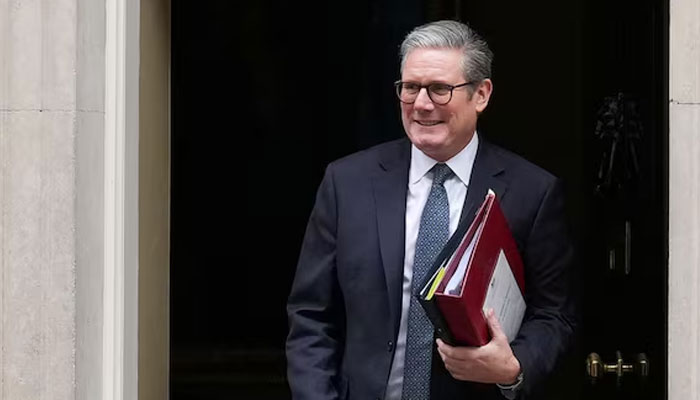
LONDON: British Prime Minister Keir Starmer promised reforms to speed up the economy and overhaul the public sector after the Labour government’s first budget failed to boost the growth outlook and sent government bond prices into a two-day dive.
Finance minister Rachel Reeves announced a plan on Wednesday that included big increases in tax, borrowing and spending, but Britain’s budget watchdog judged that economic growth beyond next year would be weaker than it previously thought.
British government bond prices fell in the hours after her speech and again on Thursday, sending borrowing costs up sharply, before stabilising on Friday.
Writing in the Financial Times on Saturday, Starmer said the budget was a “first step on our mission for growth” but also opened the way for reform of “our creaking central state” and its public services as well as more private sector investment.
“Just as we cannot tax and spend our way to prosperity, nor can we simply spend our way to better public services,” he wrote, addressing concerns that the health system and other services needed more than just extra cash to improve.
Some analysts have said that without reform the government may need to raise taxes again in future to fix the public sector, despite Reeves’ pledge that her budget was intended to “wipe the slate clean”.
Starmer listed plans to meet his promise to voters in July’s election to double Britain’s economic growth pace such as housing targets, planning system reforms, quicker approval of clean energy projects and a review of how regulators operate.
“This process involves detailed, often painstaking work. For that reason, it is not yet ready to be included in the OBR’s forecast for growth,” he said, referring to the Office for Budget Responsibility whose forecasts underpin the budget.
“However, we should be optimistic about the potential,” Starmer wrote, focusing on the importance of private sector investment alongside a big increase in public infrastructure spending.
The budget was quickly welcomed by the International Monetary Fund and on Saturday it also won applause from Mario Draghi, the former European Central Bank president who recently advised the European Union on how to boost competitiveness.
“The UK government has chosen to significantly raise public investment over the next five years and has adopted precise rules to ensure that borrowing is used only to fund this investment,” he wrote also in the FT.
“Moreover, in order to ensure the quality of spending, transactions will be validated by independent authorities. This increases the likelihood that public investment has a positive net present value and so supports fiscal sustainability.”






-
 Winter Olympics 2026: Top Contenders Poised To Win Gold In Women’s Figure Skating
 -
 Inside The Moment King Charles Put Prince William In His Place For Speaking Against Andrew
 -
 Will AI Take Your Job After Graduation? Here’s What Research Really Says
 -
 California Cop Accused Of Using Bogus 911 Calls To Reach Ex-partner
 -
 AI Film School Trains Hollywood's Next Generation Of Filmmakers
 -
 Royal Expert Claims Meghan Markle Is 'running Out Of Friends'
 -
 Bruno Mars' Valentine's Day Surprise Labelled 'classy Promo Move'
 -
 Ed Sheeran Shares His Trick Of Turning Bad Memories Into Happy Ones
 -
 Teyana Taylor Reflects On Her Friendship With Julia Roberts
 -
 Bright Green Comet C/2024 E1 Nears Closest Approach Before Leaving Solar System
 -
 Meghan Markle Warns Prince Harry As Royal Family Lands In 'biggest Crises' Since Death Of Princess Diana
 -
 Elon Musk Weighs Parenthood Against AI Boom, Sparking Public Debate
 -
 'Elderly' Nanny Arrested By ICE Outside Employer's Home, Freed After Judge's Order
 -
 Keke Palmer On Managing Growing Career With 2-year-old Son: 'It's A Lot'
 -
 Key Details From Germany's Multimillion-euro Heist Revealed
 -
 David E. Kelley Breaks Vow To Cast Wife Michelle Pfeiffer In 'Margo's Got Money Troubles'