
UK study shows support for assisted dying, before MPs vote
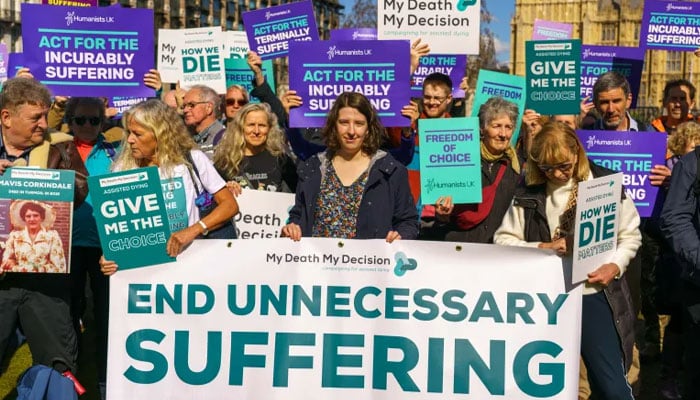
LONDON: Most people in England and Wales want assisted dying to be legalised for terminally ill adults, according to a poll published on Friday before a parliamentary vote on the emotive issue.
Some 63 percent of those surveyed said they favoured a change in the law in the next five years, according to the study conducted by researchers at King´s College London.
On Wednesday next week, lawmaker Kim Leadbeater from Britain´s ruling Labour party is set to introduce a bill to parliament that proposes giving terminally ill people “choice” at the end of life.
MPs are due to debate and vote on the legislation on November 29 -- the first time the UK parliament will have considered assisted dying in almost a decade.
The Labour government is to give a free vote to its 400-plus lawmakers in the 650-seat parliament, meaning it is likely to be very difficult to predict the outcome.
Euthanasia is illegal in Britain but is already in place to varying degrees in some European countries.
Previous attempts to legalise it have been voted down but public opinion is shifting and attempts to change the law are under way in Scotland, which has a separate legal system and powers to set its own health policy. An assisted dying bill was last debated -- and defeated -- in the House of Commons in 2015.
Since than surveys have indicated an increase in support for helping terminally ill people end their lives.
The poll of just over 2,000 people published on Friday found that most people who support changing the law do so to give the terminally ill a less painful or distressing death.
The UK´s highest-ranking Roman Catholic cleric, Cardinal Vincent Nichols, however, has urged followers to write to their MPs to oppose the proposed change in the law.
“The radical change in the law now being proposed risks bringing about for all medical professionals a slow change from a duty to care to a duty to kill,” he wrote in a pastoral letter to churches in his diocese.
“The suffering of a human being is not meaningless. It does not destroy that dignity. It is an intrinsic part of our human journey,” Nichols, who is president of the Catholic Bishops´ Conference of England and Wales, and Archbishop of Westminster.
Prime Minister Keir Starmer pledged to make parliamentary time for the subject as part of Labour´s successful election campaign in July.







-
 What You Need To Know About Ischemic Stroke
 -
 Shocking Reason Behind Type 2 Diabetes Revealed By Scientists
 -
 SpaceX Cleared For NASA Crew-12 Launch After Falcon 9 Review
 -
 Meghan Markle Gives Old Hollywood Vibes In New Photos At Glitzy Event
 -
 Simple 'finger Test' Unveils Lung Cancer Diagnosis
 -
 Groundbreaking Treatment For Sepsis Emerges In New Study
 -
 Roblox Blocked In Egypt Sparks Debate Over Child Safety And Digital Access
 -
 Savannah Guthrie Addresses Ransom Demands Made By Her Mother Nancy's Kidnappers
 -
 OpenAI Reportedly Working On AI-powered Earbuds As First Hardware Product
 -
 Andrew, Sarah Ferguson Refuse King Charles Request: 'Raising Eyebrows Inside Palace'
 -
 Adam Sandler Reveals How Tom Cruise Introduced Him To Paul Thomas Anderson
 -
 Washington Post CEO William Lewis Resigns After Sweeping Layoffs
 -
 North Korea To Hold 9th Workers’ Party Congress In Late February
 -
 All You Need To Know Guide To Rosacea
 -
 Princess Diana's Brother 'handed Over' Althorp House To Marion And Her Family
 -
 Trump Mobile T1 Phone Resurfaces With New Specs, Higher Price