
63A verdict
2022 ruling had sparked criticism, with legal and political observers calling it rewriting of constitution
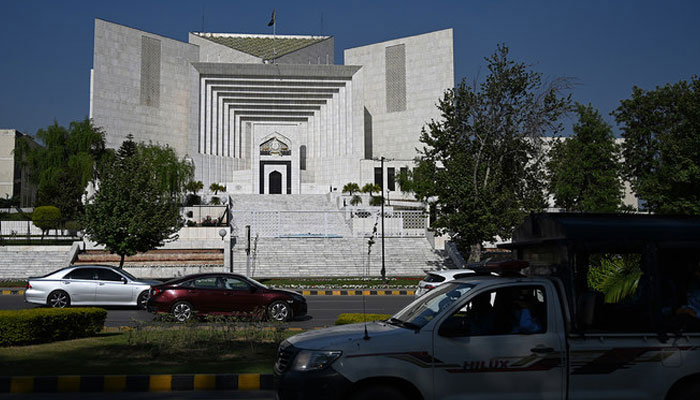
In a landmark decision on Thursday, the Supreme Court of Pakistan annulled its 2022 verdict on the interpretation of Article 63A of the constitution, which barred lawmakers from voting against party directives. The court’s unanimous ruling on Thursday, led by Chief Justice Qazi Faez Isa who was heading a five-member bench, has now restored the autonomy of parliamentarians that had been curtailed, bringing back a necessary balance between party loyalty and individual freedom in parliamentary proceedings. The 2022 ruling had sparked widespread criticism, with many legal and political observers calling it a rewriting of the constitution. The decision had effectively nullified votes cast by members of parliament who defied party orders, reducing them to mere rubber stamps for party directives and taking away their constitutional right to vote freely on key issues. By making it impossible for lawmakers to cast dissenting votes that could be counted, the spirit of Article 63A, introduced through the 18th Amendment, was distorted.
The original intention of Article 63A was clear: it sought to strike a balance between maintaining party discipline and preserving the individual autonomy of lawmakers. The clause allowed parliamentarians to vote against party lines in specific instances – elections of the prime minister or chief minister, votes of confidence or no-confidence, and votes on money bills or constitutional amendments – but it also imposed a penalty for doing so. This built-in defection clause ensured that party discipline did not come at the cost of a parliamentarian’s conscience or autonomy, while discouraging opportunistic floor-crossing. The 2022 verdict, however, turned this balance on its head, allowing party discipline to dominate completely. The ruling gave political parties unchecked control over their members, and critics argued that it diminished parliamentarians to mere followers of their party leadership, no matter the issue at hand. It is no wonder then that the decision was seen as contributing to the political chaos that followed, exacerbating tensions between major political parties, particularly in Punjab, where many observers felt it was designed to favour the PTI over its rivals.
Thursday’s ruling finally rights that wrong, restoring the original balance envisioned by the framers of the 18th Amendment. Lawmakers can now vote according to their judgement in the limited scenarios defined by Article 63A, without their votes being discounted. This ensures that individual conscience and democratic accountability are not sacrificed at the altar of party politics. That said, the timing of this verdict has led to new questions with some critics pointing out that it could pave the way for the current government to push through a constitutional package, now that the defection clause has been restored. The government has long argued that judicial reforms are necessary to ensure checks and balances on the judiciary, accusing the courts of playing politics.
It has also been pointed out by the government and some analysts that by delaying hearings on the 63A case for two years, the judiciary had effectively hampered parliament’s ability to legislate. And here we must also emphasize that parliament’s ability to legislate is its alone. These concerns cannot be dismissed entirely, especially in light of the wider context of the judiciary’s role in Pakistan’s political landscape. The government’s complaints about judicial overreach and the need for a constitutional court to address such issues reflect a broader sentiment that reform is overdue. Yet, the government’s own proposed reforms have been shrouded in secrecy, raising concerns about transparency and intent. If this verdict marks the end of a damaging chapter in which party discipline outweighed individual autonomy, it also signals the beginning of another: a renewed debate over how to strike the right balance between the powers of the judiciary, the legislature, and the executive.







-
 Lana Del Rey Announces New Single Co-written With Husband Jeremy Dufrene
 -
 Ukraine-Russia Talks Heat Up As Zelenskyy Warns Of US Pressure Before Elections
 -
 Lil Nas X Spotted Buying Used Refrigerator After Backlash Over Nude Public Meltdown
 -
 Caleb McLaughlin Shares His Resume For This Major Role
 -
 King Charles Carries With ‘dignity’ As Andrew Lets Down
 -
 Brooklyn Beckham Covers Up More Tattoos Linked To His Family Amid Rift
 -
 Shamed Andrew Agreed To ‘go Quietly’ If King Protects Daughters
 -
 Candace Cameron Bure Says She’s Supporting Lori Loughlin After Separation From Mossimo Giannulli
 -
 Princess Beatrice, Eugenie Are ‘not Innocent’ In Epstein Drama
 -
 Reese Witherspoon Goes 'boss' Mode On 'Legally Blonde' Prequel
 -
 Chris Hemsworth And Elsa Pataky Open Up About Raising Their Three Children In Australia
 -
 Record Set Straight On King Charles’ Reason For Financially Supporting Andrew And Not Harry
 -
 Michael Douglas Breaks Silence On Jack Nicholson's Constant Teasing
 -
 How Prince Edward Was ‘bullied’ By Brother Andrew Mountbatten Windsor
 -
 'Kryptonite' Singer Brad Arnold Loses Battle With Cancer
 -
 Gabourey Sidibe Gets Candid About Balancing Motherhood And Career