
‘Climate compatible education is need of the hour’
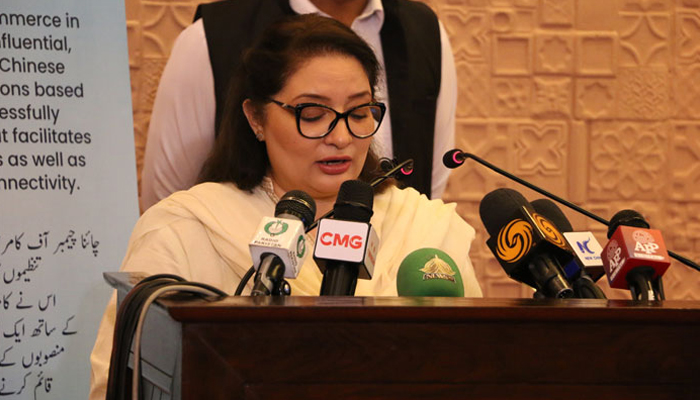
Islamabad : Romina Khurshid Alam, Coordinator to the Prime Minister on Climate Change, has said that early education plays a crucial role in shaping lifelong habits that could foster climate compatible lifestyles. MNA Romina was addressing a seminar on “Climate-compatible education” organised here by Institute of Regional Studies.
The MNA shared an inspiring anecdote about a four-year-old girl who, after hearing a speech on World Environment Day, pledged to avoid using plastic and pushed her entire family to do so as well. She emphasised the importance of advocacy campaigns, carbon credits and integrating climate education from the Montessori level. Ms Romina pointed out that if we plant the right seeds, we will reap the right fruit.
Dr Abid Qayium Suleri, Executive Director, Sustainable Development Policy Institute (SDPI) and a member of the Advisory Body to the COP29 Presidency, put forward a comprehensive strategy for climate-compatible education. His proposal encompassed three key elements: curriculum reforms, the implementation of renewable technologies for mitigation and the development of adaptation strategies. This approach aims to address the challenges posed by climate change and foster a more sustainable future.
Sharmeela Rasool, Deputy Country Representative, UNICEF, shared that UNICEF's research revealed the alarming reality that over 1 billion children worldwide were currently living in countries that were at "extremely high risk" from climate-related disasters. She outlined specific action points to tackle these pressing challenges, with a strong emphasis on integrating climate resilience into education systems.
Punjul Nugraha, Director, D-8 Organisation for Economic Cooperation, emphasised the significance of COP29 as a pivotal platform for incorporating climate education into the global agenda, highlighting the potential impact of climate change on 1.2 billion children worldwide by 2050. He also urged integration of sustainability practices, climate science and critical thinking across all educational levels.
Khazar Farhadov, Azerbaijan’s envoy to Pakistan, emphasised his country’s dedication to fostering global collaboration in the fight against climate change as the host of this year’s COP. He expressed Azerbaijan’s aspiration to set an example, stressing the establishment of climate-smart cities nationwide as part of their development plan. He also underscored the importance of well-educated populations in building resilience and effectively addressing climate-related challenges.
Shakeel Ahmed Ramay, CEO, Asian Institute of Eco-civilisation, Research, and Development (AIERD), also emphasised the crucial role of education in addressing climate change and proposed integration of green schooling into carbon credit markets as a potential solution.







-
 Northern Lights: Calm Conditions Persist Amid Low Space Weather Activity
 -
 'Look What Andrew Has Done': Meghan Markle Defended On Jeremy Vine Show
 -
 Apple, Google Agree To Make 'app Store' Changes Over UK Regulator Concerns
 -
 Autodesk Files Lawsuit Against Google Over AI Video Tool Trademark Dispute
 -
 San Francisco 49ers Player Shot Near Post-Super Bowl Party
 -
 Kardashian-Jenner Clan Brings Lewis Hamilton Into The Fold: Watch
 -
 Meghan Markle 'quietly Dreaded' As Ex-best Friend Receives Lucrative Offer For Bombshell Memoir About Duchess
 -
 Blake Shelton, Gwen Stefani Make Big Move To Save Their Marriage
 -
 Google Warns Of State-sponsored Cyberattacks Targeting Defense Sector Employees
 -
 Ransom Deadline Passes: FBI Confirms ‘communication Blackout’ In Nancy Guthrie Abduction
 -
 Jeff Bezos Hints At Blue Origin Moon Plans As Elon Musk Responds With Cautious Praise
 -
 Zach Bryan Slams Turning Point USA Alternative Halftime Show: 'Embarrassing As Hell'
 -
 South Korea Blames Coupang Data Breach On 'management Failures,' Not Cyber Attack
 -
 ‘Disgraced’ Andrew More Concerned About ‘issue Of His Legacy’ Than Epstein Links
 -
 Instagram Plans New Snapchat-style App ‘Instants’ Amid Rising AR Competition
 -
 Safer Internet Day 2026: Is Social Media Ban The Only Way To Protect Kids?