
Pakistan’s poor air quality affecting people’s life expectancy
Adverse effects of country’s worsening air pollution has been found to significantly affect life expectancy of its citizens
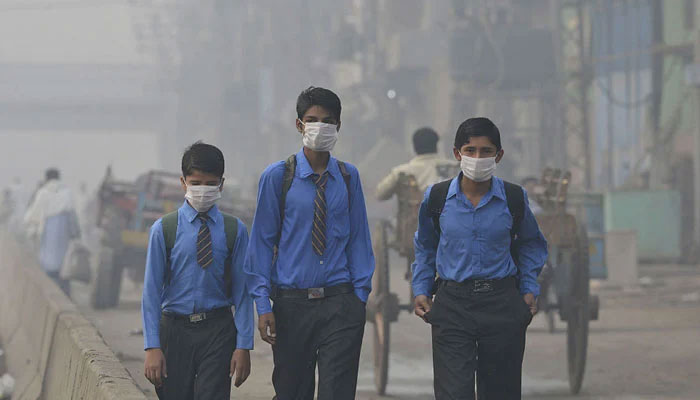
ISLAMABAD: As Pakistanis grapple with the ongoing socio-political, economic, and security issues, they also remain threatened by climate-induced challenges such as air pollution, risking not only their habitat but also their overall health and well-being.
In an annual Air Quality Index (AQLI) report produced by the University of Chicago’s Energy Policy Institute (EPIC), the adverse effects of the country’s worsening air pollution has been found to significantly affect the life expectancy of its citizens.
As Pakistanis grapple with the ongoing socio-political, economic, and security issues, they also remain threatened by climate-induced challenges such as air pollution, risking not only their habitat but also their overall health and well-being.
In an annual Air Quality Index (AQLI) report produced by the University of Chicago’s Energy Policy Institute (EPIC), the adverse effects of the country’s worsening air pollution has been found to significantly affect the life expectancy of its citizens.
The report maintained that since virtually the entire population of Pakistan breathes air that doesn’t meet the PM2.5 standard set at 15 µg/m³, people’s life expectancy could be increased by 2.3 years if the country is able to meet its own PM2.5 standard.
“In Pakistan, where the PM2.5 concentration was 38.9 µg/m³ in 2022 — 10% lower compared to the particulate levels in 2021, the average resident would gain 3.3 years from meeting the World Health Organisation (WHO) guideline,” read the AQLI 2024 annual update.
“Those in Peshawar, the most polluted city in the country, would gain 5.6 years,” it added.
Elaborating on the increase in factors affecting air pollution, the AQLI underscored an approximately fourfold increase in the number of vehicles in the country since the early 2000s as well as a significant increase in the use of fossil fuel for electricity generation.
Noting that 94 out of 252 countries and territories globally had national standards, making up 80% of the world’s population, it highlighted that 37 of those countries weren’t meeting them — which amounts to 30%of the world’s population.
Terming global pollution as the “greatest external threat to human life expectancy”, the report stated that people in the most polluted areas of the world breathe air that is six times more polluted than those in the least polluted areas, which in return, reduces their life expectancy is reduced by an average of 2.7 years compared to those living in the cleanest places.







-
 Andrew's Epstein Scandal: Will King Charles Abdicate Following King Edward's Footsteps?
 -
 Billy Joel Leaves Loved Ones Worried With His 'dangerous' Comeback
 -
 Prince William Dodges Humiliating Question In Saudi Arabia
 -
 Dax Shepard Describes 'peaceful' Feeling During Near-fatal Crash
 -
 Steve Martin Says THIS Film Has His Most Funny Scene
 -
 Kensington Palace Shares Update As Prince William Continues Saudi Arabia Visit
 -
 Fugitive Crypto Scammer Jailed For 20 Years In $73m Global Fraud
 -
 Will Andrew Mountbatten-Windsor Finally Go To Jail Now That King Charles Has Spoken Out? Expert Answers
 -
 Melissa McCarthy Reveals Her Tried And Tested ‘corpse’ Night Time Routine That’s Lost Her 95lbs
 -
 Horrifying Pictures Of The Kidnapper Of Savannah Guthrie's Mother Released
 -
 Andrew's Ex-girlfriend Launches Brazen Attack On Epstein Victims On Piers Morgan Show
 -
 Andrew Mountbatten-Windsor 'on His Own' As Palace Gives Green Light To Law Enforcement
 -
 Kanye West's Tweet About Super Bowl Halftime Resurfaced After Bad Bunny's Show
 -
 'FBI' Star Juliana Aidén Martinez Tease Her Return To 'Law And Order: SVU' After Quitting
 -
 Cardi B's Emotional Words To Pal Amid Stefon Diggs Rumored Breakup Revealed
 -
 Princess Eugenie Breaks Cover Amid Explosive Family Scandal