
Solar PV manufacturing policy need of hour: experts
Experts highlighted the increasing demand for renewable energy in Pakistan
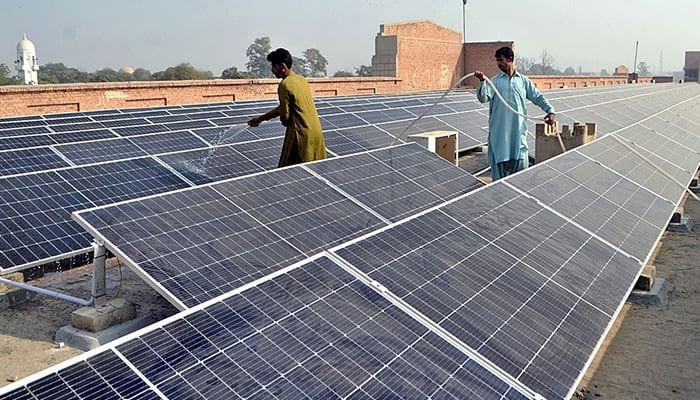
ISLAMABAD: Pakistan has imported over 10 GW of solar capacity in 2024, highlighting the urgent need for a solar PV manufacturing policy.
This disclosure was made in a consultative session titled “Shaping the Future of PV Panel Manufacturing in Pakistan: Insights into Supply Chain, Financing, and Technology Transfer Opportunities”. The session was arranged by the Renewables First in collaboration with the USPCAS-E NUST. Experts highlighted the increasing demand for renewable energy in Pakistan, noting that over 10 GW of capacity had already been imported in 2024. Dr Tahir Azhar from the MaxPower emphasized the significant potential for solar PV manufacturing in Pakistan, which was contingent on the early adoption of a solar PV manufacturing policy.
Ali Majid, general manager of Longi, shared that Chinese investors and manufacturers were increasingly interested in Pakistan due to the country’s high potential and the slowing growth within China, prompting investors to seek overseas opportunities. Ahmed Ammar Yasser from the PFAN also underscored the importance of building partnerships with China, particularly given the global geopolitical shifts driving Chinese investors away from the West. He suggested that these investors might reroute their exports through Pakistan by shifting their industry here. Moreover, he emphasized the need to focus on ancillary components of solar PV, which might be easier to localize in the short term. He particularly noted that global developments in battery manufacturing were taking off, making this the ideal time for Pakistan to enter this space as early as possible.
Providing an update on the progress of the existing Solar PV Manufacturing Policy, Aqeel Hussain Jafri, director of policy at PPIB, stressed the need to further refine the policy to ensure its alignment with other relevant policies, such as tax laws, and comprehensively cover long-term financing support mechanisms. Dr Khalid Waleed from the SDPI said the policy should include incentives, tax grants and subsidies to give Pakistan a competitive advantage internationally.
Discussing the financing outlook for the manufacturing industry in Pakistan, Abid Kitchlew, VP of National Bank of Pakistan, emphasized the need for government support to ensure liquidity for lending to manufacturing projects. He highlighted innovative financing strategies such as tax rebates for lenders and suggested introducing policy instruments that required local PV systems for public sector solarization programs, as opposed to directly subsidizing the private sector. Saqib Zaidi, chief operating officer at REON Energy, pointed out that local manufacturing became competitive with a 30% subsidy or financing support mechanisms.







-
 ByteDance’s New AI Video Model ‘Seedance 2.0’ Goes Viral
 -
 Archaeologists Unearthed Possible Fragments Of Hannibal’s War Elephant In Spain
 -
 Khloe Kardashian Reveals Why She Slapped Ex Tristan Thompson
 -
 ‘The Distance’ Song Mastermind, Late Greg Brown Receives Tributes
 -
 Taylor Armstrong Walks Back Remarks On Bad Bunny's Super Bowl Show
 -
 James Van Der Beek's Impact Post Death With Bowel Cancer On The Rise
 -
 Pal Exposes Sarah Ferguson’s Plans For Her New Home, Settling Down And Post-Andrew Life
 -
 Blake Lively, Justin Baldoni At Odds With Each Other Over Settlement
 -
 Thomas Tuchel Set For England Contract Extension Through Euro 2028
 -
 South Korea Ex-interior Minister Jailed For 7 Years In Martial Law Case
 -
 UK Economy Shows Modest Growth Of 0.1% Amid Ongoing Budget Uncertainty
 -
 James Van Der Beek's Family Received Strong Financial Help From Actor's Fans
 -
 Alfonso Ribeiro Vows To Be James Van Der Beek Daughter Godfather
 -
 Elon Musk Unveils X Money Beta: ‘Game Changer’ For Digital Payments?
 -
 Katie Holmes Reacts To James Van Der Beek's Tragic Death: 'I Mourn This Loss'
 -
 Bella Hadid Talks About Suffering From Lyme Disease