
Exploiting Pak-Iran non-sanctioned cooperation areas
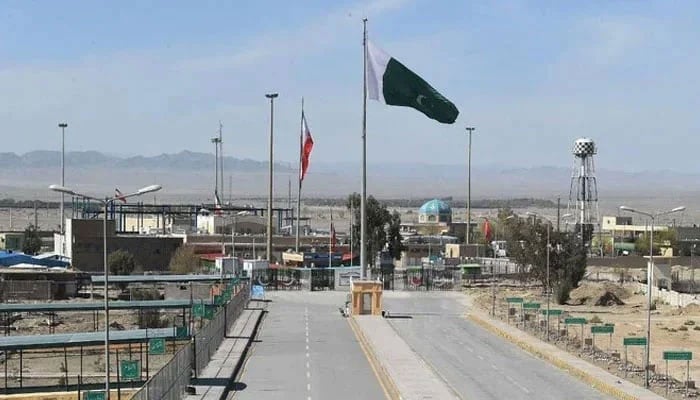
Islamabad:Mohsen Shahshargi, an expert on South Asian economy from Tehran, speaking on-line has said that economic cooperation between Iran and Pakistan was essential to cultivating the partnership on the basis of comparative advantage.
Mr Mohsen was addressing a Webinar "Pak-Iran economic cooperation: challenges and opportunities" organised here by Institute of Regional Studies. Mr Mohsen taking a cue from the $10 billion trade goal set between Pakistan and Iran in April this year, he emphasised on exploring alternative solutions such as establishing a systemic barter mechanism or conducting trade in third-party currencies like the Chinese Yuan. Adding on, though the Preferential Trade Agreement (PTA) was still in place, it remained unimplemented for several years which further restricted the signing of Free Trade Agreement (FTA) between the two countries, he observed.
To evade the US sanctions, Mr Mohsen highlighted certain areas where the cooperation could be carried out without invoking the US response. Those areas included the transportation, agriculture and services sectors. Lastly, he concluded by stating that developing border markets, revising visa requirements and ensuring the development and safety of Baluchistan province on both sides could significantly enhance trade and offshore investments between Pakistan and Iran.
Fraz Naqvi from IRS noted that despite cultural similarities, geographical proximity and a common border, both Pakistan and Iran could not fully utilise their trade potential primarily due to the imposition of US sanctions on Iran. He proposed that Pakistan might benefit from drawing inspiration from the development models of China, South Korea, Japan and other countries to establish alternative mechanisms for enhancing economic ties with Iran.
Noor Fatima from Research Society of International Law (RSIL) examined the legal dimensions of trade relations between Iran and Pakistan. She asserted that sanctions had been significant tools of foreign policy employed by states or organisations to influence the behaviour of other states or entities without resorting to armed conflict. In Iran's case, sanctions had been mostly applied unilaterally by countries like US, UK, Canada and Australia etc. Subsequently, the Iran-Pakistan gas pipeline project which aimed to supply Pakistan one billion cubic feet gas per day was stalled due to US unilateral sanctions on Iran, she added.
Ms. Noor further elaborated that in any case, Pakistan had to comply with the sanctions. However, Pakistan could adopt the transit mechanism of Transports Internationaux Routiers (TIR) with Iran on which sanctions do not apply, she recommended. Lastly, she concluded that both states must develop a coherent policy prioritising economic security in line with international trading regimes, ensure uniform policy application and build internal capacity for deeper economic engagement with each other.







-
 Czech Republic Supports Social Media Ban For Under-15
 -
 Prince William Ready To End 'shielding' Of ‘disgraced’ Andrew Amid Epstein Scandal
 -
 Chris Hemsworth Hailed By Halle Berry For Sweet Gesture
 -
 Blac Chyna Reveals Her New Approach To Love, Healing After Recent Heartbreak
 -
 Royal Family's Approach To Deal With Andrew Finally Revealed
 -
 Super Bowl Weekend Deals Blow To 'Melania' Documentary's Box Office
 -
 Meghan Markle Shares Glitzy Clips From Fifteen Percent Pledge Gala
 -
 Melissa Jon Hart Explains Rare Reason Behind Not Revisting Old Roles
 -
 Meghan Markle Eyeing On ‘Queen’ As Ultimate Goal
 -
 Japan Elects Takaichi As First Woman Prime Minister After Sweeping Vote
 -
 Kate Middleton Insists She Would Never Undermine Queen Camilla
 -
 King Charles 'terrified' Andrew's Scandal Will End His Reign
 -
 Winter Olympics 2026: Lindsey Vonn’s Olympic Comeback Ends In Devastating Downhill Crash
 -
 Adrien Brody Opens Up About His Football Fandom Amid '2026 Super Bowl'
 -
 Barbra Streisand's Obsession With Cloning Revealed
 -
 What Did Olivia Colman Tell Her Husband About Her Gender?