
New population policy being developed: PWD DG
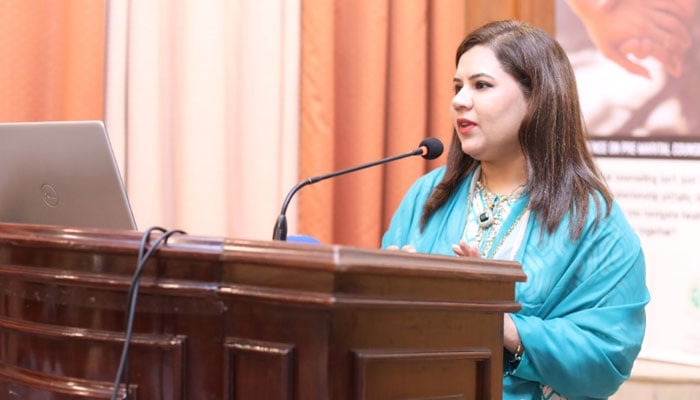
LAHORE : Significant steps are underway in the province to address the issue of population growth and family planning, said Director General Population Welfare Department (PWD) of Punjab Ms Saman Rai on Saturday.
Talking to The News in an interview, the PWD DG said the Population Welfare Department was in the process of developing a new policy based on the lessons learned from the 2017 Population Policy to foster a prosperous, healthy, educated, and knowledge-based society.
She said the provincial government has assumed control of the federally managed Population Welfare Programme, paving the way for the introduction of a targeted Population Policy specific to the province.
She said initiatives include engaging Imams and Khateebs at district level to educate communities about small family norms, a programme that has gained success.
Saman said awareness programmes in colleges across 20 districts use puppet shows to emphasise the importance of family planning. She said universities also host awareness sessions and campaigns to empower youth with knowledge and resources for informed reproductive health decisions.
She said the department has strategically positioned service delivery outlets in both rural and urban areas, conducting research surveys to develop targeted, need-based initiatives. Insights from these surveys enable the design and implementation of programmes tailored to diverse populations, she maintained.
The PWD DG said a network of 2,100 family welfare centres provides comprehensive services, with social mobilizers engaging communities to promote contraceptive use and mobile service units extending services to remote areas. She said the Contraceptive Logistics Management Information System ensures the availability and utilisation of contraceptives, enhancing the overall effectiveness of family planning programmes.
She said the department collaborates with NGOs to enhance outreach and service delivery, particularly in underserved areas and international organisations such as the UNFPA provide technical and financial support.
She said the department also works closely with other government agencies, integrating population welfare initiatives into broader development programmes. Local communities and leaders play crucial roles in awareness and education, social mobilisation, and demand generation for family planning services, she contended.
The PWD DG said in the department, the research wing collects real-time data to identify trends in contraceptive use, population growth, and projections. Comprehensive evaluation studies assess the effectiveness of initiatives and programmes. A robust feedback mechanism through the planning, monitoring, and evaluation section ensures quality service assessments and timely identification of improvement areas, she said.
Ms Saman said the Punjab Population Innovation Fund (PPIF) offers economic incentives for family planning practices, targeting marginalised couples through a voucher scheme in partnership with the Benazir Income Support Programme (BISP). She said the department collaborates with various provincial departments to tackle factors like poverty, illiteracy, unemployment, and gender inequality. Efforts are underway to focus on empowering girls through education, mobilising youth activism, and promoting women's empowerment. Behaviour Change Communication (BCC) is employed to transform cultural narratives influencing population growth, she said.
The Programme includes a user-friendly Mobile Application, Digital Information Forum, Tracking Clients system, and Real-Time Monitoring capabilities, enhancing the efficiency, accessibility, and impact of family planning services. The DG said.
She said the department develops initiatives and programmes guided by these projections to manage population growth, ensuring a sustainable future.
She said population control efforts support SDG 1 (No Poverty), SDG 3 (Good Health and Well-being), SDG 4 (Quality Education), and SDG 5 (Gender Equality). These efforts empower women, enhance maternal and child health, and reduce fertility rates, driving progress towards these SDGs.
She maintained the department engages local leaders, religious scholars, and influencers to address misconceptions and promote family planning benefits. Culturally sensitive messaging and materials are used in awareness campaigns. Service providers are trained to offer personalised counseling and services, fostering community participation and ownership through inclusive decision-making processes, she added.







-
 ‘Narcissist’ Andrew Still Feels ‘invincible’ After Exile
 -
 Shamed Andrew ‘mental State’ Under Scrutiny Amid Difficult Time
 -
 Bad Bunny's Super Bowl Halftime Show: What Time Will He Perform Tonight?
 -
 Where Is Super Bowl 2026 Taking Place? Everything To Know About The NFL Showdown
 -
 Chris Pratt Explains Why He And Katherine Schwarzenegger Did Premarital Counseling
 -
 Drake 'turns Down' Chance To Hit Back At Kendrick Lamar At Super Bowl
 -
 Sarah Ferguson Had A ‘psychosexual Network’ With Jeffrey Epstein
 -
 Miranda Kerr Shares The One Wellness Practice She Does With Her Kids
 -
 Czech Republic Supports Social Media Ban For Under-15
 -
 Khloe Kardashian Shares How She And Her Sisters Handle Money Between Themselves
 -
 Prince William Ready To End 'shielding' Of ‘disgraced’ Andrew Amid Epstein Scandal
 -
 Chris Hemsworth Hailed By Halle Berry For Sweet Gesture
 -
 Blac Chyna Reveals Her New Approach To Love, Healing After Recent Heartbreak
 -
 Royal Family's Approach To Deal With Andrew Finally Revealed
 -
 Super Bowl Weekend Deals Blow To 'Melania' Documentary's Box Office
 -
 Meghan Markle Shares Glitzy Clips From Fifteen Percent Pledge Gala