
Underground cave found on moon could be ideal base for explorers
Analysis of radar data collected by Nasa lunar Reconnaissance Orbiter (LRO) revealed that Mare Tranquillitatis pit
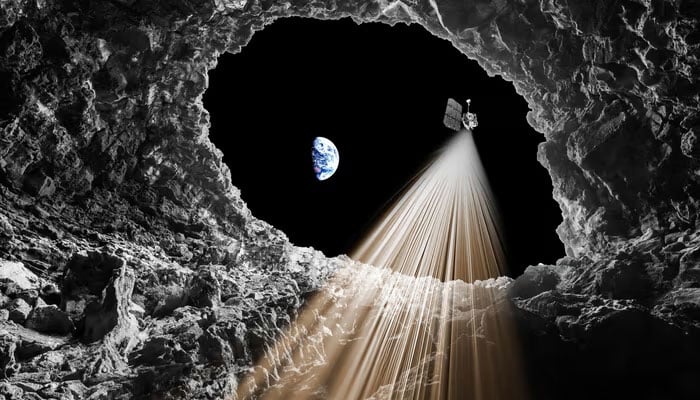
PARIS: Researchers have found evidence for a substantial underground cave on the moon that is accessible from the surface, making the spot a prime location to build a future lunar base.
The cave appears to be reachable from an open pit in the Mare Tranquillitatis (Sea of Tranquility), the ancient lava plain where the Apollo 11 astronauts Neil Armstrong and Buzz Aldrin first set foot on the moon more than half a century ago.
Analysis of radar data collected by Nasa lunar reconnaissance orbiter (LRO) revealed that the Mare Tranquillitatis pit, the deepest known pit on the moon, leads to a cave 45 metres wide and up to 80 metres long, an area equivalent to 14 tennis courts. The cave lies about 150 metres beneath the surface.
Lorenzo Bruzzone, of the University of Trento in Italy, said the cave was “probably an empty lava tube†, adding that such features could serve as human habitats for future explorers as they were “a natural shelter against the harsh lunar environment†.
Lunar orbiters first spotted pits on the moon more than a decade ago. Many are thought to be skylights that connect to underground caves such as lava tubes, giant underground tunnels that form through volcanic processes.
Such caves could form the basis for a moonbase or an emergency lunar shelter because the temperature is relatively stable inside and astronauts would be naturally shielded from harmful cosmic rays, solar radiation and micrometeorites.
Previous images taken from the LRO showed that the bottom of the Mare Tranquillitatis pit was strewn with boulders up to 10 metres wide. But it was unclear whether the pit was enclosed or served as an entry point to an underground cave, such as a lava tube whose roof had collapsed.
Writing in Nature Astronomy, the scientists describe how they used LRO data and computer simulations to show that the 100 metre-wide pit, which is bordered by vertical or overhanging walls, leads to a sloping floor and a cave that extends for tens of metres westwards.
Researchers are keen to study the rocks inside such caves as they are likely to hold clues to the moon formation and volcanic history. The caves may also contain water ice, a resource Bruzzone said was essential for long-term lunar missions and colonisation.
At least 200 pits have been spotted on the moon and many found on lava fields could be entrances to cavernous subterranean lava tubes. The main advantage of caves is that they make available the main structural parts of a possible human base without requiring complex construction activities, said Leonardo Carrer, the study first author.







-
 King Charles, Princess Anne, Prince Edward Still Shield Andrew From Police
 -
 US Set To Block Chinese Software From Smart And Connected Cars
 -
 Carmen Electra Says THIS Taught Her Romance
 -
 Leonardo DiCaprio's Co-star Reflects On His Viral Moment At Golden Globes
 -
 SpaceX Pivots From Mars Plans To Prioritize 2027 Moon Landing
 -
 King Charles Still Cares About Meghan Markle
 -
 J. Cole Brings Back Old-school CD Sales For 'The Fall-Off' Release
 -
 GTA 6 Built By Hand, Street By Street, Rockstar Confirms Ahead Of Launch
 -
 Funeral Home Owner Sentenced To 40 Years For Selling Corpses, Faking Ashes
 -
 Why Is Thor Portrayed Differently In Marvel Movies?
 -
 Dutch Seismologist Hints At 'surprise’ Quake In Coming Days
 -
 Australia’s Liberal-National Coalition Reunites After Brief Split Over Hate Laws
 -
 DC Director Gives Hopeful Message As Questions Raised Over 'Blue Beetle's Future
 -
 King Charles New Plans For Andrew In Norfolk Exposed
 -
 What You Need To Know About Ischemic Stroke
 -
 Shocking Reason Behind Type 2 Diabetes Revealed By Scientists