
UN report puts Pakistan population at 404.68m in 2092
Pakistan’s population is expected to surpass that of Indonesia in 2048 when it will reach 331.29 million
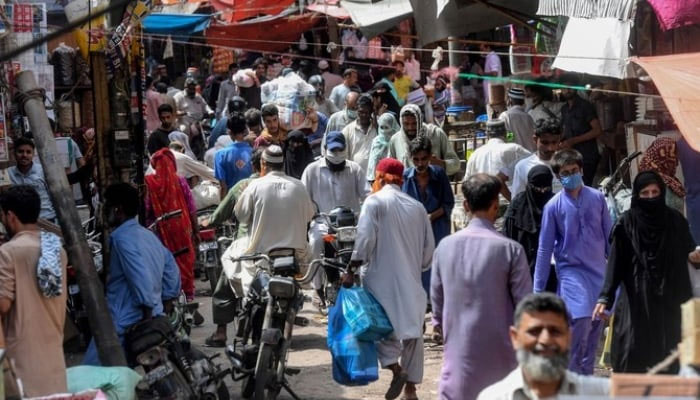
NEW YORK: A key UN report has placed Pakistan, whose current population is over 245 million, in the group of countries whose population is expected to increase through 2054 and could potentially peak in the second half of the century or later.
According to the current projects in the UN’s World Population Prospects 2024 report, Pakistan will reach its peak population in 2092 of 404.68 million people.
It said that Pakistan’s population is expected to surpass that of Indonesia in 2048 when it will reach 331.29 million. Between 1998 and 2017, Pakistan’s average population growth rate was 2.40%, the report said. For a population of over 220 million, this is a growth of about 5.28 million people per year. Pakistan has one of the highest birth rates of 22 births per 1,000 people, it was pointed out. “Very few women use any type of birth control in Pakistan, and the surging population can put too much pressure on water and sanitation systems, result in millions of unemployed people, and overwhelm health and education systems.”
Compared to the other countries in the region, the growth rate of Pakistan is about 2.1 percent higher, it said. The report predicted that in about 35 years, if this growth continues, the population of Pakistan will eventually become double of what it was back in 2001. Judging from how the population has grown significantly over just ten years, this “doubled population” figure does not seem to be far off, it said.
The current growth rate in Pakistan is close to 2%, but this is expected to halve to less than 1% by the year 2050 – at which point it is predicted to cross the 300 million threshold.
The report also said that the global population reached nearly 8.2 billion by mid-2024 and is expected to grow by another two billion over the next 60 years, peaking at around 10.3 billion in the mid-2080s. It will then fall to around 10.2 billion, which is 700 million lower than expected a decade ago. That’s just one of the key findings revealed in the report published by the UN Thursday.







-
 Prince Harry Warns Meghan Markle To 'step Back'
 -
 Selena Gomez Explains Why She Thought Lupus Was 'life-or-death'
 -
 New Zealand Flood Crisis: State Of Emergency Declared As North Island Braces For More Storms
 -
 Nancy Guthrie Case: Mystery Deepens As Unknown DNA Found At Property
 -
 James Van Der Beek's Brother Breaks Silence On Actor's Tragic Death
 -
 Megan Thee Stallion On New Romance With Klay Thompson: 'I'm Comfy'
 -
 Nicole Kidman Celebrates Galentine’s Day Months After Keith Urban Split
 -
 Justin Bieber Unveils Hailey Bieber As First Face Of SKYLRK In Intimate Campaign Debut
 -
 Caitlin O’Connor Says Fiance Joe Manganiello Has Changed Valentine’s Day For Her
 -
 Rachel Zoe Sends Out Message For Womne With Her Post-divorce Diamond Ring
 -
 James Van Der Beek's Final Conversation With Director Roger Avary Laid Bare: 'We Cried'
 -
 Jaden Smith Walks Out Of Interview After Kanye West Question At Film Premiere
 -
 Michelle Obama Gets Candid About Spontaneous Decision At Piercings Tattoo
 -
 Why Halle Berry Wasn't Ready For Marriage After Van Hunt Popped Question? Source
 -
 Bunnie Xo Shares Raw Confession After Year-long IVF Struggle
 -
 Brooks Nader Reveals Why She Quit Fillers After Years