
Export of 150,000 tonnes of sugar allowed
SAB had previously postponed sugar export approvals, haunted by the wheat import scandal and its subsequent public scrutiny
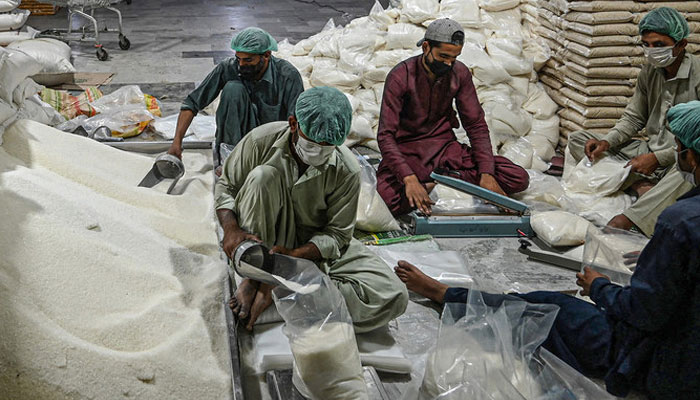
ISLAMABAD: In a move laden with caution and regulatory scrutiny, the Pakistani government has conditionally approved the export of 150,000 (0.15 million) metric tons of sugar, mandating the Pakistan Sugar Mills Association (PSMA) to maintain adequate local stocks to ensure stable domestic supply and prices.
The recent decision emerged from a crucial meeting of the Sugar Advisory Board (SAB), chaired by Federal Minister for Industries and Production Rana Tanveer Hussain. The SAB, an authoritative tripartite body, includes representatives from federal and provincial governments, the sugar industry, and key stakeholders such as Kissan Ittehad.
Notably, the SAB had previously postponed sugar export approvals, haunted by the wheat import scandal and its subsequent public scrutiny. The PSMA had earlier asserted the presence of a 1.5-million-ton sugar surplus, advocating for its export permission. However, the government, wary of past market disruptions, conducted thorough verification to authenticate these stock claims and ensure that the process would not trigger price hikes.
Emphasising the need for a stable domestic sugar supply at sustainable prices, the SAB came to an agreement with the PSMA for the exports. Minister Hussain stated that the ex-mill sugar price would not be increased under any circumstances and directed the PSMA to prioritise clearing all pending payments to farmers. The SAB will review sugar prices and market stability again in a fortnight, and future sugar exports would depend on price stability and stock availability within the country, Hussain said.
In January 2023, the coalition government of Pakistan Democratic Movement (PDM), led by Shehbaz Sharif, permitted export of 250,000 tons of sugar based on projections suggesting a surplus. That decision backfired as domestic prices soared from Rs100 per kg to Rs190 per kg by August 2023. By late August, the caretaker government revealed that national sugar reserves had plummeted to 2.3 million metric tons, insufficient to meet demand until the next crushing season. This disclosure raised alarms about the potential misreporting of sugar production and consumption figures by both the industry and the previous government, further complicating the export narrative. Consequently, sugar exports were banned, and the sugar producers’ appeals for resumption faced outright rejection until the cane-crushing season concluded in March 2024.
The SAB, while reviewing sugar stock availability, market prices, sugarcane rates, global sugar market prices, and industry production costs, emphasized the importance of maintaining sufficient local stocks to ensure a stable supply of sugar at sustainable prices.







-
 Prince William Questions Himself ‘what’s The Point’ After Saudi Trip
 -
 James Van Der Beek's Friends Helped Fund Ranch Purchase Before His Death At 48
 -
 King Charles ‘very Much’ Wants Andrew To Testify At US Congress
 -
 Rosie O’Donnell Secretly Returned To US To Test Safety
 -
 Meghan Markle, Prince Harry Spotted On Date Night On Valentine’s Day
 -
 King Charles Butler Spills Valentine’s Day Dinner Blunders
 -
 Brooklyn Beckham Hits Back At Gordon Ramsay With Subtle Move Over Remark On His Personal Life
 -
 Meghan Markle Showcases Princess Lilibet Face On Valentine’s Day
 -
 Harry Styles Opens Up About Isolation After One Direction Split
 -
 Shamed Andrew Was ‘face To Face’ With Epstein Files, Mocked For Lying
 -
 Kanye West Projected To Explode Music Charts With 'Bully' After He Apologized Over Antisemitism
 -
 Leighton Meester Reflects On How Valentine’s Day Feels Like Now
 -
 Sarah Ferguson ‘won’t Let Go Without A Fight’ After Royal Exile
 -
 Adam Sandler Makes Brutal Confession: 'I Do Not Love Comedy First'
 -
 'Harry Potter' Star Rupert Grint Shares Where He Stands Politically
 -
 Drama Outside Nancy Guthrie's Home Unfolds Described As 'circus'